


 Testosterone Gel
 Avanafil

How and Where to Apply Testosterone Gel (Male Application Sites Explained)

Introduction
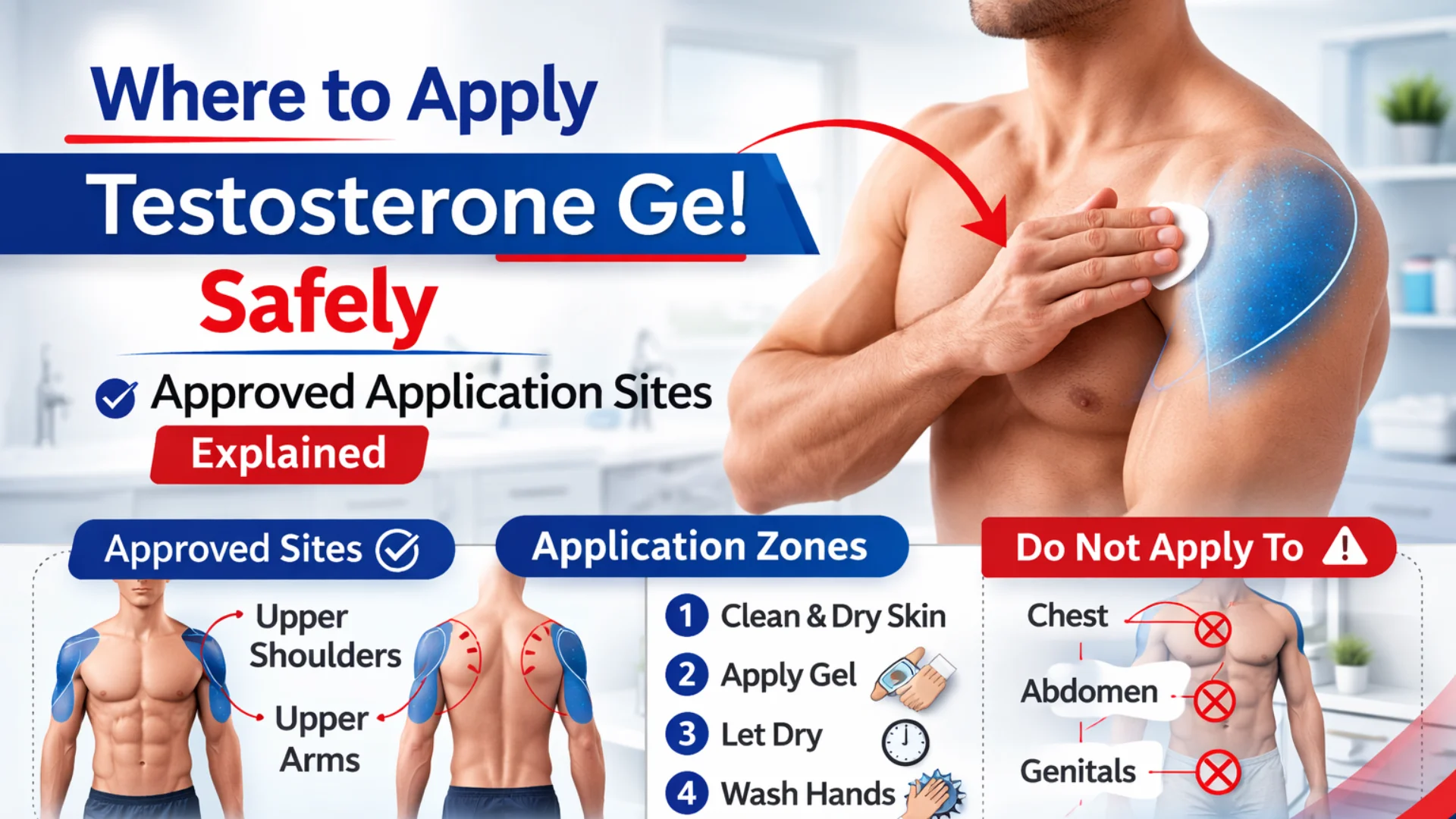
Testosterone gel is a prescription form of testosterone replacement therapy (TRT) used in the United States to treat certain forms of clinically diagnosed low testosterone. As a transdermal medication, it is absorbed through the skin and into the bloodstream over time.
Correct placement is essential for consistent absorption and to reduce the risk of accidental transfer to others. Because testosterone is an active hormone, improper application may affect both treatment effectiveness and safety.
This guide provides general educational information about where to apply testosterone gel, how skin absorption works, and how to reduce transfer risk. It does not replace individualized medical guidance or product-specific instructions provided by a licensed healthcare professional.
Medical Note
Testosterone gel is a prescription form of testosterone therapy. It should only be used after appropriate medical evaluation, laboratory testing, and guidance from a licensed healthcare provider. This article is for educational purposes and does not replace professional medical advice, diagnosis, or treatment.
Why Application Site Matters
How Skin Absorption Works
Testosterone gel is designed for transdermal delivery, meaning the medication passes through the outer layer of the skin (the stratum corneum) and gradually enters systemic circulation. This process allows testosterone levels to increase steadily rather than rapidly.
Absorption depends on several physiological factors:
- Skin thickness
- Blood flow in the area
- Presence of hair follicles
- Oil and moisture levels
- Surface area exposed
Certain body areas—particularly the shoulders and upper arms—have characteristics that support predictable absorption. These areas typically provide sufficient surface area and consistent blood flow while minimizing excessive variability.
The gel forms a thin layer on the skin. As the alcohol-based carrier evaporates, testosterone remains and penetrates the skin barrier. Systemic absorption occurs gradually over several hours after application, which is why drying time and skin contact precautions are emphasized in FDA AndroGel prescribing information. Serum testosterone levels are typically assessed through periodic laboratory monitoring to ensure appropriate dosing.
Incorrect placement may reduce absorption efficiency, alter hormone levels, or increase the chance of unintentional transfer.
Risks of Incorrect Placement
Applying topical testosterone outside approved areas may result in:
- Reduced or inconsistent absorption
- Increased skin irritation
- Higher risk of transferring testosterone to another person
- Variability in serum testosterone levels during lab monitoring
Application to areas with thinner skin, higher friction, or greater likelihood of contact with others may alter medication performance. For this reason, regulatory labeling specifies approved sites.
Where to Apply Testosterone Gel (Approved Areas)
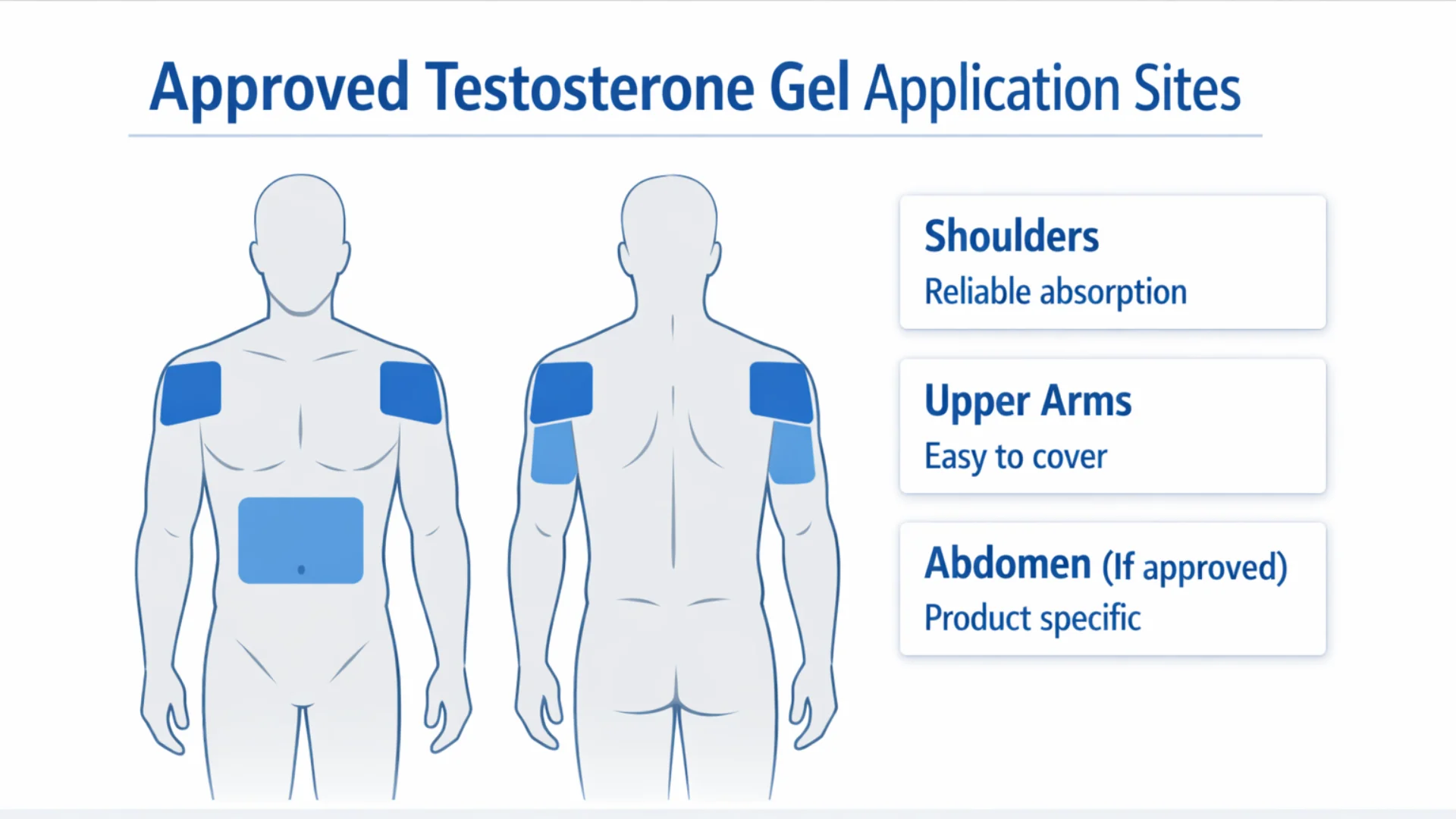
Approved testosterone gel application sites are determined by clinical testing and manufacturer labeling. Patients are advised to follow the instructions provided with their specific prescription product.
For readers seeking broader educational context on available formulations and product types, the Testosterone Gel category page provides informational overviews within the U.S. regulatory framework.
Shoulders
The shoulders are among the most commonly approved application sites. They provide:
- Adequate surface area
- Reliable absorption characteristics
- Reduced likelihood of frequent skin-to-skin contact
Application is typically limited to the upper outer shoulder area. This placement helps minimize friction and contact transfer during daily activity.
Upper Arms
The upper arms—particularly the outer and posterior portions are also commonly approved.
These areas offer:
- Consistent transdermal absorption
- Easy coverage with clothing
- Lower transfer risk compared to high-contact zones
The testosterone replacement gel is generally spread evenly over intact skin without concentrating it in a small area.
Abdomen (Product-Specific Guidance)
Some transdermal testosterone therapy formulations permit application to the abdomen, while others do not. When approved, application is typically restricted to the upper abdominal area and not near the navel or lower groin region.
Absorption rates from the abdomen may differ slightly compared to shoulders or arms. For this reason, product labeling should always be reviewed carefully. Not all topical testosterone products are interchangeable in their approved application sites.
Reference materials such as the Complete Testosterone Gel Application Guide may provide additional educational context.
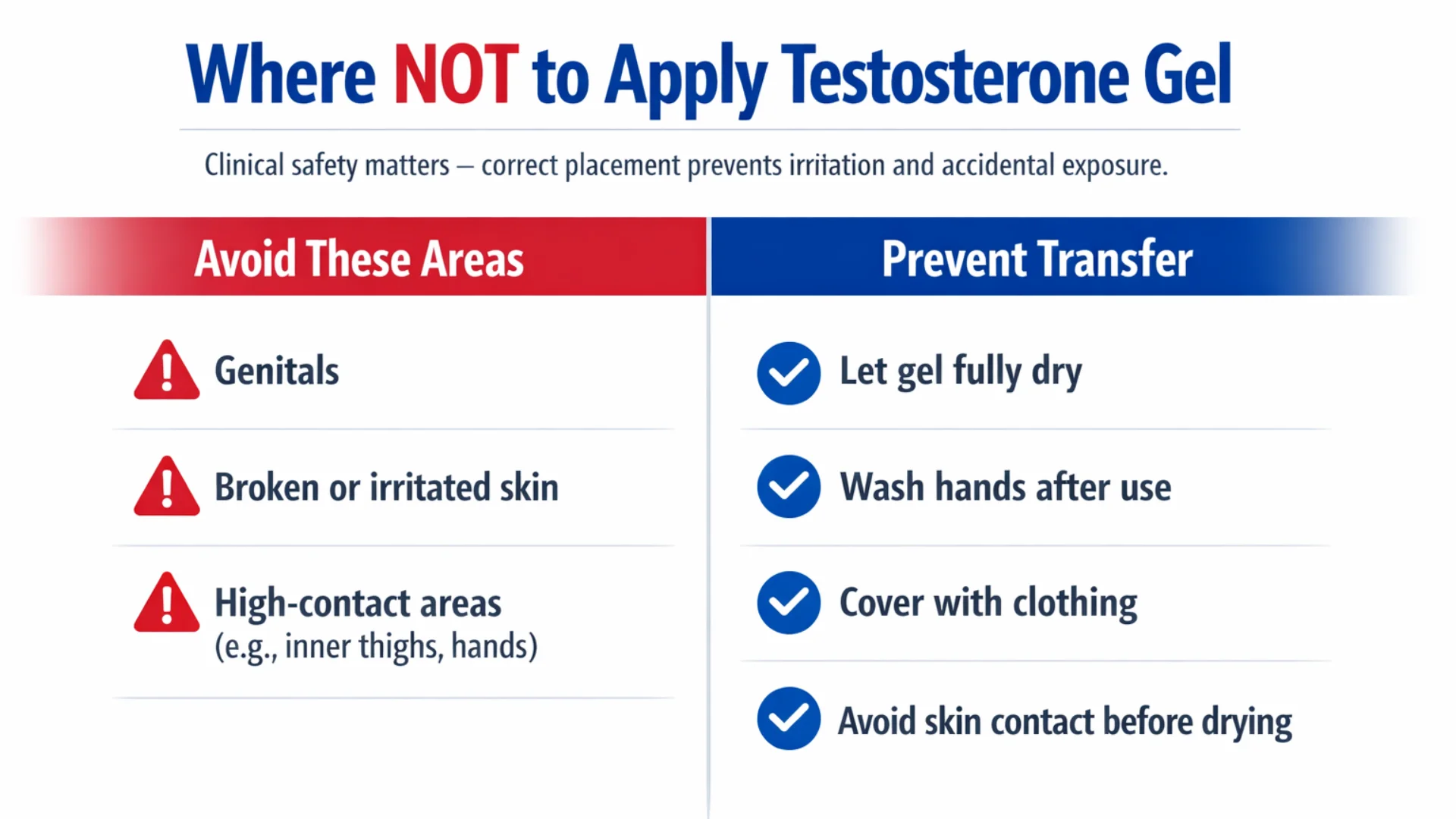
Where NOT to Apply Testosterone Gel
Certain areas are consistently excluded from approved application sites due to safety and absorption concerns.
Genital Area
Testosterone gel should not be applied to the penis, scrotum, or surrounding genital skin unless specifically indicated in a distinct formulation designed for that purpose.
Genital skin is thinner and more sensitive, which can lead to:
- Increased irritation
- Unpredictable absorption
- Elevated systemic testosterone exposure
Standard testosterone gel products for hypogonadism are not designed for genital application.
Broken or Irritated Skin
Application to:
- Cuts
- Abrasions
- Sunburned skin
- Rashes
may increase irritation and alter absorption rates. Damaged skin can allow testosterone to enter circulation more rapidly than intended.
Consistent use on healthy, intact skin supports stable hormone delivery. Additional patient safety details are available in MedlinePlus Testosterone Topical Information.
Areas Likely to Contact Others
High-contact areas such as the chest or lower abdomen may increase the risk of transfer during close physical interaction.
Transfer risk is an important safety consideration, particularly in households with women and children. Placement on areas that can be covered by clothing helps reduce exposure.
Drying Time
Drying time varies by formulation but generally ranges from several minutes to approximately 5–10 minutes.
During this time:
- The alcohol carrier evaporates
- Testosterone begins penetrating the skin
- Direct contact should be avoided
Allowing full drying before clothing contact may reduce residue transfer.
Shower/Swimming Timing
Testosterone gel requires sufficient time for absorption before washing the area. Many formulations recommend waiting several hours before showering or swimming, though exact timing differs by product.
Washing too soon may reduce the amount of testosterone absorbed and potentially affect serum levels.
Preventing Transfer to Others
Transfer risk is a central safety concern with testosterone gel.
Skin-to-Skin Precautions
Testosterone can transfer through direct skin contact before the gel has fully dried and absorbed. Even after drying, residue may remain on the skin surface for a period of time.
Close skin contact with another individual particularly soon after application—may result in unintended exposure.
Protecting Women and Children
Women and children are particularly sensitive to exogenous testosterone. Accidental exposure has been associated with:
- Unwanted hair growth
- Acne
- Hormonal changes
- Behavioral shifts
In children, premature development of secondary sexual characteristics has been reported in rare cases of repeated exposure. Clinical recommendations are outlined in the Endocrine Society Testosterone Therapy Clinical Practice Guideline.
Covering the application site with clothing and practicing appropriate hygiene are standard safety measures.
Clothing and Washing Guidance
After drying, the application site is generally covered with clothing. If another person comes into contact with the area, washing the contacted skin with soap and water may reduce exposure.
Clinically significant transfer through clothing is uncommon once the gel has fully dried; however, caution is still advised, particularly if contact occurs shortly after application or if clothing is thin.
Educational overviews such as the TRT Treatment Options guide may provide broader context regarding different testosterone delivery systems and their respective safety considerations.
Explore the Testosterone Gel Learning Hub
Is Testosterone Gel Effective? Benefits, Risks & Safety Explained
How Does Testosterone Gel Work?
How and Where to Apply Testosterone Gel
Testosterone Gel Application: Step-by-Step Guide
How Quickly Does Testosterone Gel Work? Realistic Timeline Guide
Signs Testosterone Gel Is Working
Testosterone Gel vs Shot: Differences, Benefits, Risks & Considerations
Is Testosterone Gel Available Over the Counter in the U.S.?
Cernos Gel vs Testosterone Injections: Differences & Considerations
Buying Testosterone Gel Online: Safety, Prescription & Source Checks
Frequently Asked Questions
Can you apply testosterone gel to legs?
Most standard testosterone gel formulations in the United States do not list the legs as approved application sites. Application outside labeled areas may result in inconsistent absorption and is generally not recommended unless specified in product instructions.
Can testosterone gel transfer through clothes?
Transfer through clothing is less common than direct skin contact. Once the gel has fully dried, clinically significant transfer through clothing is generally considered unlikely, though caution is still advised to minimize unintended exposure.
How long does testosterone gel take to absorb?
Initial skin penetration begins after application, but systemic absorption occurs gradually over several hours. Because therapeutic levels are assessed through periodic laboratory monitoring, clinical effectiveness is evaluated based on measured serum testosterone levels rather than immediate physical sensation.
What if applied incorrectly?
If testosterone gel is applied to a non-approved area or washed off prematurely, serum testosterone levels may fluctuate. Periodic laboratory monitoring is standard practice in testosterone replacement therapy to ensure safe and appropriate dosing. Individuals who suspect incorrect use or experience unexpected side effects typically discuss concerns with their prescribing healthcare provider.
When used as prescribed and monitored by a healthcare provider, testosterone gel is considered safe and effective for appropriately diagnosed individuals
When to Speak With Your Healthcare Provider
Communication with a healthcare provider may be appropriate in cases of:
- Persistent skin irritation
- Signs of transfer to household members
- Unexpected changes in testosterone lab values
- Concerns about application technique
- Questions about product-specific instructions
Because testosterone therapy requires periodic laboratory monitoring, proper application technique supports accurate dose assessment.
Conclusion
Understanding where to apply testosterone gel is essential for safe and consistent hormone delivery. Approved areas most commonly the shoulders and upper arms are selected based on absorption science and safety testing. Avoiding non-approved sites and following structured application steps reduces variability and transfer risk.
Testosterone gel is an effective transdermal therapy when used according to prescribing information and clinician guidance. Individuals with questions about application technique or safety considerations typically consult their healthcare provider for clarification.
This article is intended for informational purposes within the U.S. context and does not replace medical evaluation or product-specific prescribing instructions.
About MedsVista Research Desk
MedsVista Research Desk prepares educational medication content using publicly available medical references, safety-focused editorial standards, and medication education principles. Content is written for general information and should not replace diagnosis, treatment planning, or medical advice from a licensed healthcare provider.

5 thoughts on “How and Where to Apply Testosterone Gel (Male Application Sites Explained)”