


 Testosterone Gel
 Avanafil

Signs Testosterone Gel Is Working: What to Expect


Signs that testosterone gel may be working can include symptom changes together with laboratory evidence that testosterone levels are responding. Symptoms alone cannot confirm that the dose is appropriate.
Medical Note
Testosterone gel is a prescription form of testosterone therapy. It should only be used after appropriate medical evaluation, laboratory testing, and guidance from a licensed healthcare provider. This article is for educational purposes and does not replace professional medical advice, diagnosis, or treatment.
Subjective Signs
Possible changes can include sexual interest, energy, mood, motivation, or other symptoms that were present before treatment. These changes are not specific to testosterone and should be interpreted in context.
Objective Signs
Laboratory testing is the main objective way to assess hormone response. Clinicians may also review blood counts, adverse effects, and other safety markers depending on the patient and treatment plan.
Signs That Need Review
Lack of improvement, troublesome skin reactions, marked mood changes, symptoms suggestive of excessive testosterone exposure, or concerns about transfer should be discussed with the prescribing clinician.
Understanding How Testosterone Gel Works Over Time
Hormone Stabilization Process
Testosterone gel is absorbed through the skin and enters the bloodstream gradually. With regular use as prescribed, the goal is to support more consistent testosterone levels over time. Unlike treatments that may create more noticeable short-term peaks, gels are generally intended to provide steady daily hormone exposure. For a broader overview, see how testosterone gel works and Testosterone Topical drug information.
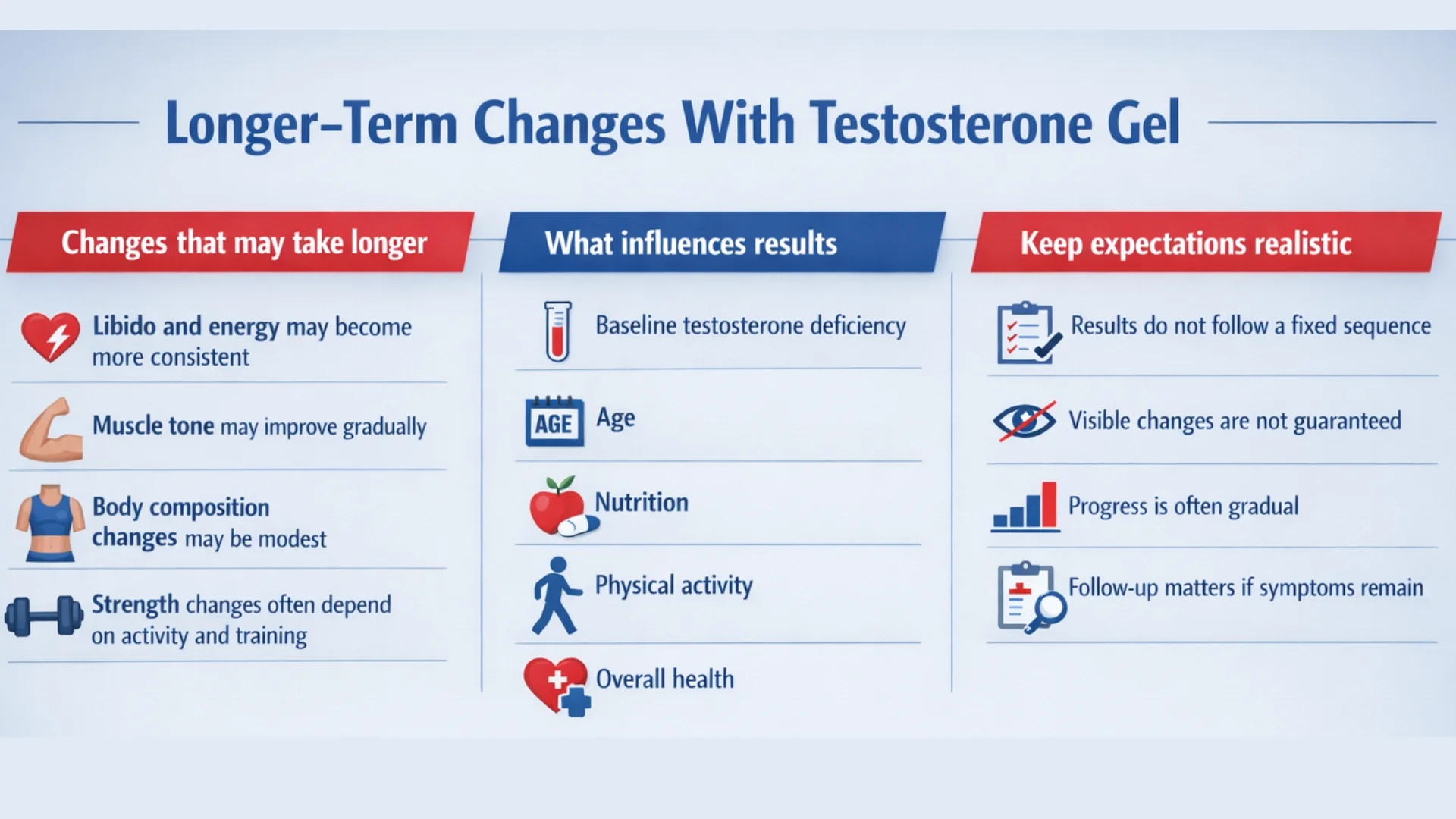
Because testosterone affects many body systems, changes do not happen all at once. Mood, sexual health, energy, and laboratory values may respond on different timelines. Physical changes, if they occur, usually develop more gradually and may depend on baseline testosterone deficiency, age, activity level, nutrition, and overall health. The pace of change can also vary depending on whether symptoms were clearly related to low testosterone before treatment began.
Why Effects Are Gradual
Many of the signs associated with testosterone therapy depend on the body adjusting over time. Hormone levels may begin changing relatively early, but noticeable effects often lag behind. For example, a person may have improving lab values before noticing meaningful symptom or physical changes.
That is one reason realistic expectations matter. A gradual pattern does not necessarily mean the gel is not working. It may simply reflect the normal pace of hormone-related change and the need for follow-up monitoring. You may also want to compare general expectations in How Long Does TRT Take to Work? Results Timeline.
Early Possible Changes
Mood Changes
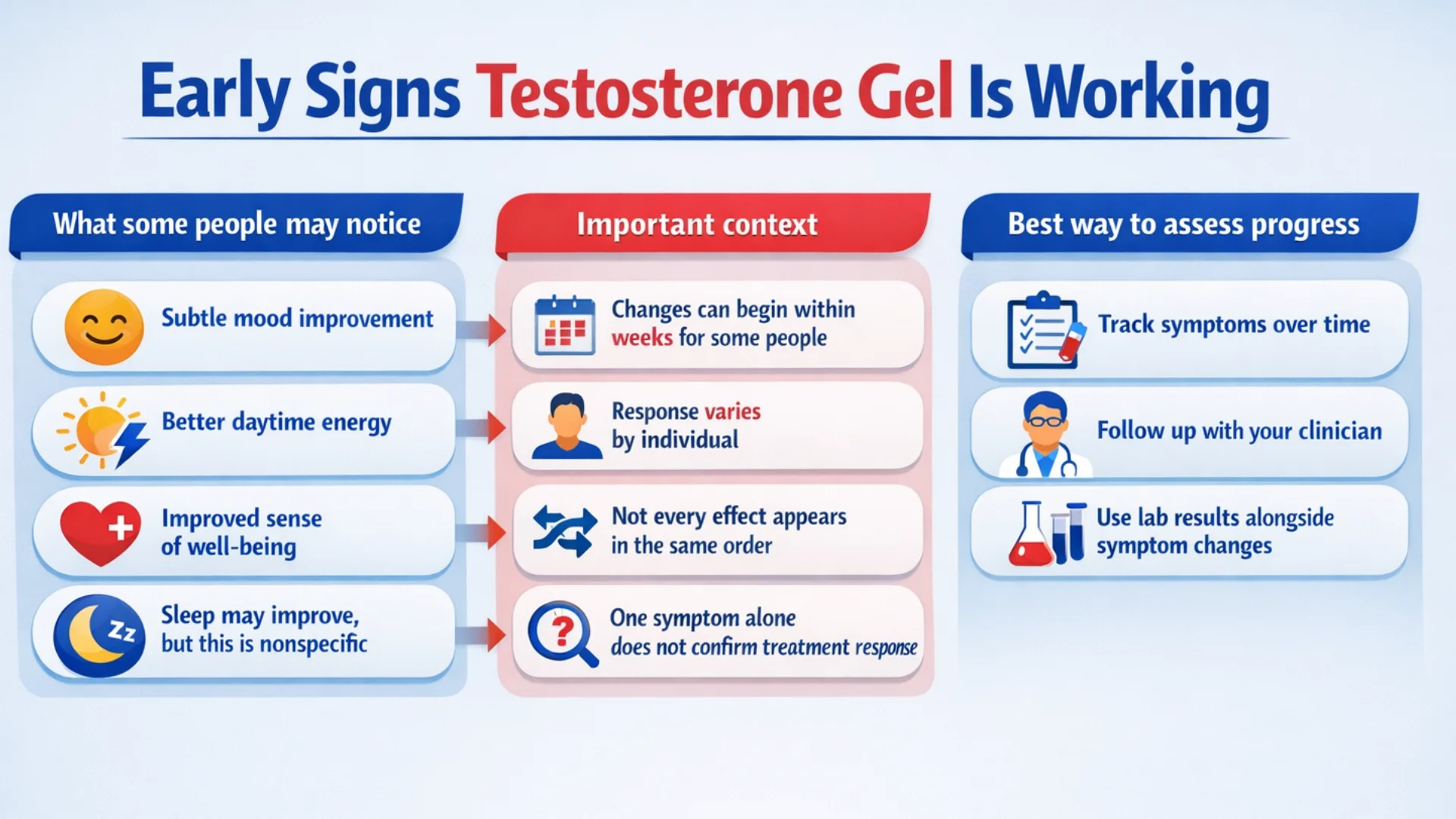
One of the earliest changes some people report is a subtle shift in mood. This may include feeling less irritable, more emotionally steady, or more mentally engaged during the day. These changes are often mild rather than dramatic. Some people notice a clearer sense of focus or improved motivation, while others do not feel a meaningful difference this early.
Mood changes can be difficult to interpret on their own because sleep, stress, work demands, and unrelated health factors may also affect emotional well-being. For that reason, early mood improvement may be considered a possible sign, but not definitive proof, that testosterone gel is working.
Energy Levels
Energy is another area where early changes may begin to appear. Some people describe less daytime fatigue, better stamina for daily activities, or a smaller afternoon energy drop. This can be one of the more encouraging signs testosterone gel is working, but it is still variable and may not occur in a linear way.
What matters more is whether energy becomes more consistent over time rather than changing from day to day. A temporary good week does not always reflect a stable treatment response.
Sleep Changes
Sleep quality is sometimes mentioned during treatment, but it is usually a less specific change than libido, energy, or lab confirmation. Some people may notice sleeping more soundly, waking less often, or feeling somewhat more rested once hormone levels improve. At the same time, sleep changes are not specific to testosterone therapy and may reflect other factors. If sleep seems better, it is best viewed as part of the broader picture rather than a primary sign on its own.
Changes That May Become More Noticeable Over Time
Libido Changes
Sexual interest is one of the more commonly discussed areas of improvement during testosterone therapy. For some people, libido may begin to improve within the first month or two, though timing varies by individual. This may show up as a greater interest in sexual activity, more frequent sexual thoughts, or a return toward a prior baseline level of desire.
Not everyone experiences the same pattern. Libido can be influenced by relationship factors, mental health, stress, sleep, and other medical conditions. A lack of early change does not automatically mean treatment is ineffective, and an early change does not always mean testosterone is the only factor involved. In some cases, improving libido is one of the clearer signs testosterone gel is working, but it should still be interpreted alongside other symptoms and follow-up testing.
More Consistent Energy
As treatment continues, improvement in energy may feel less occasional and more stable. Instead of isolated better days, some people begin noticing a more reliable pattern of improved daily function. Routine tasks may feel less draining, and it may become easier to sustain concentration or activity over longer periods.
A trend toward steadier energy is often more meaningful than a brief initial improvement that fades quickly. Over time, this pattern may become one of the practical signs testosterone gel is working in everyday life.
Longer-Term Changes
Muscle Mass Development
Changes in muscle mass usually take longer to become noticeable than changes in mood, energy, or libido. Over several months, some people may notice improved muscle tone or a better response to regular physical activity. These changes are not caused by testosterone gel alone in any fixed or predictable way. They depend on factors such as baseline deficiency, age, exercise habits, nutrition, recovery, and overall health.
Mayo Clinic also notes that low testosterone can be associated with reduced muscle bulk and strength, while treatment decisions require individualized review in testosterone therapy: potential benefits and risks as you age. For that reason, muscle-related improvements are usually gradual and are better viewed as a longer-term possibility rather than a reliable early sign.
Body Composition Changes
Some people may notice gradual changes in body composition over time, such as reduced fat mass or a shift in how weight is distributed. Clothing may fit differently, or subtle physical changes may become more noticeable after several months. These changes are often modest and may take time to appear.
They are also less reliable when viewed without context, since diet, exercise, sleep, and other health changes can strongly influence body composition. Even when testosterone gel is helping, visible body composition changes do not follow a fixed sequence for every person. Related reading: Is Testosterone Gel Effective? Benefits, Risks & Safety Explained.
Physical Strength
Improved strength may accompany longer-term changes in physical function, especially when combined with regular resistance training or increased activity. This does not usually appear as a sudden jump in performance. More often, it may show up as a gradual improvement in capacity, endurance, or recovery over time.
Because strength depends on many factors beyond hormone levels, it is generally one part of a broader pattern rather than a standalone sign. When these changes do occur, they are best considered alongside other signs testosterone gel is working rather than as proof on their own.
Subjective vs Objective Signs
Symptom Perception
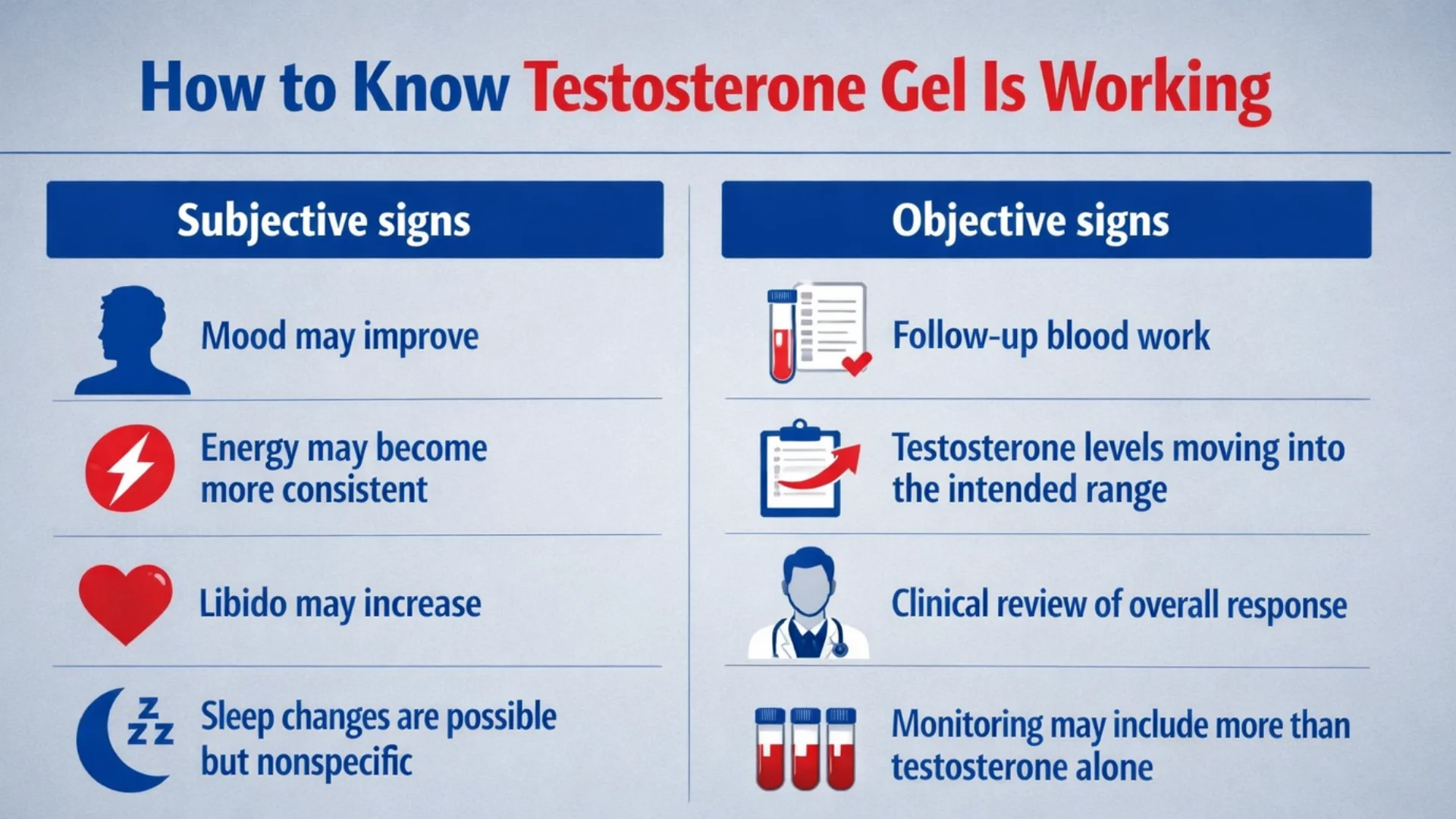
Subjective signs are the changes a person notices personally, such as better mood, more energy, improved libido, or possible sleep improvement. These experiences matter because symptom relief is often one of the main reasons testosterone therapy is started. However, subjective changes can also be influenced by expectation, lifestyle adjustments, placebo effect, or unrelated health improvements.
That does not make them unimportant. It simply means they should be interpreted carefully and in context.
Blood Test Confirmation
Objective confirmation usually comes from follow-up blood work. Laboratory monitoring can show whether testosterone levels have increased into the intended range and whether treatment appears to be working biologically. In many cases, this is the clearest way to confirm that the gel is having the expected effect beyond day-to-day symptom perception. See testosterone levels test for general background.
This is especially important when symptoms are unclear, delayed, or inconsistent. A person may feel uncertain about whether the gel is helping, while blood tests show that hormone levels have improved. The reverse can also happen, where symptoms seem better but laboratory values suggest further evaluation is still needed.
How to Know Testosterone Gel Is Working
The most useful way to assess response is to look for a pattern rather than rely on one symptom alone. Some people may notice changes in energy or libido before anything else, while others first see improvement on lab testing. Medical follow-up may include more than testosterone levels alone, depending on clinical judgment.
In general, the clearest assessment comes from combining symptom tracking with follow-up medical evaluation. Looking at both symptoms and laboratory response is usually the most reliable way to judge signs testosterone gel is working. For a broader treatment overview, see What Is TRT Therapy? A Comprehensive Guide on Testosterone Replacement Therapy.
When to Speak With Your Healthcare Provider
Medical follow-up is important if there is no noticeable improvement after an appropriate monitoring period, especially if symptoms remain unchanged and follow-up labs do not show expected testosterone changes. Review may also be appropriate if side effects develop, if symptoms worsen, or if the overall response feels unclear. With gels specifically, follow-up is also important if there are concerns about proper application, skin transfer precautions, or safe handling.
Concerns may also arise when there is a mismatch between symptoms and lab values. For example, a person may have improved testosterone levels on testing but little symptom change, or they may feel somewhat better while laboratory results still require closer review. These situations are not unusual and usually need individualized interpretation by a qualified clinician. See also How to Talk to Your Doctor About TRT: Key Questions to Ask and testosterone replacement therapy for men.
Explore the Testosterone Gel Learning Hub
Is Testosterone Gel Effective? Benefits, Risks & Safety Explained
How Does Testosterone Gel Work?
How and Where to Apply Testosterone Gel
Testosterone Gel Application: Step-by-Step Guide
How Quickly Does Testosterone Gel Work? Realistic Timeline Guide
Signs Testosterone Gel Is Working
Testosterone Gel vs Shot: Differences, Benefits, Risks & Considerations
Is Testosterone Gel Available Over the Counter in the U.S.?
Cernos Gel vs Testosterone Injections: Differences & Considerations
Buying Testosterone Gel Online: Safety, Prescription & Source Checks
Frequently Asked Questions
Does testosterone gel work immediately?
Testosterone gel does not usually produce immediate full effects. Some early changes may begin within weeks for some people, but many effects develop gradually over time and vary by individual.
How long before testosterone gel improves libido?
Libido may begin to improve within several weeks for some people, though timing varies. For others, changes may take longer and may depend on factors beyond testosterone levels alone.
What if I do not notice changes?
A lack of early noticeable change does not always mean the treatment is not working. Some effects may take longer to develop, and follow-up blood tests may provide a clearer picture of response.
Can lab tests confirm it is working?
Lab tests are one of the most reliable ways to confirm whether testosterone levels are responding to treatment. They are typically used alongside symptom review rather than as a replacement for it.
Conclusion
Signs testosterone gel is working usually appear gradually rather than in a fixed sequence. Some people may notice earlier changes in mood, energy, or libido, while sleep improvement may occur as a nonspecific change in some cases. Physical changes such as muscle development, body composition shifts, or strength improvements may take longer and are influenced by factors such as age, baseline deficiency, activity, nutrition, and overall health.
The most balanced way to evaluate progress is to consider both subjective symptom changes and objective lab confirmation. General timelines can be helpful for context, but individual response varies. This article is intended for educational purposes only and should be used as background information for informed discussions during medical follow-up. Additional reading includes How and Where to Apply Testosterone Gel (Male Application Sites Explained) and Testosterone Gel vs Shot: Which Works Best?.
About MedsVista Research Desk
MedsVista Research Desk prepares educational medication content using publicly available medical references, safety-focused editorial standards, and medication education principles. Content is written for general information and should not replace diagnosis, treatment planning, or medical advice from a licensed healthcare provider.

5 thoughts on “Signs Testosterone Gel Is Working: What to Expect”