


 Testosterone Gel
 Avanafil

What Is Ivermectin? Uses, Safety, and Key Facts

Educational Disclaimer
This article is for informational and educational purposes only. It does not constitute medical advice, diagnosis, or treatment recommendations. Individuals should consult a licensed healthcare professional before starting or changing any medication.
Introduction
Ivermectin is a prescription medication classified as an antiparasitic drug used to treat specific infections caused by parasites in humans. Many people researching what is ivermectin are seeking clear, medically accurate information about its approved uses, safety profile, and regulatory status. As part of the broader category of antiparasitic medications used in modern medicine, ivermectin has played a measurable role in global public health, particularly in the control and reduction of certain neglected tropical diseases.
Originally developed in the late 20th century, ivermectin became a cornerstone therapy for specific parasitic worm infections affecting millions of people worldwide. During the COVID-19 pandemic, public discussion increased around the drug. Regulatory authorities, including the U.S. Food and Drug Administration (FDA) and the Centers for Disease Control and Prevention (CDC), clarified that ivermectin is not approved for the prevention or treatment of COVID-19.
This article provides a medically grounded explanation of ivermectin, including how it works, its approved uses, dosage considerations, safety profile, and regulatory context.
What Is Ivermectin
Ivermectin is an anthelmintic medication. Anthelmintics are drugs specifically designed to eliminate parasitic worms (helminths) from the body. In addition to internal parasites, ivermectin is also effective against certain external parasites that affect the skin.
In human medicine, ivermectin is available as:
- Oral tablets
- Topical dermatological formulations
It is classified as a prescription-only medication in most countries. This classification reflects the need for proper diagnosis, weight-based dosing, and medical supervision.
The drug was derived from compounds discovered in soil bacteria known as Streptomyces avermitilis. Its introduction significantly reduced the global burden of parasitic diseases such as river blindness (onchocerciasis) and contributed to long-term disease control programs in endemic regions. Due to its global health impact, the scientists responsible for its discovery were awarded the Nobel Prize in Physiology or Medicine in 2015.
For detailed prescribing information and safety data, see NIH MedlinePlus – Ivermectin
Key Takeaways
- Ivermectin is a prescription antiparasitic medication.
- It treats specific internal and external parasitic infections.
- It is regulated and approved for defined medical conditions only.
How Ivermectin Works in the Body
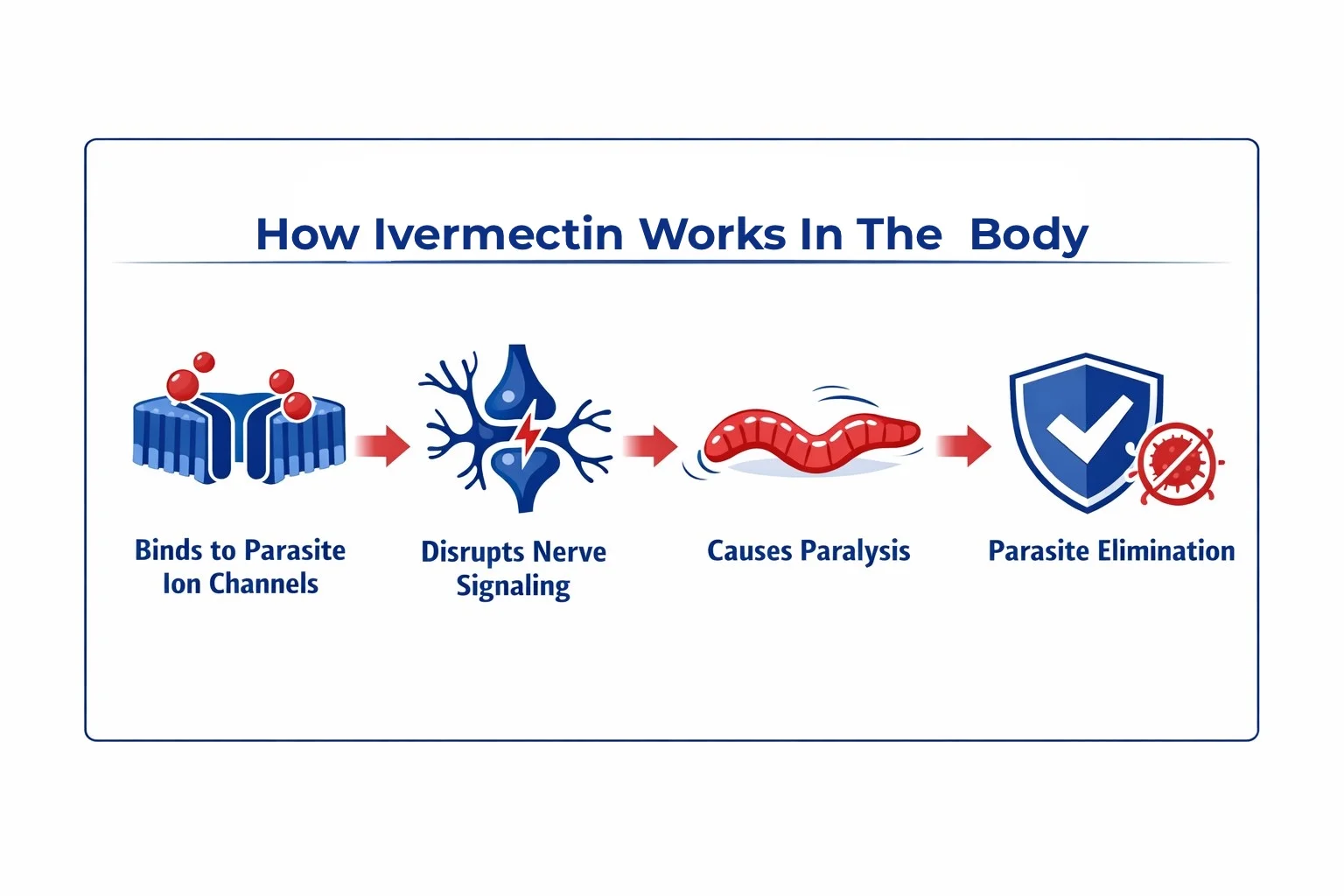
Ivermectin works by targeting specific ion channels in parasite nerve and muscle cells. Its effectiveness is based on selective interference with parasite neurological function.
Mechanism of Action
The drug binds to glutamate-gated chloride channels found in many invertebrates. These channels help regulate electrical activity within parasite cells.
When these channels are activated:
- Chloride ions enter the parasite’s cells
- Electrical signaling becomes disrupted
- The parasite becomes paralyzed
- The organism eventually dies and is cleared from the body
Human nerve cells do not contain these channels in the same configuration. Additionally, the blood–brain barrier limits central nervous system exposure at approved doses. These biological differences help explain why ivermectin can selectively affect parasites while maintaining an established safety profile in humans when used appropriately.
Its biological activity is primarily directed at parasites rather than viruses, which is one reason it is not approved for treating viral infections.
Key Takeaways
- Ivermectin disrupts nerve signaling in parasites.
- It causes paralysis and elimination of susceptible organisms.
- Its selectivity helps maintain safety in humans at approved doses.
Approved Uses in Humans
Ivermectin has clearly defined, evidence-based medical indications, particularly in the management of intestinal and bloodstream parasitic infections.
Parasitic Worm Infections
Approved uses include:
- Onchocerciasis (river blindness)
- Strongyloidiasis (intestinal roundworm infection)
These infections are most common in tropical and subtropical regions but may also affect travelers or individuals with relevant exposure histories. Large-scale treatment initiatives have used ivermectin to reduce transmission rates and disease progression in affected communities.
For further context on its pharmaceutical composition and classification, see What Is Ivermectin Made Of?
Dermatologic and External Conditions
Topical ivermectin formulations are approved for:
- Head lice infestations
- Certain inflammatory forms of rosacea
Dermatologic therapy should be guided by appropriate clinical evaluation to ensure safe and targeted treatment. Topical and oral forms are not interchangeable and serve different therapeutic purposes.
Key Takeaways
- Ivermectin treats specific parasitic worm infections.
- Topical forms treat lice and certain rosacea cases.
- Uses outside approved indications require clinical evidence.
Ivermectin and COVID-19
Public discussion during the pandemic led to confusion regarding ivermectin’s approved role.
The FDA advisory on Ivermectin and COVID-19 states that ivermectin is not authorized for preventing or treating COVID-19.
Similarly, the CDC safety communication reported increased adverse events linked to misuse, particularly involving non-approved formulations.
Regulatory agencies emphasize:
- It is approved only for certain parasitic infections.
- It is not authorized for viral respiratory illnesses.
- Self-medication increases risk of toxicity and overdose.
Key Takeaways
- Ivermectin is not approved for COVID-19.
- Regulatory agencies have issued formal safety advisories.
- Misuse increases overdose risk.
Veterinary vs. Human Ivermectin
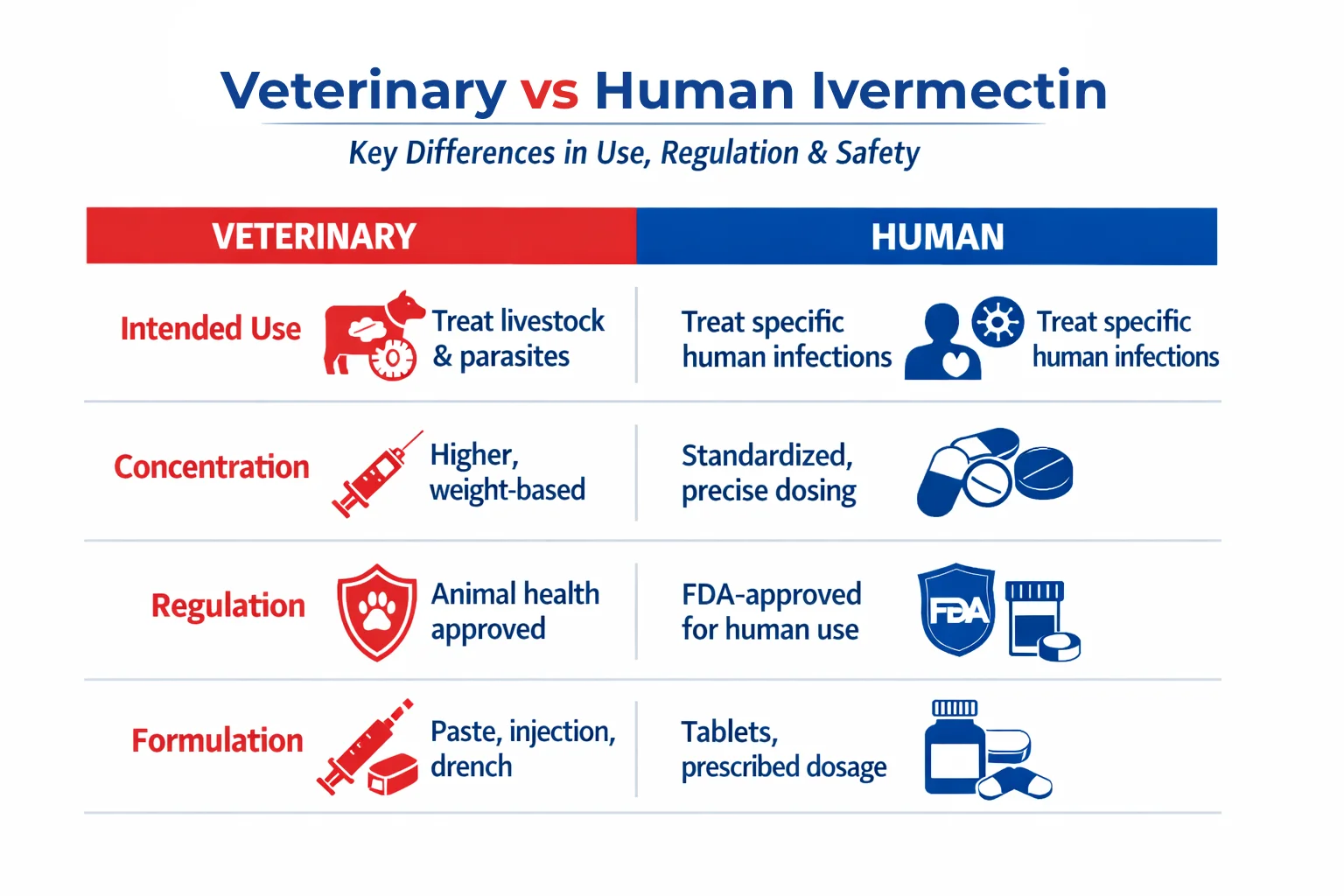
Ivermectin is widely used in veterinary medicine. However, animal formulations differ significantly from those approved for human use.
Veterinary Formulations
- Often contain higher concentrations intended for large animals
- May include inactive ingredients not tested in humans
- Are regulated under veterinary approval standards
These products are designed for species-specific dosing and may be packaged as injectables, pastes, or feed additives.
Human Formulations
- Manufactured under pharmaceutical standards for human safety
- Dosed according to body weight and infection type
- Evaluated through human clinical trials
- Subject to regulatory oversight specific to human medicine
Using veterinary ivermectin in humans increases the risk of overdose, neurological toxicity, and severe side effects due to differences in concentration and formulation.
Key Takeaways
- Veterinary and human products are not interchangeable.
- Concentration differences can lead to overdose.
- Human use requires approved formulations and supervision.
Available Dosage Strengths
In human medicine, ivermectin tablets are available in multiple standardized strengths depending on manufacturer and regulatory approval.
The total prescribed dose depends on:
- Body weight
- Type of infection
- Severity of condition
- Clinical treatment guidelines
Tablet strength alone does not determine appropriateness. Dosing must be calculated based on medical evaluation.
Key Takeaways
- Dosing is weight-based and condition-specific.
- Tablet strength alone does not determine treatment.
- Professional evaluation is required before use.
Dosage Considerations
Healthcare providers assess several factors before prescribing ivermectin:
- Patient weight
- Infection type
- Geographic exposure
- Immune status
- Overall medical history
Some infections require a single oral dose. Others may require repeat treatment at specified intervals. In public health programs, dosing schedules may differ from individual outpatient treatment protocols.
Medical supervision ensures correct dosing and monitoring for side effects.
Key Takeaways
- Treatment plans vary by infection.
- Repeat dosing may be necessary in some cases.
- Medical supervision is essential.
Side Effects and Safety Profile
When used as directed, ivermectin has an established safety record consistent with other prescription-only antiparasitic therapies.
Common Side Effects
- Nausea
- Dizziness
- Mild rash
- Diarrhea
- Fatigue
Temporary symptoms may occur due to immune response as parasites die, particularly in certain worm infections.
Rare but Serious Effects
- Low blood pressure
- Neurological symptoms
- Allergic reactions
Overdose may cause confusion, impaired coordination, excessive drowsiness, or severe gastrointestinal symptoms. Patients concerned about medication reactions should seek professional evaluation and follow established prescription medication safety guidelines.
Key Takeaways
- Most side effects are mild and temporary.
- Serious reactions are uncommon but possible.
- Misuse significantly increases health risks.
Approved vs. Unapproved Uses

Regulatory approval requires strong clinical evidence demonstrating safety and effectiveness for a specific condition.
Key Takeaways
- Ivermectin is approved only for defined parasitic conditions.
- It is not approved for viral infections.
- Evidence-based approval supports patient safety.
Historical Impact on Global Health
Mass drug administration programs have significantly reduced rates of river blindness in endemic regions. Ivermectin remains one of the most impactful antiparasitic interventions in modern medicine.
Large-scale public health initiatives have demonstrated sustained reductions in transmission across affected regions over multiple decades. These programs rely on coordinated distribution strategies, long-term epidemiological tracking, and international collaboration.
Global health organizations, including the World Health Organization (WHO recognize its role in disease control initiatives and elimination efforts.
Key Takeaways
- Ivermectin has reduced parasitic disease burden globally.
- Long-term programs show measurable reductions in transmission.
- Its impact is supported by decades of research and monitoring.
Before addressing common questions, it is helpful to summarize that ivermectin’s approved uses, safety profile, and regulatory status are clearly defined. The following answers clarify frequent points of confusion using medically grounded information.
Frequently Asked Questions (FAQs)
What is ivermectin used to treat?
It is prescribed for specific parasitic worm infections such as strongyloidiasis and onchocerciasis. Topical formulations are used for head lice and certain rosacea cases. It is not approved for viral illnesses or general infections.
Is ivermectin safe?
When prescribed and taken according to approved medical guidelines, ivermectin has a well-established safety profile. The likelihood of adverse effects increases when dosing guidelines are not followed or when non-approved formulations are used.
Can humans take veterinary ivermectin?
No. Veterinary products are formulated for animals and may contain higher concentrations or ingredients not evaluated for human safety. Using these products can increase the risk of overdose and neurological complications.
Why is ivermectin controversial?
Discussion during the COVID-19 pandemic led to confusion about its role. Regulatory agencies clarified that it is not approved for preventing or treating COVID-19, reinforcing the importance of evidence-based prescribing.
Is ivermectin available without prescription?
In most countries, ivermectin for human use requires a prescription and should be taken only under medical supervision.
Conclusion
Ivermectin is a medically approved antiparasitic medication with clearly defined and regulated uses. It has significantly improved global health outcomes in the treatment of certain parasitic infections and remains an important therapy within evidence-based infectious disease management.
However, it is approved only for specific conditions. Safe use requires:
- Proper diagnosis
- Correct dosing
- Approved human formulations
- Medical supervision
For additional scientific background on its pharmaceutical classification, refer to What Is Ivermectin Made Of? . Understanding its mechanism, approved indications, and regulatory status supports responsible, evidence-based use
