


 Testosterone Gel
 Avanafil

Ivermectin Warnings & Precautions: Important Safety Information


Medical Review Disclaimer:
This content is for informational and educational purposes only and is not intended as medical advice. It has been medically reviewed for accuracy but should not be used as a substitute for professional diagnosis or treatment. Always consult a qualified healthcare provider regarding medication use or medical conditions.
Introduction
This draft provides an expanded educational overview of ivermectin warnings and precautions, focusing on safety considerations commonly highlighted in medical reference sources. The purpose is to explain how warnings, precautions, and contraindications differ, and why these distinctions matter when evaluating ivermectin use. The information presented reflects cautious, regulator-aligned framing and is intended for general understanding rather than medical decision-making.
What Is Ivermectin
Ivermectin is a prescription medication primarily used to treat certain parasitic infections. Its approved uses depend on the formulation and clinical indication, and it is typically administered under medical supervision. While ivermectin has a long history of use in specific contexts, its safety profile varies depending on individual health factors, underlying conditions, and concurrent medications. For this reason, most authoritative sources emphasize that ivermectin use should be individualized and clinically assessed.
Understanding Ivermectin Warnings vs. Precautions
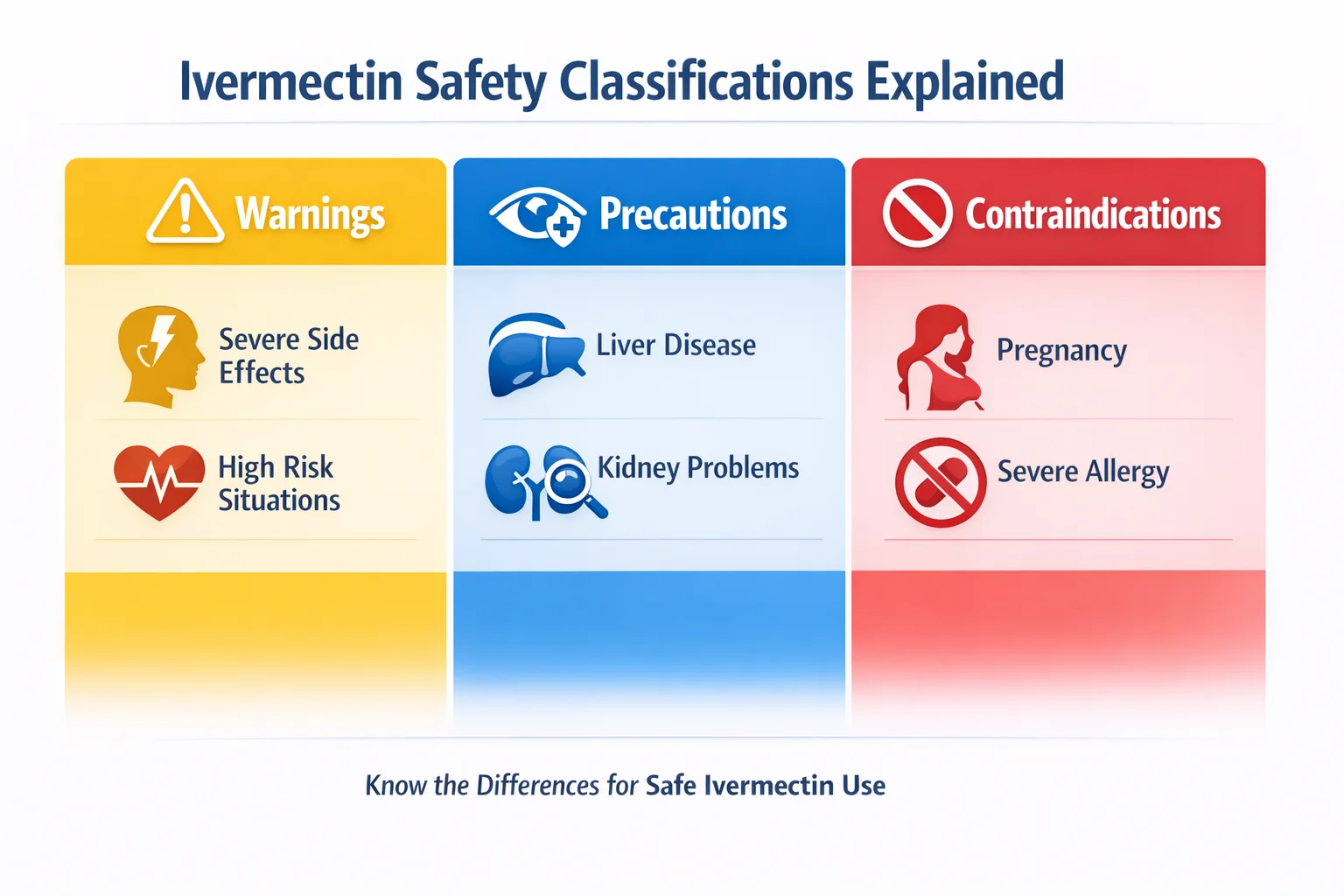
Warnings
Warnings highlight situations where ivermectin use may pose an increased risk of serious or potentially harmful outcomes. These statements are designed to alert clinicians and patients to conditions where the risk–benefit balance requires careful evaluation. Warnings often relate to severe adverse effects, known high-risk populations, or circumstances where misuse has been associated with harm.
In patient-facing resources, warnings are frequently framed in cautious language, emphasizing that decisions about use should involve a healthcare professional. This approach reflects an effort to prevent inappropriate or unsupervised use.
Precautions
Precautions describe conditions or factors that may increase the likelihood of side effects or complications but do not necessarily rule out ivermectin use. These include situations where closer monitoring, dose adjustments, or additional clinical judgment may be needed.
Precautions are commonly broader than warnings and may apply to a wider range of patients. In many educational sources, precautions are grouped under “Before using” sections, which can blur their distinction from warnings. Clarifying this difference helps readers understand that precautions signal caution, not absolute avoidance.
Contraindications
Contraindications refer to specific situations in which ivermectin should not be used because the potential risks outweigh any expected benefit. These are typically stated more definitively than warnings or precautions.
Commonly referenced contraindications include:
- Hypersensitivity or allergy to ivermectin or similar compounds, which may lead to serious allergic reactions
- Pregnancy, where ivermectin use is generally avoided due to concerns about fetal safety
- Certain pediatric populations, depending on age, weight, and clinical guidelines
In plain language, contraindications indicate that ivermectin is not recommended in these situations, even under medical supervision, unless exceptional circumstances apply.
Key Safety Warnings and Precautions
Allergic Reactions
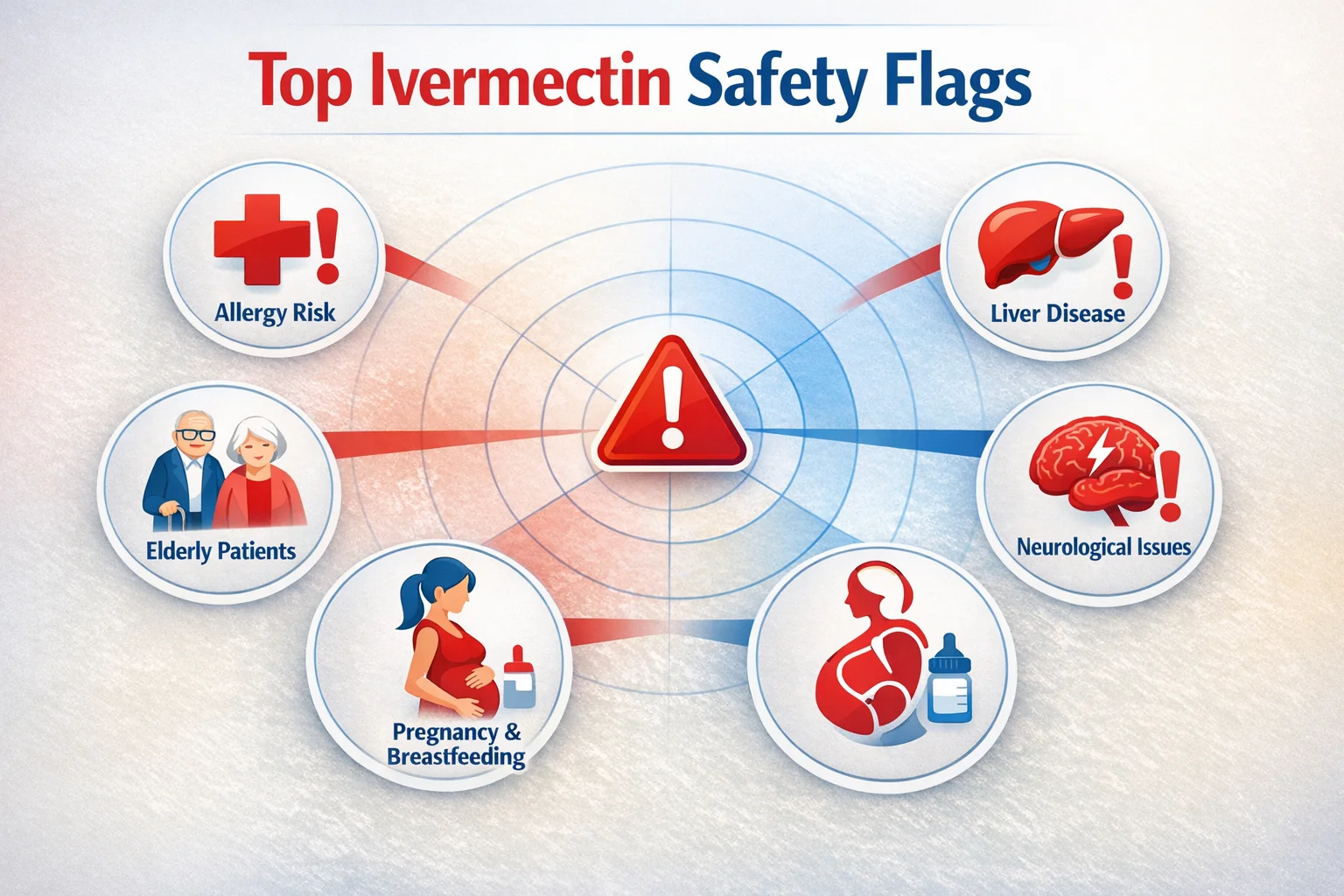
Allergic reactions are a key safety concern with ivermectin. Individuals with a known allergy to the medication may experience symptoms ranging from mild skin reactions to more severe systemic responses. Because allergic history is not always apparent, warnings often emphasize the importance of recognizing early signs of hypersensitivity and discontinuing use if they occur allergic reactions.
Liver Disease
Ivermectin is metabolized by the liver, making liver function an important consideration. Individuals with existing liver disease may process the medication differently, potentially leading to higher drug levels in the body. While many patient-facing sources mention liver disease briefly, clinical references highlight it as a reason for caution, monitoring, or avoidance depending on severity liver disease considerations
Neurological Considerations
Neurological effects associated with ivermectin are discussed more frequently in technical and clinical sources than in general health articles. These effects may include dizziness, confusion, or more serious neurological symptoms in rare cases. Such risks are often emphasized in warnings related to misuse, high doses, or use outside approved indications neurological effects.
Elderly Populations
Older adults may be more susceptible to ivermectin-related adverse effects due to age-related changes in liver function, the presence of multiple medical conditions, or concurrent medication use. Despite this, elderly-specific risks are not always clearly explained in general safety summaries, representing a common informational gap.
Side Effects Overview
Commonly Reported Effects
Common side effects reported in educational resources typically include gastrointestinal symptoms such as nausea or diarrhea, mild dizziness, fatigue, or skin-related reactions. These effects are usually described as temporary and self-limiting, though they may still require medical attention if persistent common side effects.
Serious or Less Common Effects
More serious side effects are less frequent but receive emphasis due to their potential severity. These may include significant neurological symptoms, severe allergic reactions, or complications related to underlying health conditions. Warnings highlight these effects to ensure prompt recognition and medical evaluation.
Mechanisms Behind Certain Interactions
Some ivermectin interactions are linked to liver metabolism pathways, while others involve additive effects such as increased neurological symptoms. Understanding these mechanisms helps explain why certain combinations are monitored more closely, even when outcomes are uncertain.
Drug Interactions
Ivermectin may interact with other medications, particularly those that affect liver enzymes or the central nervous system. Clinical drug references often provide detailed interaction lists, while patient-oriented materials summarize interactions in broader terms. These interactions can influence how ivermectin is absorbed or metabolized, increasing the risk of side effects drug interactions.
Pregnancy and Breastfeeding Considerations
Pregnancy is frequently described as a contraindication or a situation where ivermectin use is not recommended. This framing reflects limited safety data and concerns about potential effects on fetal development. Breastfeeding guidance is often less explicit, with recommendations varying based on clinical judgment and available evidence pregnancy and breastfeeding.
Patient Information and General Guidance
Educational sources consistently emphasize that ivermectin use should be guided by a qualified healthcare professional. This includes evaluating individual risk factors, reviewing medical history, and considering alternative treatments where appropriate. Such guidance reflects a cautious and regulator-friendly approach aimed at minimizing misuse and misunderstanding. For more on how ivermectin is formulated and regulated, see What Is Ivermectin Made Of?. For additional context, read Is Paxlovid the Same as Ivermectin?.
Frequently Asked Questions (FAQs)
What are the main ivermectin warnings?
Ivermectin warnings highlight situations where use may involve a higher risk of serious side effects or complications. These warnings often relate to allergic reactions, neurological effects, or use in populations where safety data is limited. They are intended to prompt careful evaluation before use rather than to suggest routine avoidance in all cases.
How are ivermectin precautions different from contraindications?
Precautions describe conditions that may require closer monitoring or clinical judgment but do not automatically rule out use. Contraindications, by contrast, refer to situations where ivermectin is generally not recommended because potential risks outweigh benefits, such as known hypersensitivity or pregnancy.
Is ivermectin safe for elderly patients?
Safety considerations for elderly patients may differ due to age-related changes in liver function, the presence of multiple medical conditions, or the use of other medications. While ivermectin is not automatically contraindicated based on age alone, additional caution and clinical assessment are commonly advised.
Can ivermectin be used if someone has liver disease?
Because ivermectin is metabolized by the liver, existing liver disease may affect how the medication is processed in the body. This can increase the likelihood of side effects. Many medical references recommend caution, monitoring, or avoidance depending on the severity of liver impairment.
Why is pregnancy considered a contraindication for ivermectin?
Pregnancy is often listed as a contraindication or a situation where ivermectin use is not recommended due to limited safety data and concerns about potential effects on fetal development. This cautious approach reflects uncertainty rather than confirmed harm, but it leads most guidelines to advise against use during pregnancy.
Are neurological side effects common with ivermectin?
Neurological side effects are generally considered uncommon but are more frequently discussed in clinical and technical sources. These effects may include dizziness or confusion, and in rare cases more severe neurological symptoms. Such risks are often associated with misuse or use outside approved indications.
What are the most common side effects of ivermectin?
Commonly reported side effects include gastrointestinal discomfort, mild dizziness, fatigue, or skin-related reactions. These effects are usually described as temporary, though persistent or worsening symptoms may require medical evaluation.
Can ivermectin interact with other medications?
Ivermectin may interact with medications that affect liver enzymes or the nervous system. These interactions can influence how the drug is metabolized, potentially increasing side effect risk. Because interaction details vary, they are typically assessed on an individual basis.
Should ivermectin be taken without medical supervision?
Most educational and clinical sources emphasize that ivermectin should be used under the guidance of a qualified healthcare professional. This approach helps ensure appropriate use, correct indication, and consideration of individual risk factors.
Conclusion
This expanded draft outlines ivermectin warnings, precautions, and contraindications in a structured and accessible manner. By clearly separating these categories and addressing special populations, the content aims to improve understanding of ivermectin safety considerations while reinforcing the importance of professional medical evaluation.
