


 Testosterone Gel
 Avanafil

Is pregabalin 150 mg a narcotic? Understanding its classification, risks and safe use


Is pregabalin 150 mg a narcotic? It’s a common question due to its status as a controlled medication. While it’s not an opioid, pregabalin’s regulation and potential for misuse have created confusion about its classification.
What is pregabalin 150 mg? Quick overview
Quick overview Pregabalin is a prescription medication commonly prescribed to manage chronic neurological conditions that stem from overactive or abnormal nerve signaling. It is especially effective in conditions where nerve irritation or dysfunction leads to persistent pain, heightened sensitivity, or seizure activity.
Pharmacologically, pregabalin belongs to a class of drugs known as GABA analogues. While its chemical structure resembles that of gamma-aminobutyric acid (GABA)—a key inhibitory neurotransmitter in the brain—pregabalin does not bind to GABA receptors. Instead, it exerts its therapeutic effects by binding to the alpha-2-delta subunit of voltage-gated calcium channels in the central nervous system. This reduces the release of several excitatory neurotransmitters, such as glutamate, norepinephrine, and substance P, thereby dampening abnormal nerve transmission and relieving symptoms.
Common uses include:
-
Neuropathic pain (e.g., diabetic neuropathy, postherpetic neuralgia, spinal cord injury)
-
Fibromyalgia
-
Adjunct treatment for partial seizures
-
Generalized Anxiety Disorder (GAD) in select countries (not U.S.-approved)
The 150 mg dosage is a mid-range strength commonly used for maintenance or titration based on patient response.
Key takeaways:
- Pregabalin 150 mg is a mid-range dose
- It helps manage nerve pain, fibromyalgia, and seizures
- Dose titration is individualized
Pregabalin Learning Hub
Use this guide hub to explore pregabalin uses, dosage context, safety questions, comparisons, pricing, and alternatives.
- What Is Pregabalin 75 mg Used For?
- Pregabalin vs Gabapentin
- Pregabalin Dosage Guide
- How Much Is Pregabalin 75 mg?
- What Is Pregabalin 150 mg Used For?
- Pregabalin FAQs & Alternatives
This content is for informational use only and should not replace guidance from a licensed healthcare provider.
Is pregabalin a narcotic? The simple answer
No. Pregabalin is not classified as a narcotic or opioid. Narcotics typically refer to opioids like morphine or oxycodone, which work on opioid receptors and can induce euphoria.
Pregabalin differs in that it:
- Does not bind to opioid receptors
- Modulates calcium channels in the nervous system
- Is categorized as a non-opioid controlled substance
Despite not being a narcotic, it is still controlled due to abuse potential.
Key takeaways:
- Pregabalin is not an opioid or narcotic
- It is regulated due to risk of misuse, not narcotic classification
Why pregabalin is a controlled substance
Pregabalin was placed under control due to rising misuse reports and risks, especially when combined with other sedatives.
Factors contributing to control:
- Sedative/euphoric effects when misused
- Co-use with opioids or alcohol increases danger
- Withdrawal symptoms
- Drug-seeking behavior
Legal classifications:
Key Takeaways:
- Misuse often involves polysubstance scenarios
- Regulations aim to protect patients while maintaining access
Pregabalin 150 mg vs higher doses: does dose affect risk?
Yes. Higher doses (e.g., 300 mg/day or more) correlate with increased misuse risk. 150 mg is within the therapeutic range, but risk exists if misused.
Potential effects with dose increase:
- Sedation, euphoria
- Cognitive fog
- Higher likelihood of misuse, especially among those with a history of substance abuse
Even 150 mg can be misused if not taken as prescribed.
Key takeaways:
- 150 mg is generally safe under supervision
- Dose escalation increases risk
How pregabalin works in the body (simple mechanism)
Pregabalin binds to the alpha-2-delta subunit of voltage-gated calcium channels in the CNS. This reduces neurotransmitter release related to:
- Pain perception
- Anxiety
- Seizure activity
It is chemically similar to GABA but does not activate GABA receptors.
Key takeaways:
- Modulates calcium channels, not opioids.
- Reduces nerve signaling and overactivity
Misuse, dependency and withdrawal risks
While not a narcotic, pregabalin has legitimate dependency risks:
- Long-term use may lead to dependence
- Sudden cessation can cause withdrawal (e.g., tremors, anxiety, insomnia)
- Misuse often includes mixing with opioids or alcohol
Supporting evidence:
Key takeaways:
- Dependency risk is higher with long-term or high-dose use
- Always taper under doctor supervision
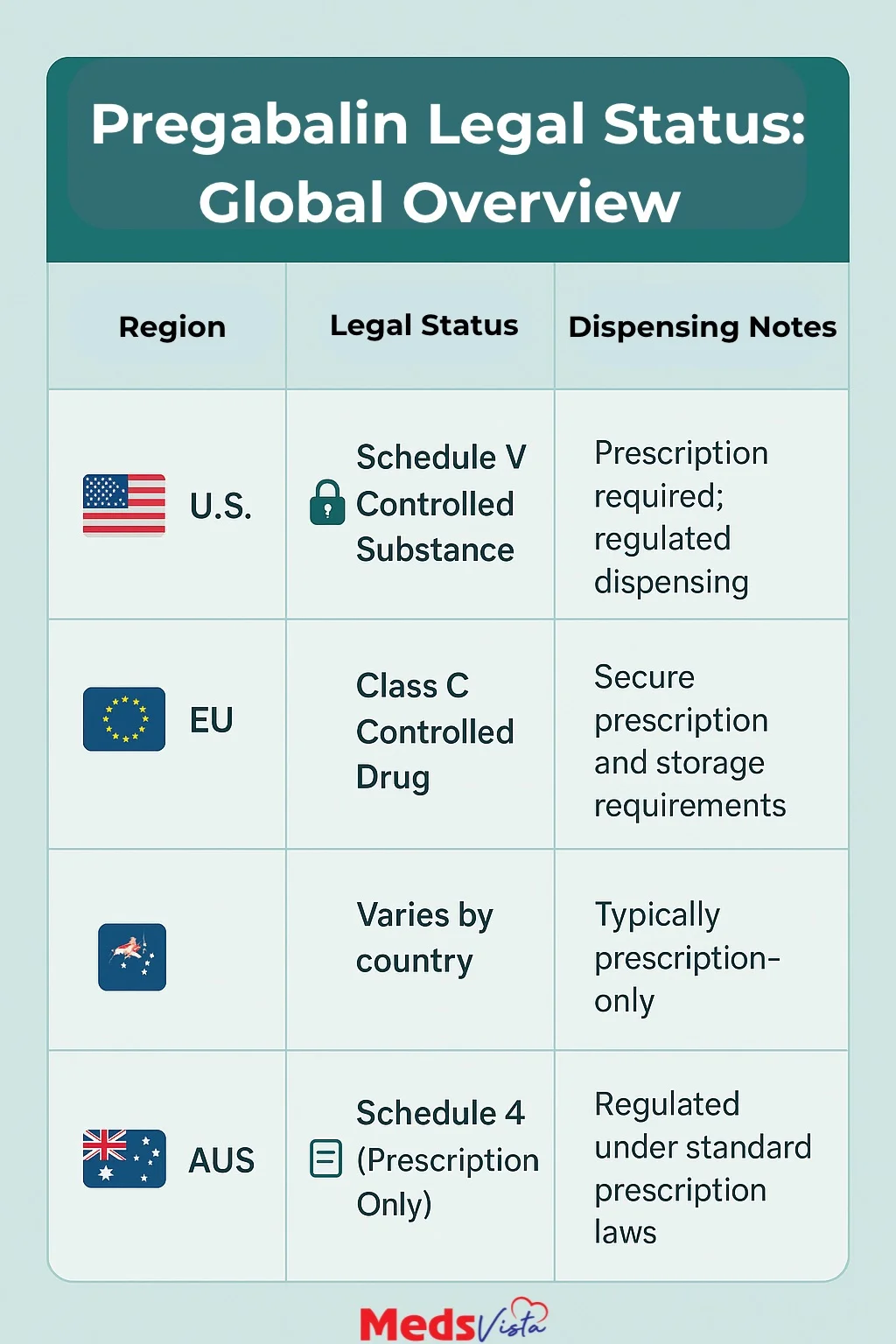
Legal classification: UK, US and global overview
Key takeaways:
- Legal status varies globally
- Regulation balances access with safety
Who should not take pregabalin
Pregabalin should be avoided or used cautiously in:
- Patients with substance abuse history
- Older adults prone to sedation/falls
- Individuals with kidney disease
- Pregnant or breastfeeding women (case-by-case basis)
Avoid combining with:
- Opioids
- Benzodiazepines
- Alcohol
- Other CNS depressants
Key takeaways:
- Screening helps ensure safe use
- Interactions with sedatives are risky
Safe use guidelines and medical precautions
To use pregabalin safely:
- Take only as prescribed
- Do not double doses
- Store securely to prevent misuse
- Report unusual side effects
Monitoring may include kidney function checks and dosage adjustments.
Key takeaways:
- Safe use depends on adherence to medical advice
- Patient education is critical
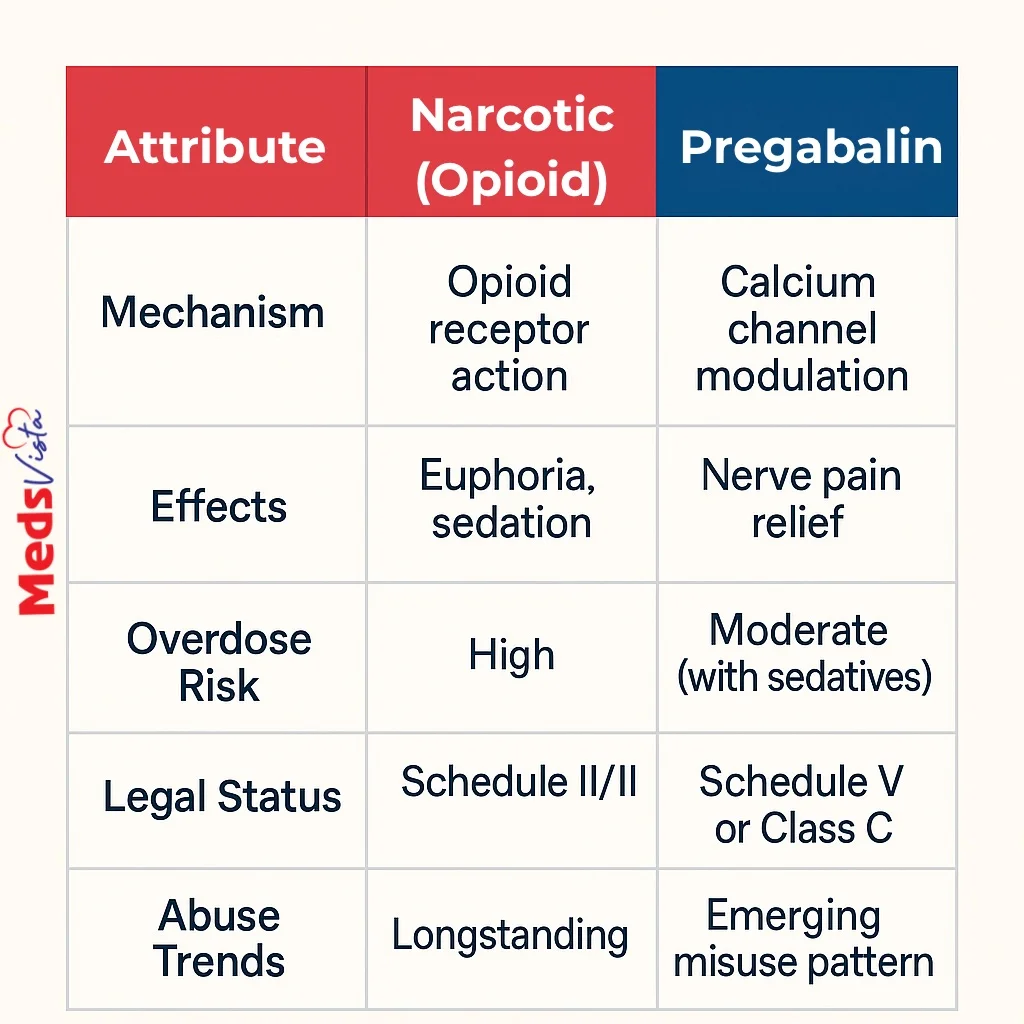
Pregabalin vs narcotics: key differences
Key takeaways:
- Pregabalin is not an opioid
- Oversight improves safety
Considering pregabalin for nerve pain: pharmacy-safe guidance Patients should:
- Use licensed pharmacies like MedsVista
- Avoid unverified online sellers
- Review medication guides and ask about dose instructions
Why choose MedsVista?
FAQs about pregabalin 150 mg
Q1: Is pregabalin 150 mg addictive?
Pregabalin 150 mg is not an opioid or narcotic, but misuse, dependence, and withdrawal can occur. Risk may be higher in people with a history of substance misuse or when pregabalin is combined with alcohol, opioids, or sedatives. It should only be taken as prescribed.
Q2: Can I take pregabalin with painkillers?
A: Some painkillers may be used with pregabalin, but combinations must be checked by a healthcare provider. Opioids, sedatives, and certain other medicines can increase sleepiness, dizziness, falls, and breathing-related risks.
Q3: Does pregabalin show up on drug tests?
A: Standard drug tests do not always include pregabalin, but specialized tests can detect it. Patients should disclose prescribed pregabalin use when drug testing is required, especially for employment, travel, medical care, or regulated settings.
Q4: Is pregabalin safe long-term?
A: Pregabalin may be used long-term when prescribed and monitored, but it is not risk-free. Long-term use should be reviewed for side effects, dose needs, kidney function, dependence risk, and whether the medicine is still helping.
Q5: Where can I buy pregabalin safely?
A: Pregabalin should only be obtained through legitimate, regulated sources that follow prescription and safety requirements. Patients should avoid unknown sellers and should consult a licensed healthcare provider before starting, stopping, or changing treatment.
Conclusion
Pregabalin 150 mg is not a narcotic, but it is a controlled substance. It plays a valuable role in treating several neurological and pain-related conditions, including nerve pain, fibromyalgia, partial seizures, and anxiety (where approved). Unlike opioids, it works through calcium channel modulation and does not produce the same euphoric effects associated with narcotic misuse.
However, being a controlled substance means that improper or unsupervised use can still lead to dependency, especially when taken at higher doses or in combination with other central nervous system depressants. That is why responsible use—guided by a licensed healthcare provider—is essential.
Patients can benefit significantly from pregabalin when they follow dosage instructions, avoid unsanctioned combinations with other drugs, and work closely with their provider to monitor side effects or changes in symptoms.
Always consult your doctor. Do not self-medicate. Work with a licensed provider. Shop safe pregabalin generics at MedsVista.
