


 Testosterone Gel
 Avanafil
How Fast Does Sildenafil Work After Taking It? A Complete Timing Guide

Informational only. This article is not medical advice. For personal health decisions, consult a licensed healthcare professional.
Sildenafil usually starts working within 30 to 60 minutes of swallowing a tablet. For those wondering how fast does sildenafil work, it’s worth noting that some users may notice effects as early as 20 minutes, while others might require closer to a full hour. This variation depends on several factors including stomach contents, hydration, stress levels, and overall health.
Unlike stimulants, sildenafil doesn’t produce an immediate surge in energy or arousal. Instead, it enhances blood flow in response to sexual stimulation. New users might misinterpret the absence of an instant effect as the medication not working. In reality, patience and proper timing are key.
Real-World Example:
Take sildenafil at 7:00 PM, and you might start noticing enhanced responses to arousal by 7:30 or 7:45 PM. However, if you’ve just had a high-fat meal or are anxious, effects may be delayed until 8:00 PM or later.
To prepare effectively, check out our complete guide for first-time sildenafil users and our comparison guide on sildenafil vs tadalafil.
Key Takeaways
- Expect onset between 30–60 minutes.
- Peak effects usually occur between 60–120 minutes.
- Onset may be earlier or later depending on individual factors.
- Sexual arousal is required—sildenafil doesn’t work on its own.
What Affects How Quickly Sildenafil Works?
Food Intake
Eating a heavy or high-fat meal before taking sildenafil is one of the most common causes of delayed onset. These meals slow down gastric emptying, which in turn delays the absorption of sildenafil into your bloodstream. This can push the onset time well beyond the typical 30–60 minute range.
For best results, take sildenafil on an empty stomach or after a light, low-fat meal such as salad, toast, or fruit. Avoid high-fat options like cheeseburgers, pizza, fried chicken, creamy sauces, and butter-laden dishes. Such foods can delay absorption by up to an hour or more.
Pro Tip: Try taking sildenafil after lunch or an early, light dinner instead of following a rich or heavy evening meal.
Alcohol
While one standard drink (a glass of wine or a beer) may not significantly impact sildenafil’s effectiveness, consuming more than this can have a notable negative effect. Alcohol is a central nervous system depressant, meaning it can impair both physical and psychological arousal.
In addition, alcohol dilates blood vessels — just like sildenafil — which can lead to a drop in blood pressure, causing dizziness, faintness, or headaches when the two are combined. These side effects not only reduce comfort but can directly interfere with sexual performance.
For a deeper dive into this topic, read our sildenafil side effects guide.
Psychological Factors
Your mental and emotional state has a surprisingly strong effect on how sildenafil performs. Even if the medication is fully active in your system, it won’t produce an erection without sexual arousal — and that arousal can be suppressed by anxiety, stress, or self-consciousness.
Performance anxiety, particularly among first-time users, can create a feedback loop: stress inhibits arousal, arousal doesn’t occur, and the medication is mistakenly seen as ineffective.
Tip: Create a low-pressure, supportive environment with your partner. Communication, privacy, and relaxation can make a significant difference.
Other Medications and Health Conditions
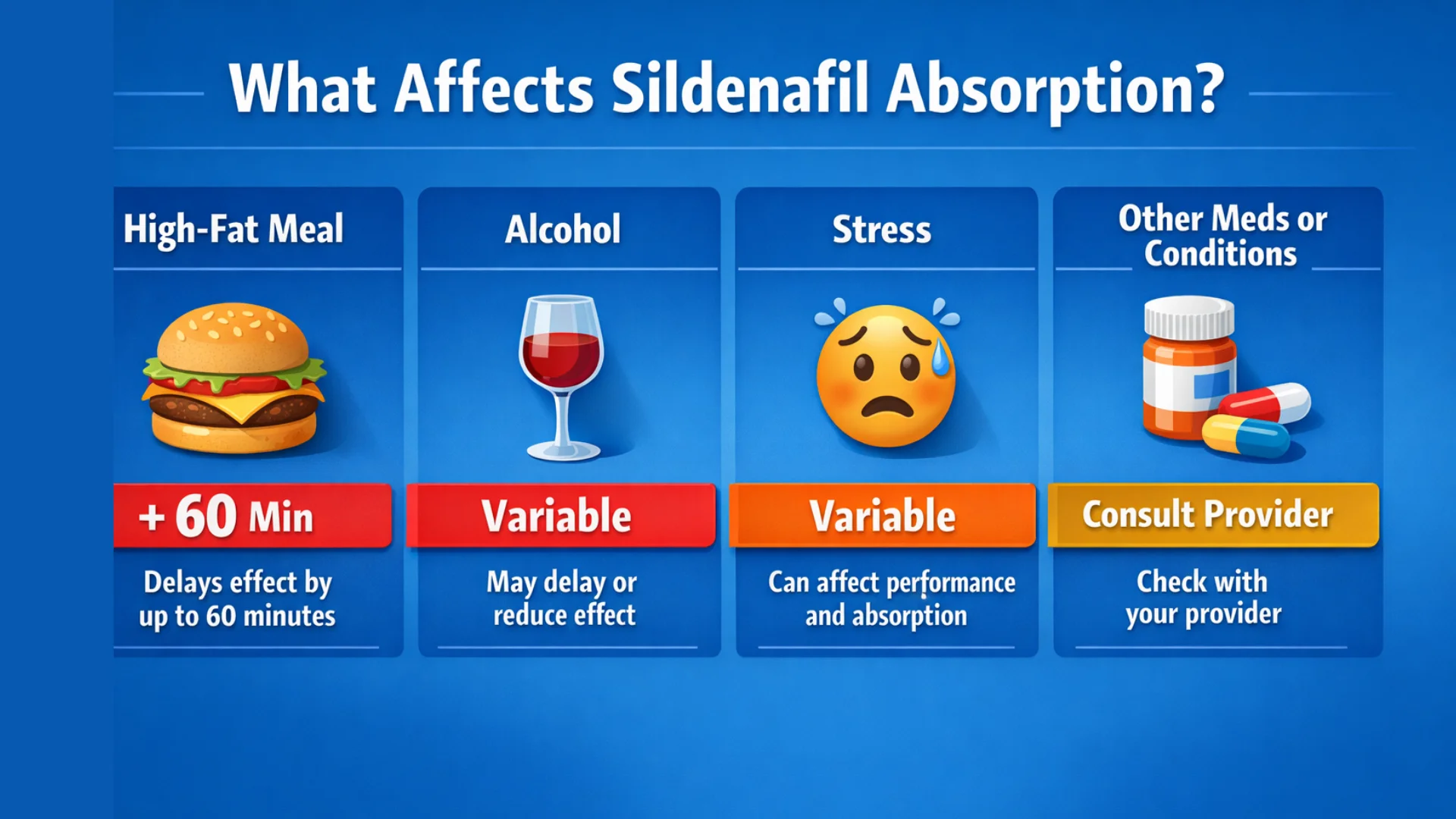
Certain prescription medications can interfere with how your body processes sildenafil. For example:
- Nitrates (e.g., nitroglycerin): Dangerous interactions that can cause life-threatening drops in blood pressure.
- Alpha-blockers: May amplify blood pressure-lowering effects.
- Some antidepressants: Can interfere with sexual function overall.
In addition, chronic health conditions such as diabetes, high blood pressure, or cardiovascular disease may influence how well sildenafil works, how it’s absorbed, or how your body responds to sexual stimulation.
Always inform your healthcare provider about your full medical history and current medications to ensure sildenafil is safe and effective for you.
See drug interactions with sildenafil for a detailed list.
Key Takeaways
- Avoid heavy or fatty meals before taking sildenafil.
- Limit or avoid alcohol to prevent side effects and reduced effectiveness.
- A relaxed, low-pressure setting helps enhance results.
- Speak with your provider about other medications and health conditions that may interfere.
A Practical Sildenafil Timing Timeline
Structuring your time around sildenafil can ease anxiety. Here’s a simple timing chart:
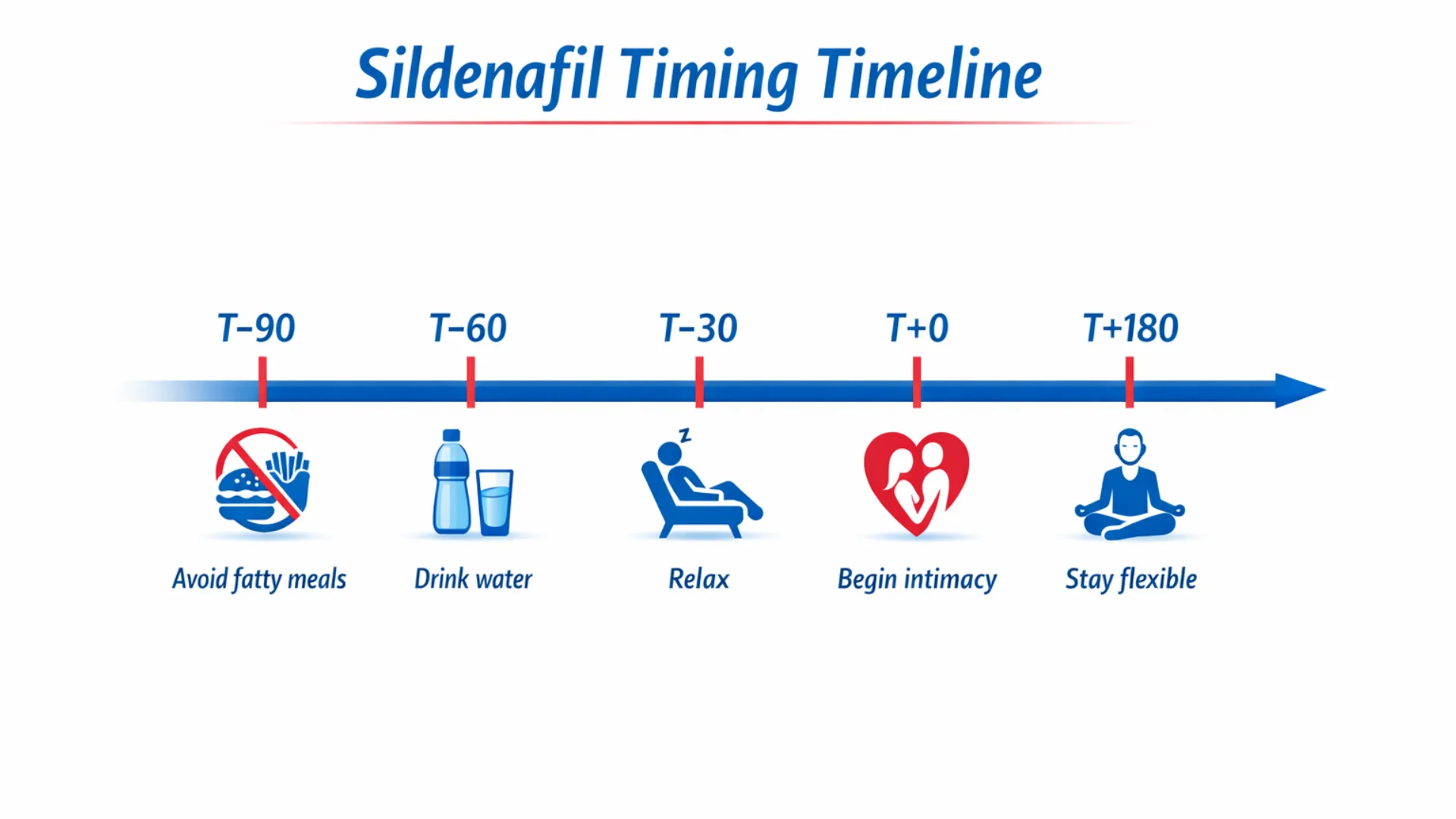
Instead of clock-watching, allow flexibility in your evening plans. A calm, pressure-free environment enhances outcomes.
Key Takeaways
- Take sildenafil about 60 minutes before sexual activity.
- Avoid high-pressure situations.
- Allow a 4-hour window for effectiveness.
How Long Do the Effects of Sildenafil Last?
Once active, sildenafil typically provides a 3 to 4-hour window for improved erectile response during arousal. It does not cause a constant erection but enhances the natural process when sexually stimulated.
Peak effects are generally seen between 60 and 120 minutes post-dose. Effects decline after about 4 hours, though traces may remain longer.
Flexibility, not urgency, is the goal. Enjoy the evening at your pace.
For longer-lasting options, see our guide on which generic Cialis is best for you.
Key Takeaways
- Effects last up to 4 hours.
- Peak action usually 1–2 hours after taking.
- Erections occur only with sexual stimulation.
Can You Take More Than One Dose a Day?
No—sildenafil should only be taken once within a 24-hour period. Taking more than one dose increases the risk of side effects such as flushing, headache, low blood pressure, and vision changes.
If the medication doesn’t seem effective, consider factors like food, alcohol, and timing. If issues persist, consult your provider—never self-adjust your dosage.
For alternative options, explore our guide on Cenforce vs Viagra differences.
Key Takeaways
- Limit use to one dose per day.
- Don’t self-adjust dosage.
- Seek professional advice if effectiveness is low.
FAQs About Sildenafil Timing
Q: How fast does sildenafil work after taking it?
A: Usually within 30–60 minutes. Some users feel effects sooner.
Q: Do I need to be aroused for sildenafil to work?
A: Yes. It supports arousal, but doesn’t initiate it.
Q: Will food affect how fast sildenafil works?
A: Yes—especially fatty meals
Q: Can I drink alcohol while on sildenafil?
A: In moderation, yes. Avoid excessive consumption.
Q: How long does it last?
A: Up to 4 hours, with peak at 60–120 minutes.
Q: What if I don’t feel anything in 30 minutes?
A: Wait longer and ensure optimal conditions (no food/alcohol, relaxed state).
Q: Can I take another dose if nothing happens?
A: No. One dose per 24 hours is the limit.
Q: Is a full stomach okay?
A: It’s not unsafe but may delay onset.
Conclusion: Plan Smart, Stay Relaxed
Sildenafil is a proven treatment when used with proper timing and expectations. Most users feel effects within 30–60 minutes, but best results come from planning ahead—avoiding heavy meals, staying calm, and being sexually stimulated.
Focus on flexibility and communication with your partner, rather than exact timing. Always consult a licensed provider if unsure about timing, dosage, or expectations.
For more, visit our sildenafil resource center or refer to Mayo Clinic’s sildenafil overview.
