


 Testosterone Gel
 Avanafil

How ED Medications Differ: A Structured Comparison of Options

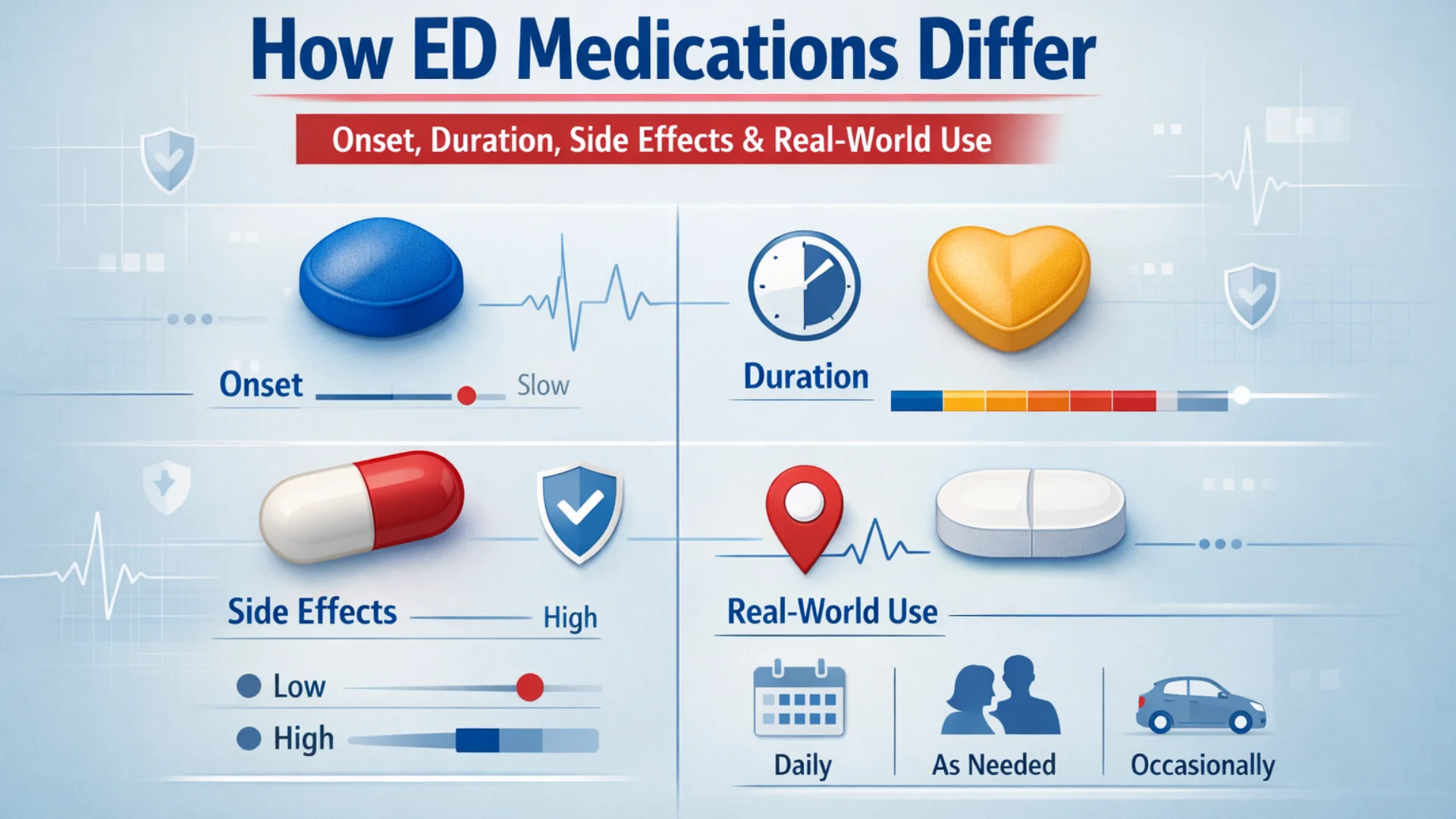
Erectile dysfunction medications are often discussed as though they all work the same way. However, how ED medications differ matters because each option has its own timing, duration, side-effect pattern, and practical fit for daily life. Understanding how ED medications differ can help readers compare treatment categories more clearly and prepare for an informed conversation with a licensed healthcare provider.
These medications are commonly used to support erectile function by improving blood flow under the right conditions. Still, they do not create automatic results, and they do not work without sexual stimulation. In addition, they are not appropriate for everyone. This article explains how ED medications differ in a structured, educational way, with attention to onset, duration, variability, and safety considerations.
Important: This content is for educational purposes only. Do not self-medicate. Always consult a licensed healthcare provider to determine whether an ED medication is appropriate for you.
What Are ED Medications?
Most commonly prescribed oral treatments for erectile dysfunction belong to a group called phosphodiesterase type 5 inhibitors, often shortened to PDE5 inhibitors. These medications help relax blood vessels and support blood flow during sexual arousal. Although they share the same general mechanism, how ED medications differ becomes clearer when you compare their timing, effects, and tolerability.
Common PDE5 Inhibitors
The four best-known PDE5 inhibitors are:
- Sildenafil
- Tadalafil
- Vardenafil
- Avanafil
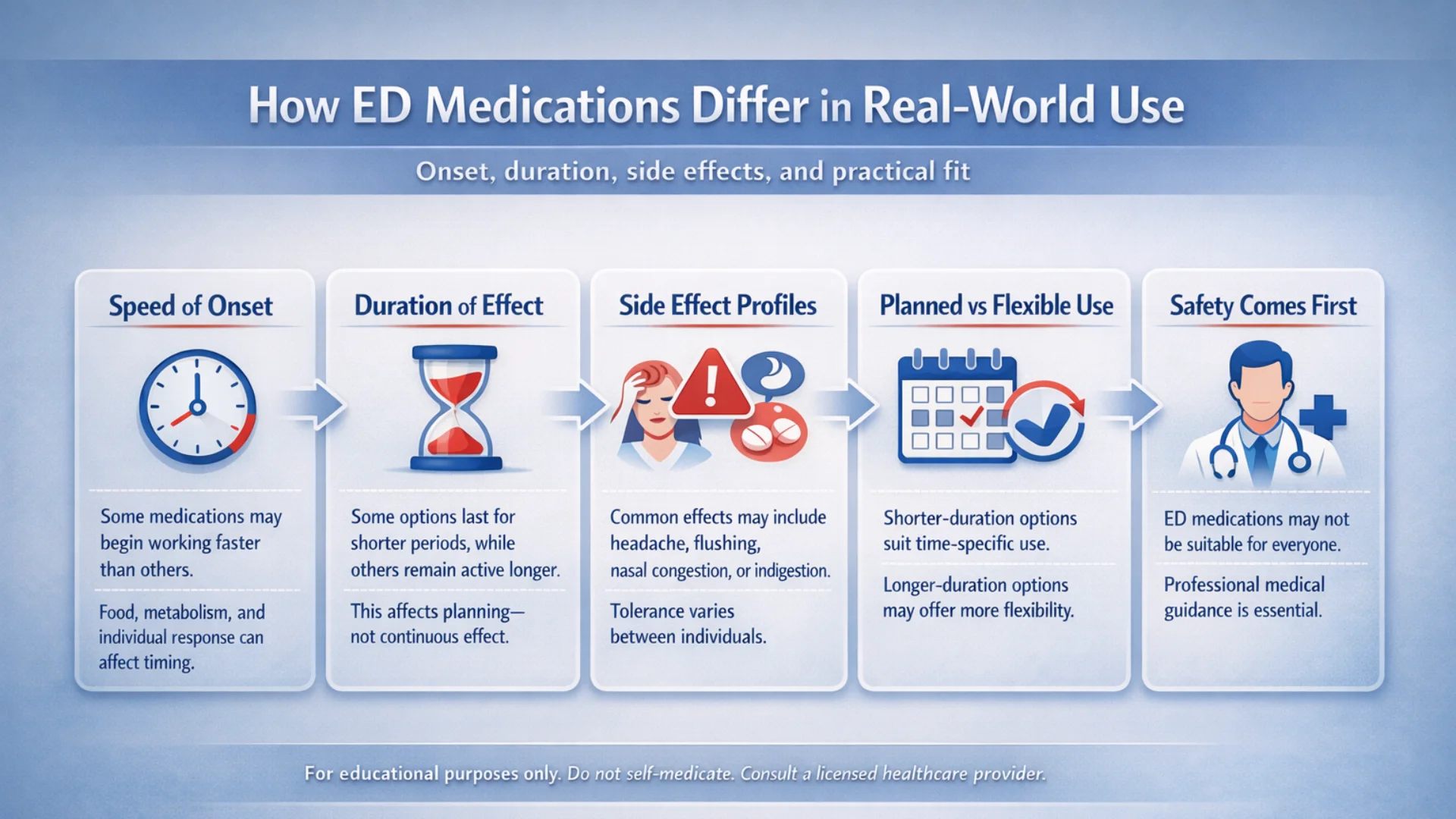
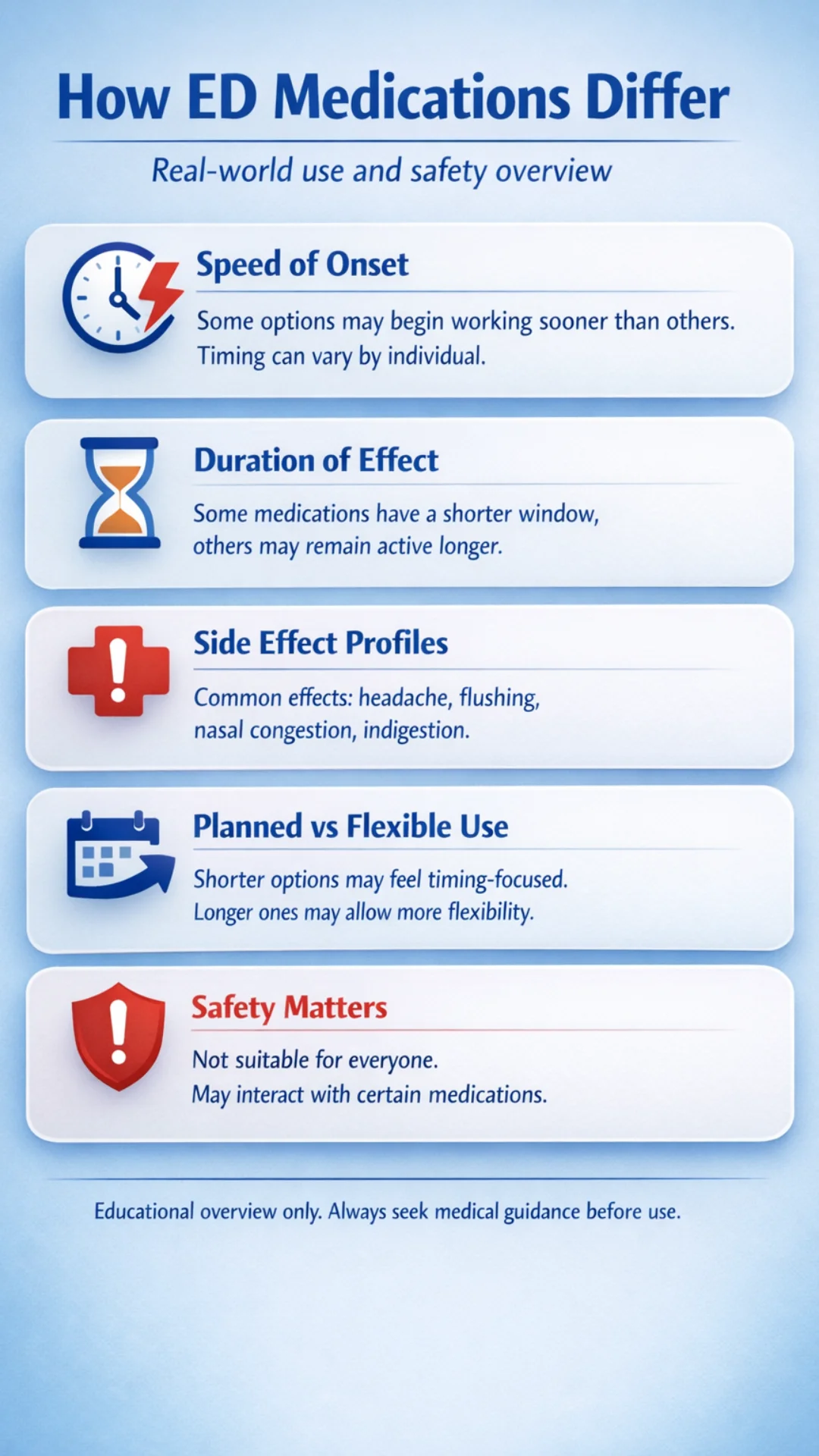
At first glance, these options may appear interchangeable. However, they are not identical. Some are known for a shorter action window, while others remain active longer. As a result, one option may suit a certain lifestyle or preference better than another.
For general background on erectile dysfunction itself, see the erectile dysfunction overview – NIDDK.
How ED Medications Differ in Onset Time
One of the clearest ways to understand how ED medications differ is to look at onset time. Onset refers to how quickly a medication may begin working after it is taken. However, the exact timing can vary based on the individual, food intake, metabolism, and other personal factors.
Typical Onset Ranges
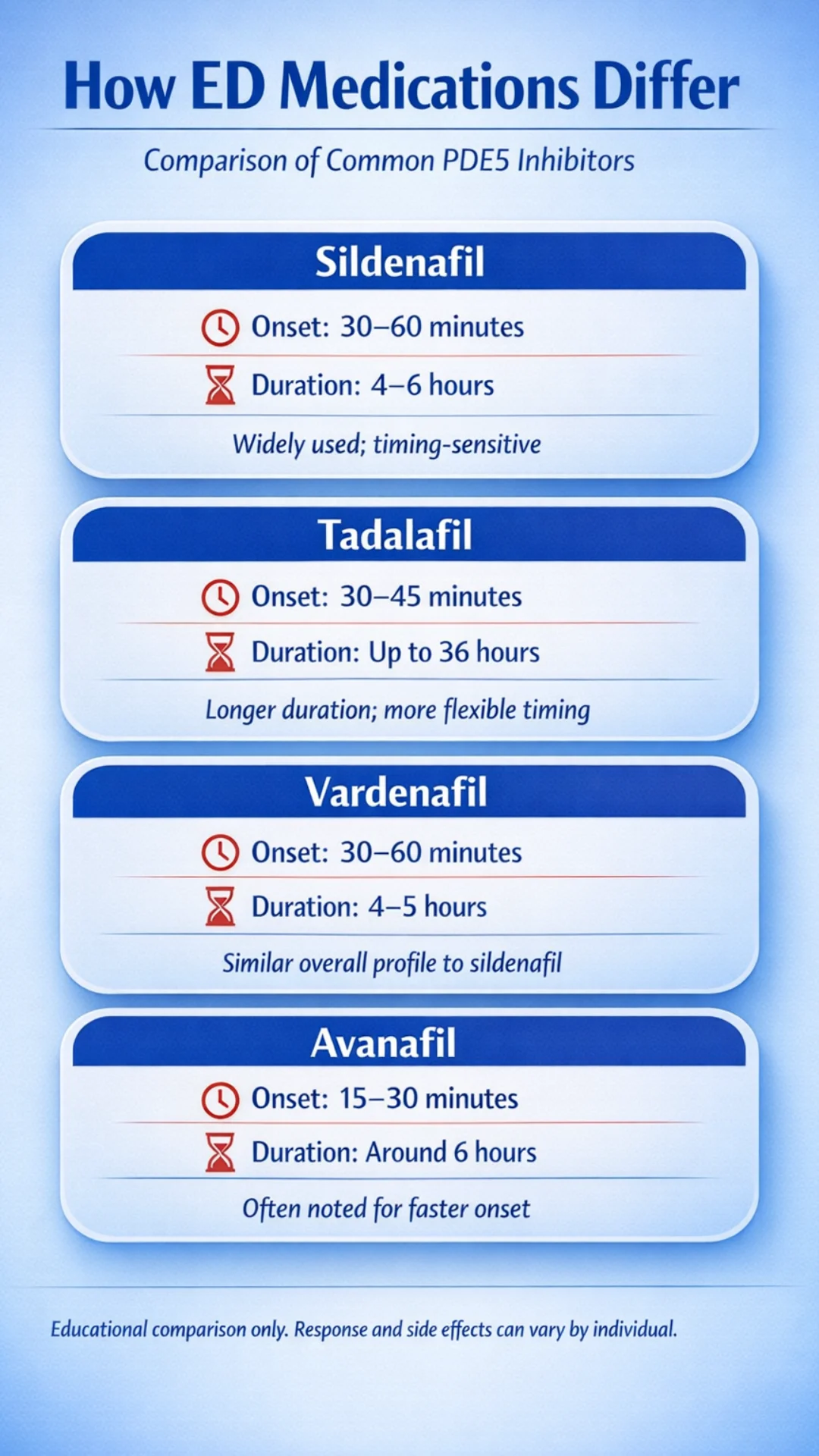
The commonly discussed onset windows include:
- Avanafil: about 15 to 30 minutes in some individuals
- Sildenafil: about 30 to 60 minutes in many cases
- Tadalafil: about 30 to 45 minutes for some users
- Vardenafil: about 30 to 60 minutes
These are broad reference ranges rather than guarantees. Therefore, a medication that acts quickly for one person may feel slower for another. This is one reason why personal response plays such a large role in treatment experience.
Food and Timing Considerations
Food can also affect how some options perform. In particular, high-fat meals may delay the onset of sildenafil and vardenafil. On the other hand, timing may feel more flexible with certain alternatives depending on the user’s response pattern.
Because of these differences, people often compare options based not just on active ingredient, but also on how predictable the start time feels in real-life situations. For a deeper internal comparison, read this Sildenafil vs Tadalafil comparison guide.
How ED Medications Differ in Duration of Effect
Another major point in how ED medications differ is duration. Duration does not mean a continuous erection. Instead, it refers to the period during which the medication may remain active enough to support a response when sexual stimulation occurs.
Typical Duration Windows
General duration ranges are often described as:
- Tadalafil: up to about 36 hours in some cases
- Sildenafil: about 4 to 6 hours
- Vardenafil: about 4 to 5 hours
- Avanafil: about 6 hours
These ranges help explain why some medications are associated with more flexibility while others are linked to narrower timing windows. Consequently, the experience of using them can feel quite different even when the overall treatment goal is similar.
Why Duration Matters
A shorter duration may appeal to people who prefer more time-specific planning. In contrast, a longer duration may appeal to those who value less scheduling pressure. Neither pattern is automatically better. Instead, the key issue is personal preference, routine, and medical suitability.
This is also why many comparisons focus on lifestyle fit rather than superiority. A medication with a longer activity window may feel more convenient for one person, while another may prefer a shorter-acting option with a more defined timeframe.
How ED Medications Differ in Side Effects and Tolerability
Side effects are another important part of how ED medications differ. While all PDE5 inhibitors share some common adverse effects, they are not experienced in exactly the same way across all options or all users.
Common Side Effects Across PDE5 Inhibitors
Commonly reported side effects include:
- Headache
- Flushing
- Nasal congestion
- Indigestion
These effects are not universal, and their intensity can vary significantly. Moreover, one person may tolerate one medication well and find another less comfortable.
Notable Differences Between Options
Some distinctions often mentioned include:
- Tadalafil: may be more commonly linked with back or muscle discomfort in some users
- Sildenafil and vardenafil: may cause visual disturbances in some cases
- Avanafil: is often described as more selective, although side effects can still occur
Because tolerability varies, people sometimes need more than one discussion with a prescriber before finding the most suitable option. For additional context, see this guide on generic Viagra safety and side effects.
For broader treatment information from a medical publisher, visit ED treatment options – Mayo Clinic.
Comparison Table: How ED Medications Differ at a Glance
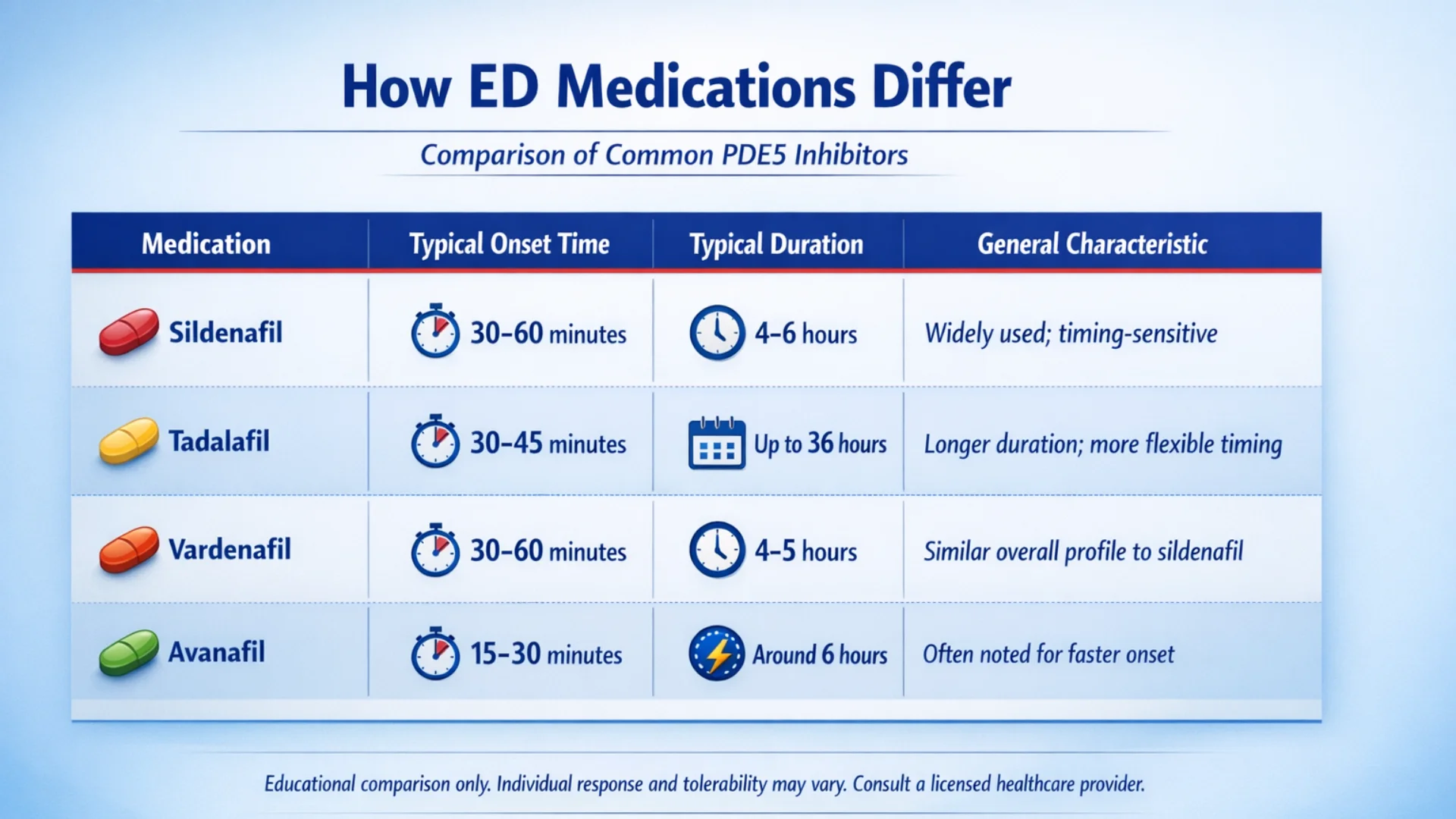
This table offers a simplified overview. However, the real experience may vary because metabolism, food, health status, and other medications can influence response.
How ED Medications Differ in Real-World Use
A practical way to understand how ED medications differ is to think about real-world usage patterns. Although medical suitability always comes first, people often compare these medications based on how well they fit daily life.
Planned Use
Sildenafil and vardenafil are often associated with more planned use because of their shorter activity windows. Therefore, some people view them as options that require more attention to timing. This does not make them less useful. It simply means their use may feel more structured.
Readers interested in sildenafil timing can explore how long generic Viagra lasts.
Flexible Timing
Tadalafil is widely discussed for its longer duration. As a result, some users see it as better aligned with flexibility rather than precise scheduling. That longer window can shape expectations around convenience, though individual response still varies.
For a closer related discussion, read which generic Cialis is best.
Faster-Acting Preference
Avanafil is often mentioned when people are looking at faster onset categories. Even so, response time still depends on the person and the situation. Therefore, it should not be viewed as identical for all users.
For more context on shorter lead-time options, see the fast-acting ED pills guide.
Duration-Based Preference
Some users focus primarily on how long a medication may remain active. Others pay closer attention to onset or side effects. Consequently, treatment comparisons often become less about “best overall” and more about which profile appears most compatible with individual preferences and medical guidance.
Another related internal resource is this tadalafil or vardenafil guide.
Why Response Can Vary From One Person to Another
Even after learning how ED medications differ, it is important to remember that outcomes are not identical across users. Several factors can influence the experience.
Factors That May Affect Response
Response may vary because of:
- Metabolism
- Age
- General health
- Underlying medical conditions
- Medication interactions
- Food intake
- Timing of use
Therefore, one person may respond well to a medication that feels less effective or less comfortable for someone else. This does not necessarily mean one option is universally stronger. Instead, it reflects the fact that ED treatment is highly individualized.
For official medication information, see Sildenafil tablets information – MedlinePlus.
Safety and Limitations
Safety should remain central in any discussion of ED medications. Although these treatments are commonly prescribed, they are not suitable for everyone. That is why a medical evaluation matters before use.
General Safety Considerations
A healthcare provider may need to review whether ED medication is appropriate if a person has:
- Cardiovascular conditions
- Low blood pressure
- Liver disease
- Kidney disease
- A history of certain eye or circulation-related issues
In addition, current medications should always be reviewed carefully to reduce the risk of interactions.
Important Drug Interactions
PDE5 inhibitors should not be used with nitrates, which are sometimes prescribed for chest pain. This combination can lead to a serious drop in blood pressure. They may also interact with alpha-blockers and some antifungal or antibiotic medications.
Because interaction risks can differ by person and medication profile, professional guidance is essential before starting treatment.
When Immediate Medical Care Is Needed
Urgent medical attention is needed if someone experiences:
- An erection lasting more than 4 hours
- Chest pain during sexual activity
- Sudden vision changes
- Sudden hearing changes
These situations require prompt medical care and should not be managed casually.
Choosing an Option Starts With Medical Guidance
Learning how ED medications differ can help organize the comparison, but it does not replace professional advice. The most appropriate option depends on the person’s health history, current medications, treatment goals, and tolerance profile.
Moreover, expectations should remain realistic. These medications support erectile response under the right conditions, but they do not solve every underlying cause of ED. In some cases, a clinician may also look at broader health factors, including circulation, hormone-related issues, stress, sleep, or chronic illness.
Overall, the most useful takeaway is not that one medication wins in every category. Instead, it is that understanding how ED medications differ creates a clearer foundation for informed, safer discussions with a licensed provider
Frequently Asked Questions
What does “how ED medications differ” usually refer to?
It usually refers to differences in onset time, duration of effect, side-effect profile, and how each medication may fit into different real-life routines. These distinctions help explain why one option may feel more suitable than another for a specific individual.
Which ED medication works the fastest?
Avanafil is often described as one of the faster-acting options, with onset possible in about 15 to 30 minutes in some users. However, timing can still vary depending on the person and the circumstances.
Which ED medication lasts the longest?
Tadalafil is commonly associated with the longest duration, with effects that may last up to around 36 hours in some cases. That longer activity window is one of the main ways it differs from shorter-acting alternatives.
Do ED medications work without sexual stimulation?
No. PDE5 inhibitors generally require sexual stimulation to support an erectile response. They do not create an automatic effect on their own.
Is one ED medication more effective than another?
Not universally. Effectiveness varies between individuals and may depend on health status, tolerability, timing, interactions, and other personal factors. A prescriber can help determine which option may be most appropriate.
Conclusion
ED medications share a similar general mechanism, yet important differences affect how they are experienced. Understanding how ED medications differ means looking at onset, duration, side effects, flexibility, and individual variability together rather than in isolation.
Some options are often discussed for quicker onset. Others are better known for a longer activity window. In addition, tolerability and response can vary from one person to another. For that reason, the right choice is not universal.
A structured comparison makes the topic easier to understand, but treatment decisions should always be made with a licensed healthcare professional. Avoid self-medication, review possible interactions, and seek personalized medical advice before using any ED medication.
Key Takeaways
- How ED medications differ mainly comes down to onset time, duration, side effects, and lifestyle fit.
- Sildenafil, tadalafil, vardenafil, and avanafil all belong to the PDE5 inhibitor class, but they are not identical in use experience.
- Tadalafil is generally associated with the longest activity window, while avanafil is often noted for faster onset in some individuals.
- Food intake, metabolism, health conditions, and medication interactions can all influence results.
- These medications require sexual stimulation to work and are not appropriate for everyone.
- A licensed healthcare provider should evaluate safety, suitability, and interaction risks before treatment.
