


 Testosterone Gel
 Avanafil

Are ED Pills Effective? What the Science Says About Results, Timing, and Expectations


Informational only. This article is not medical advice. For personal health decisions, consult a licensed healthcare professional.
Erectile dysfunction (ED) medications—commonly referred to as ED pills—are a widely used option for men seeking to improve sexual performance. But are ED pills effective, and what should you expect in terms of results, timing, and limitations? This medically-reviewed article explores the latest science behind ED pill effectiveness, how they work, and what to consider before use.
What “Effective” Means—And Why It Varies
Effectiveness refers to the ability to achieve and sustain an erection sufficient for sexual activity. However, this outcome is not guaranteed and can vary based on:
- The underlying cause of ED (vascular, neurological, psychological, or mixed)
- Overall physical and mental health
- Medication adherence (e.g., taking the drug under optimal conditions)
For a detailed medication comparison, see Sildenafil vs Tadalafil: The Absolute 2025 Guide for Choosing the Best ED Treatment:
Key Takeaways
- “Effective” means getting and keeping an erection suitable for intercourse
- Effectiveness varies by individual
- Both physical and psychological factors influence results
Achieving vs Maintaining an Erection
ED pills work by increasing blood flow to the penis through PDE5 inhibition. However, achieving an erection and maintaining it are distinct physiological events:
- Achieving: Relies on vascular function—ED pills help dilate blood vessels and relax smooth muscle.
- Maintaining: Depends more on nerve function, emotional stimulation, and overall health.
Men with conditions like diabetes, heart disease, or nerve damage may have reduced ability to maintain an erection even with medication.
Key Takeaways
- ED pills facilitate blood flow to initiate erections
- Maintenance relies on emotional and physiological balance
The Role of Sexual Stimulation
A common misconception is that ED pills work automatically. In truth, medications like sildenafil and tadalafil require sexual stimulation to trigger nitric oxide release and cGMP activity.
Key Takeaways
- ED pills are not aphrodisiacs
- Sexual arousal is required for them to work
Timing: Onset, Peak, and Duration
Each ED medication has a different time profile, affecting how long it takes to work and how long the effects last. Timing your dose around anticipated sexual activity is important.
For alternatives to Viagra, check out 7 Fast‑Acting ED Pills and Formats Men Are Choosing Over Viagra:
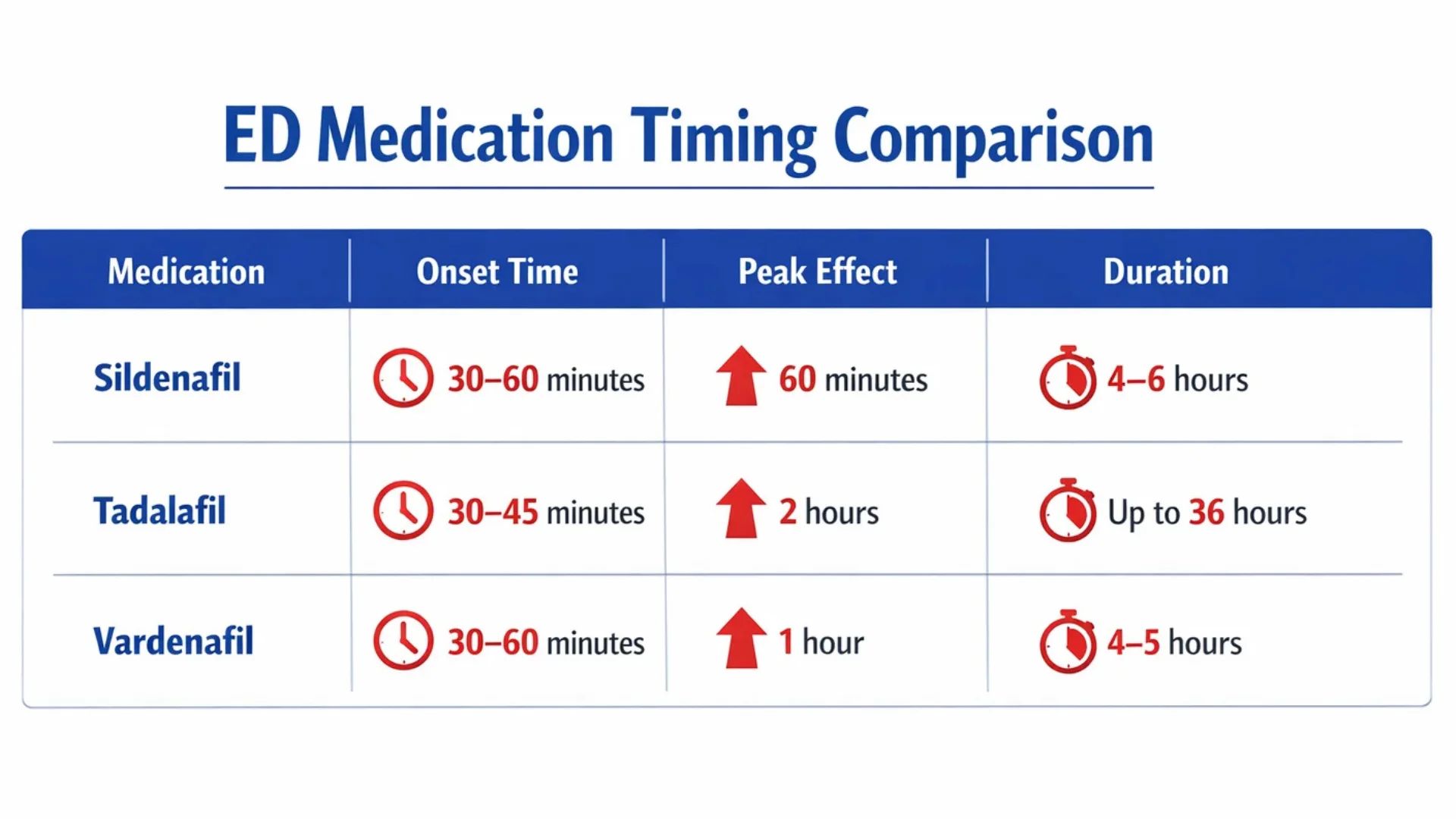
Note: Individual results may vary. ED pills enhance natural responses to stimulation they do not cause spontaneous erections.
Key Takeaways
- Understand each drug’s onset and duration
- Proper timing enhances the chance of success
When ED Pills Don’t Work: Common Reasons
Some men may find that ED pills don’t produce the desired effect. This doesn’t necessarily mean the treatment is ineffective; other factors may be at play.
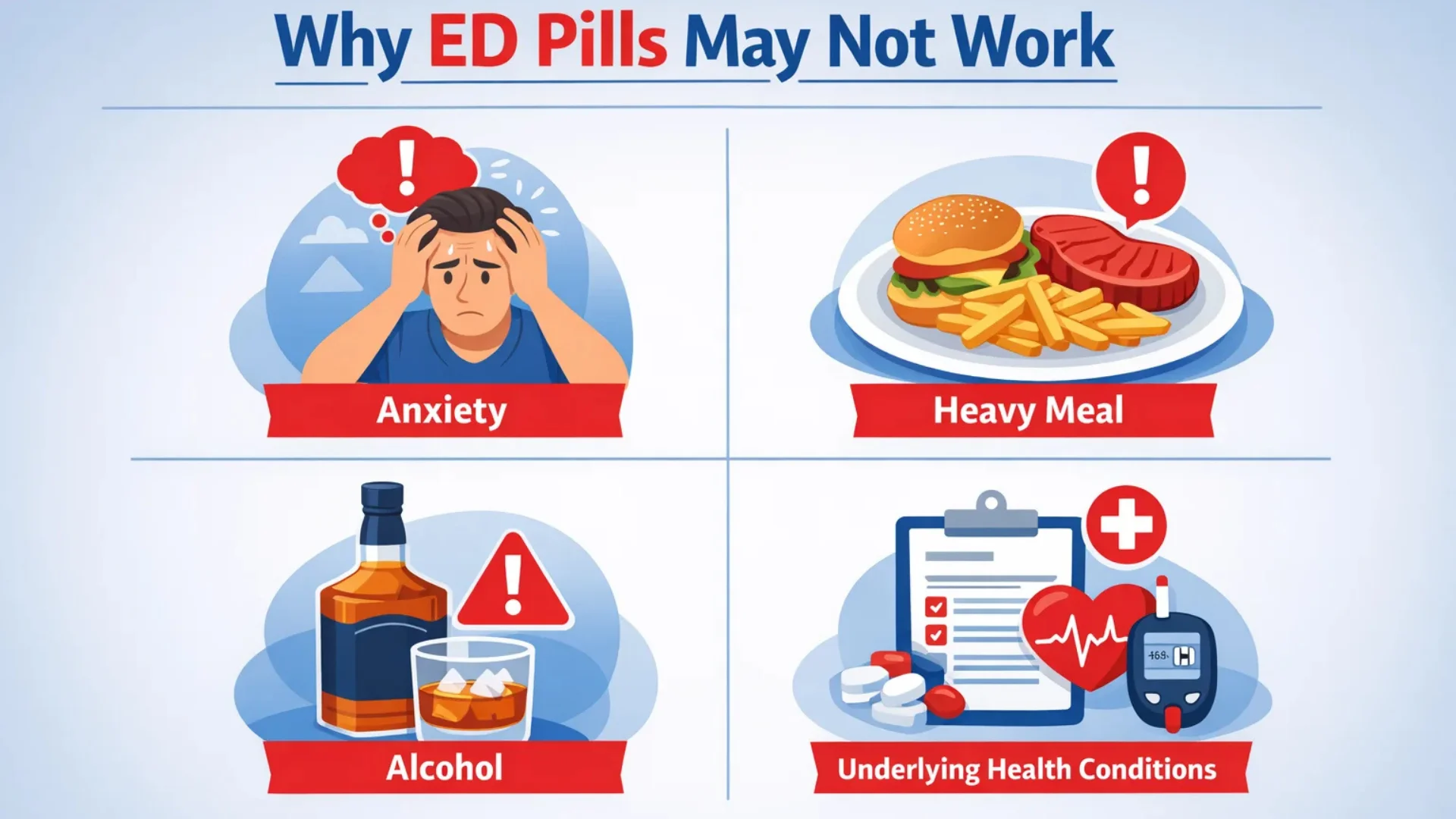
Psychological ED and Performance Anxiety
Stress, anxiety, depression, and relationship issues can inhibit sexual arousal and block medication effectiveness.
Food, Alcohol, and Timing Interference
Heavy meals especially high-fat ones and alcohol can slow absorption, particularly with sildenafil and vardenafil.
Underlying Health Conditions
Chronic conditions like cardiovascular disease, high blood pressure, diabetes, and nerve damage can reduce responsiveness.
Key Takeaways
- Non‑response may stem from timing, food, or mental health
- Medical conditions can blunt results
- Seek medical evaluation if problems persist
Expectations for First‑Time Users
If you’re using ED medication for the first time, it’s important to manage expectations.
Variability Is Normal
Initial attempts may not lead to full success. Stress and unfamiliarity with the medication can influence outcomes.
What “Not Working” Can Mean
A single failed attempt doesn’t mean the drug doesn’t work. It may take a few tries to find the right combination of dosage, timing, and environment.
Key Takeaways
- Trial and error is part of the process
- A calm, supportive environment improves results
- Consistent use as directed yields better insights
Myths vs Facts About ED Pills
Myth | Fact |
ED pills work without arousal | They require sexual stimulation |
They work for every man | Effectiveness varies by user |
One failed dose = failure | One-time failure is common |
More pills = better results | Higher doses don’t always improve outcomes |
Key Takeaways
- Set realistic expectations
- Knowledge leads to more informed use
Safety, Legitimacy, and Professional Guidance
WHO-GMP Certified Generics vs FDA-Approved Drugs
MedsVista offers WHO‑GMP certified generics. These are not FDA-approved drugs but are manufactured to international quality standards. Always verify the legitimacy of your source.
For sourcing tips, see Where to Buy Sildenafil Online Safely:
Lifestyle and Mental Health Support
Medication alone may not be sufficient. Improving sleep, managing stress, exercising, and avoiding tobacco and alcohol can boost treatment effectiveness.
Trusted external resources:
Key Takeaways
- Only use medication from trusted sources
- Work with a licensed provider
- Combine pills with lifestyle improvements
FAQs: Duration & Lifestyle Fit
Are ED pills effective the first time you take them?
Not always. First-time effectiveness varies due to stress, improper timing, or food/alcohol interference. It may take a few attempts to get optimal results.
Can I take ED pills with alcohol?
It’s best to limit or avoid alcohol. Drinking can interfere with drug absorption and reduce blood pressure, potentially worsening ED.
Do I need a prescription for ED pills?
Yes. Always consult a licensed healthcare provider. Avoid purchasing from unverified online sources.
Are there side effects?
Possible side effects include headache, flushing, nasal congestion, and upset stomach. Consult your doctor if side effects persist or worsen.
Conclusion: What to Remember About ED Pill Effectiveness
So, are ED pills effective? The answer is a qualified yes.
When taken correctly—at the right time, with sexual stimulation, and under medical supervision—ED medications like sildenafil, tadalafil, and vardenafil can significantly improve erectile function. Countless clinical studies and real-world results support their role in enhancing blood flow and helping men achieve erections sufficient for intercourse.
But effectiveness is not universal or guaranteed. These medications are tools, not magic bullets. Their success often depends on treating the whole person—not just the symptom. Underlying health conditions, mental well-being, lifestyle habits, and relationship dynamics all play a role.
It’s essential to recognize that ED pills are part of a comprehensive solution, not a substitute for holistic health. Using them in isolation—especially without professional guidance—can lead to frustration, disappointment, or even risk.
Action Steps for Best Results
- Consult your doctor: ED can be an early sign of cardiovascular disease or hormonal imbalance. A licensed provider can determine the right medication and dosage, or suggest additional workup.
- Do not self-medicate: Avoid taking leftover prescriptions or sourcing pills from unverified sites. This can be unsafe and ineffective.
- Use medication only as directed: Follow instructions regarding dosage, timing, and food interactions. For example, avoid heavy meals before taking sildenafil.
- Ensure sexual arousal is present: ED pills require sexual stimulation to work. They don’t trigger erections on their own.
- Be patient and consistent: It may take multiple attempts to find the right approach. Don’t give up after one try.
- Address lifestyle factors: Quit smoking, manage weight, get adequate sleep, and reduce stress—these actions improve not just ED, but overall health.
- Communicate with your partner: A supportive, pressure-free environment enhances results and helps reduce performance anxiety.
Author Note
This blog was written by Michael Reynolds, a seasoned medical writer specializing in men’s health and medication access. Reviewed by Dr. James Carter, board-certified urologist and MedsVista contributor.
