


 Testosterone Gel
 Avanafil

ED Pills Misconceptions: What People Get Wrong About ED Medications

Introduction
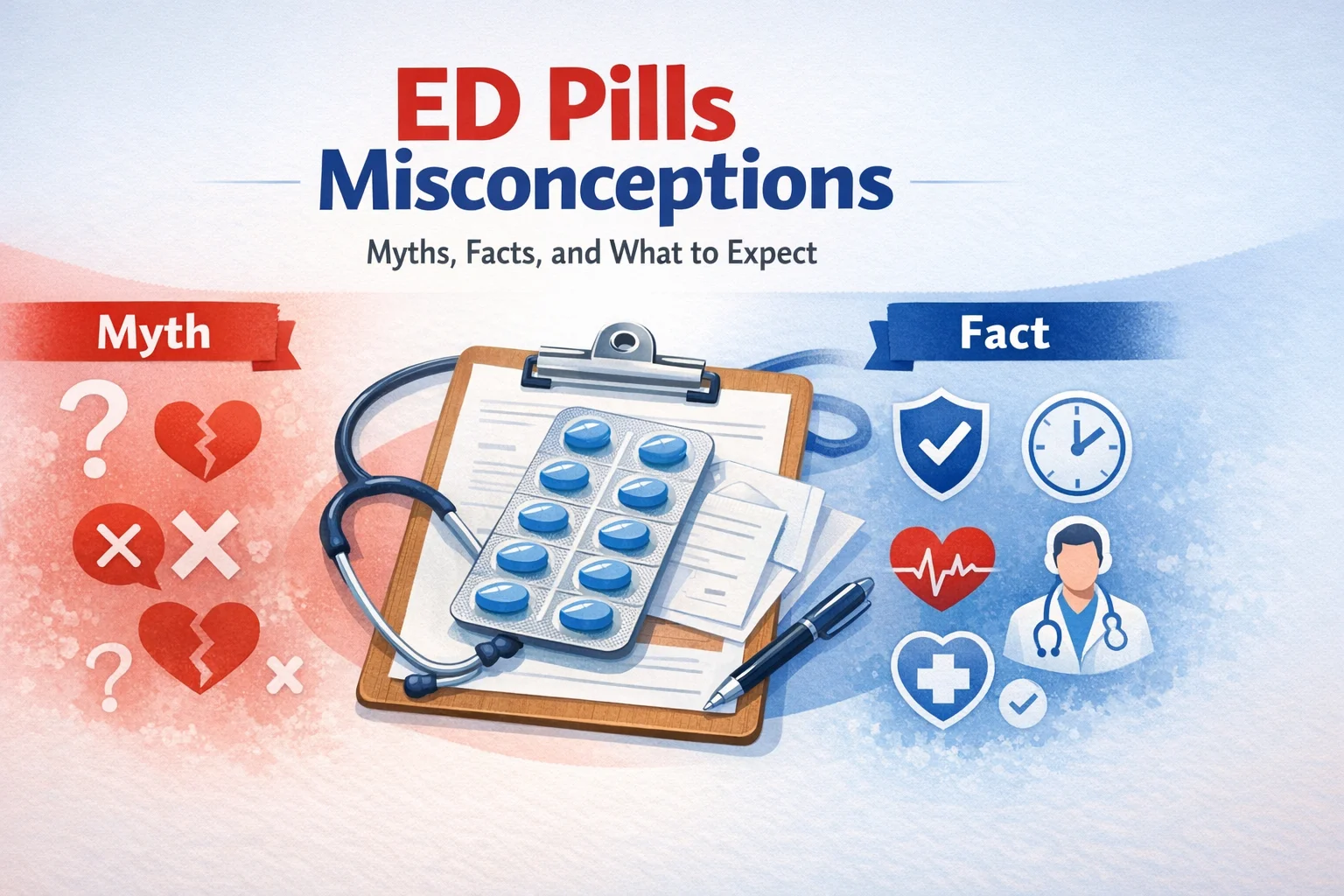
ED pills misconceptions are common because these medications are often discussed in simplified and misleading ways. Many people expect instant or guaranteed results, yet the reality is more complex and depends on timing, stimulation, overall health, and medical context.
In practice, ED medications support the body’s natural erectile response rather than create an automatic effect. Understanding ED pills misconceptions, why results vary, and when medical guidance matters can help readers make safer, more informed decisions. It is normal for results to vary, and finding the right treatment approach may take time and medical guidance.
How ED Pills Actually Work
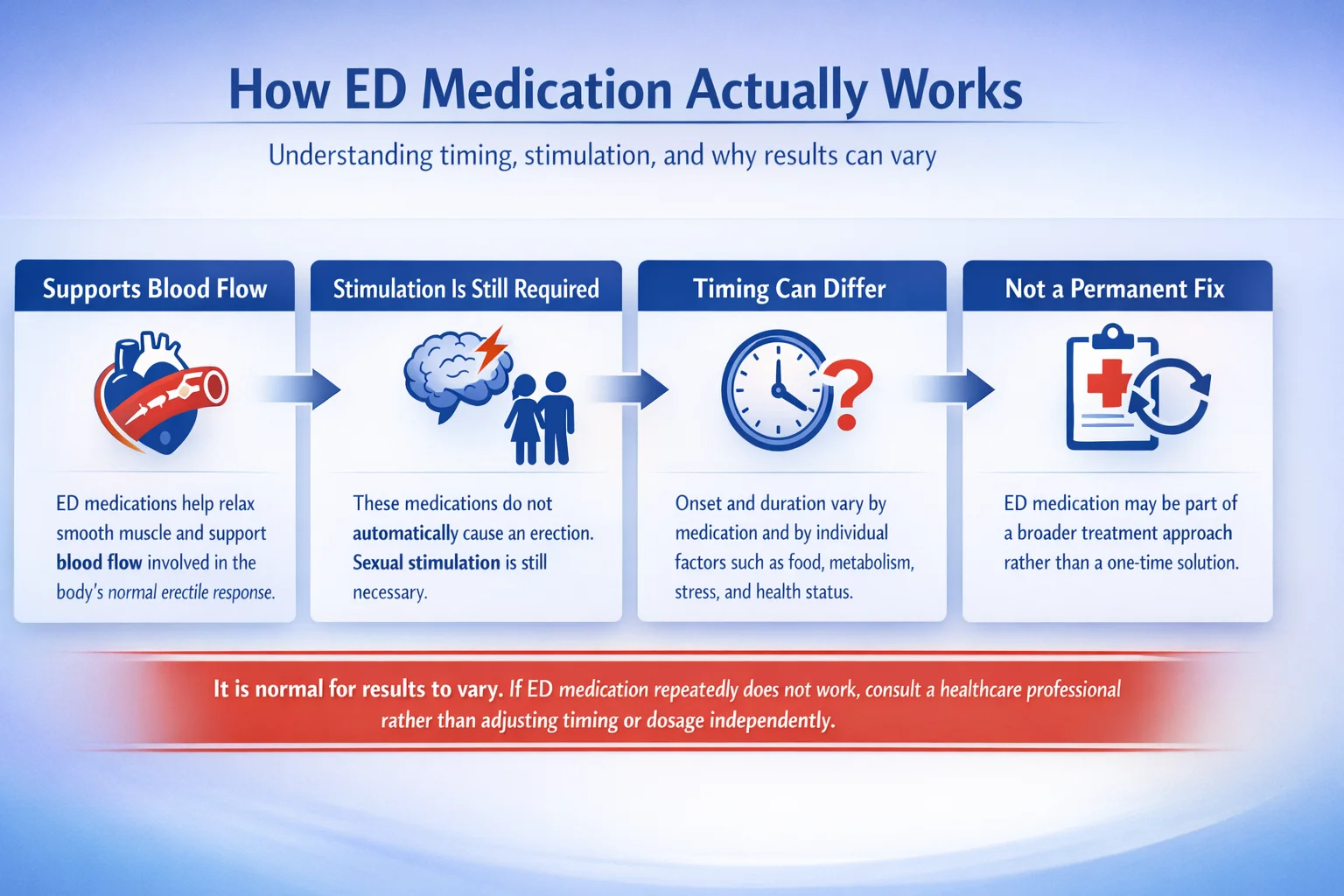
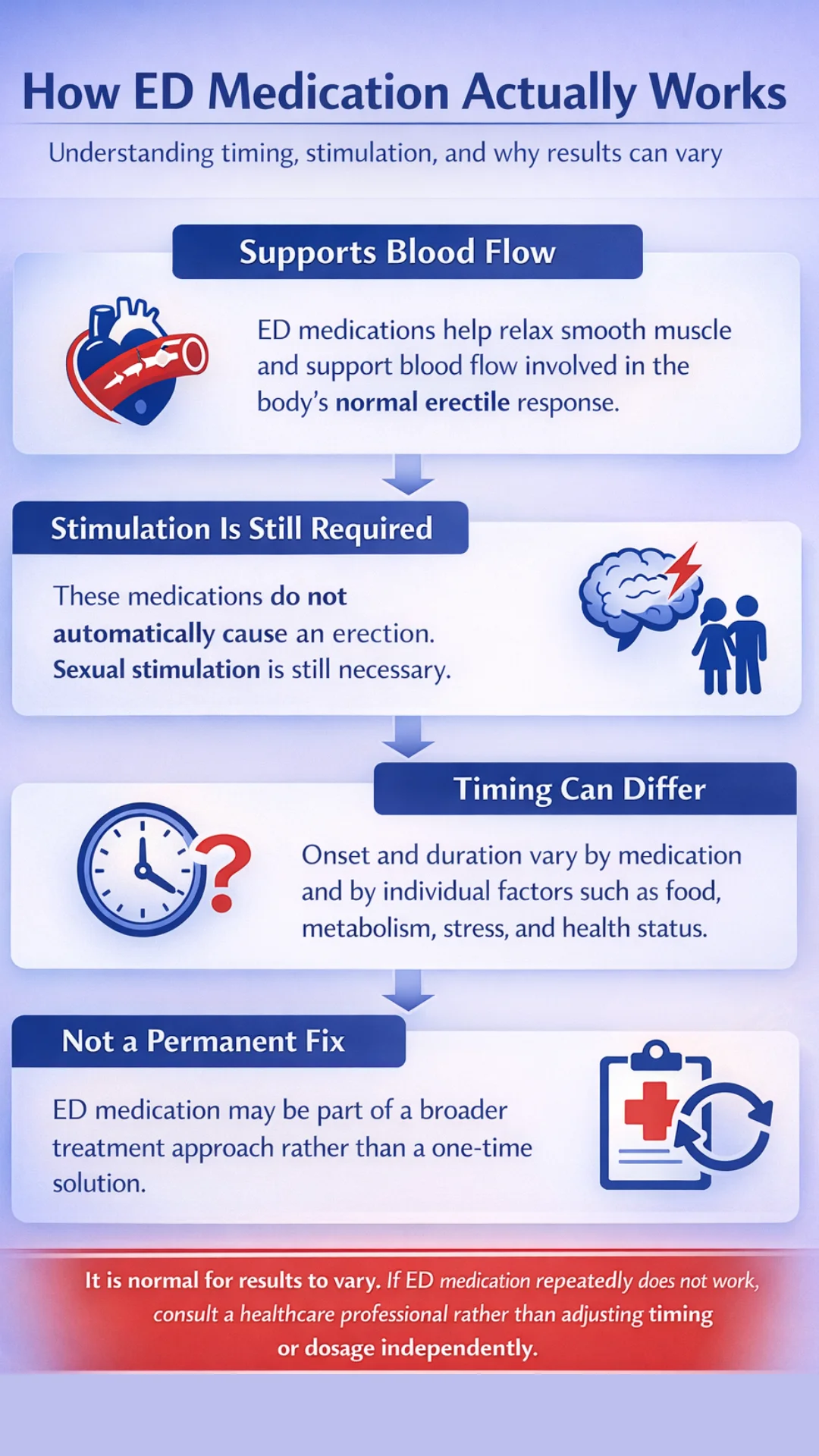
Many ED pills misconceptions begin with a basic misunderstanding of what these medications are designed to do. ED medications, including phosphodiesterase type 5 (PDE5) inhibitors, help improve blood flow to the penis by relaxing smooth muscle and supporting vascular response. They assist the body’s normal erection process rather than replace it.
Sexual Stimulation Is Still Required
ED pills do not directly cause an erection on their own. Instead, they help the body respond more effectively to sexual stimulation. Without arousal, the medication will not usually produce the intended effect.
Timing and Absorption Can Differ
Different ED medications have different onset times and durations. Some may start working within 30 to 60 minutes, while others may take longer. In addition, food intake, alcohol use, metabolism, stress, and overall health can all affect how quickly the medication works. Readers comparing onset times may also find this fast-acting ED pills guide helpful.
Duration Does Not Mean a Continuous Erection
Some ED medications remain active for several hours, while others may last longer. However, this does not mean a person will have a constant erection during that period. Instead, it means the body may be more responsive to stimulation within that time window. People who want more detail on timing may also review how long generic Viagra lasts.
Why ED Pills Misconceptions Persist
Many ED pills misconceptions come from brief online explanations, exaggerated expectations, and personal stories shared without medical context.
Simplified Messaging
Many discussions reduce ED medication to a quick fix. As a result, people may expect instant action, perfect consistency, or a one-time solution, even though these assumptions do not reflect how treatment works in real life.
Anecdotal Experiences
Personal accounts can be informative, but they do not explain the full clinical picture. One person’s experience may differ from another’s because of health conditions, medication interactions, timing, anxiety, or lifestyle factors.
Psychological Expectations
Performance pressure can strongly shape how people judge results. For example, a person who expects immediate success may feel more anxious, and that anxiety can interfere with sexual response even when medication is present.
What to Expect From ED Medication
A realistic understanding of treatment can reduce frustration and correct ED pills misconceptions before they lead to unsafe decisions.
Do ED Pills Work Instantly?
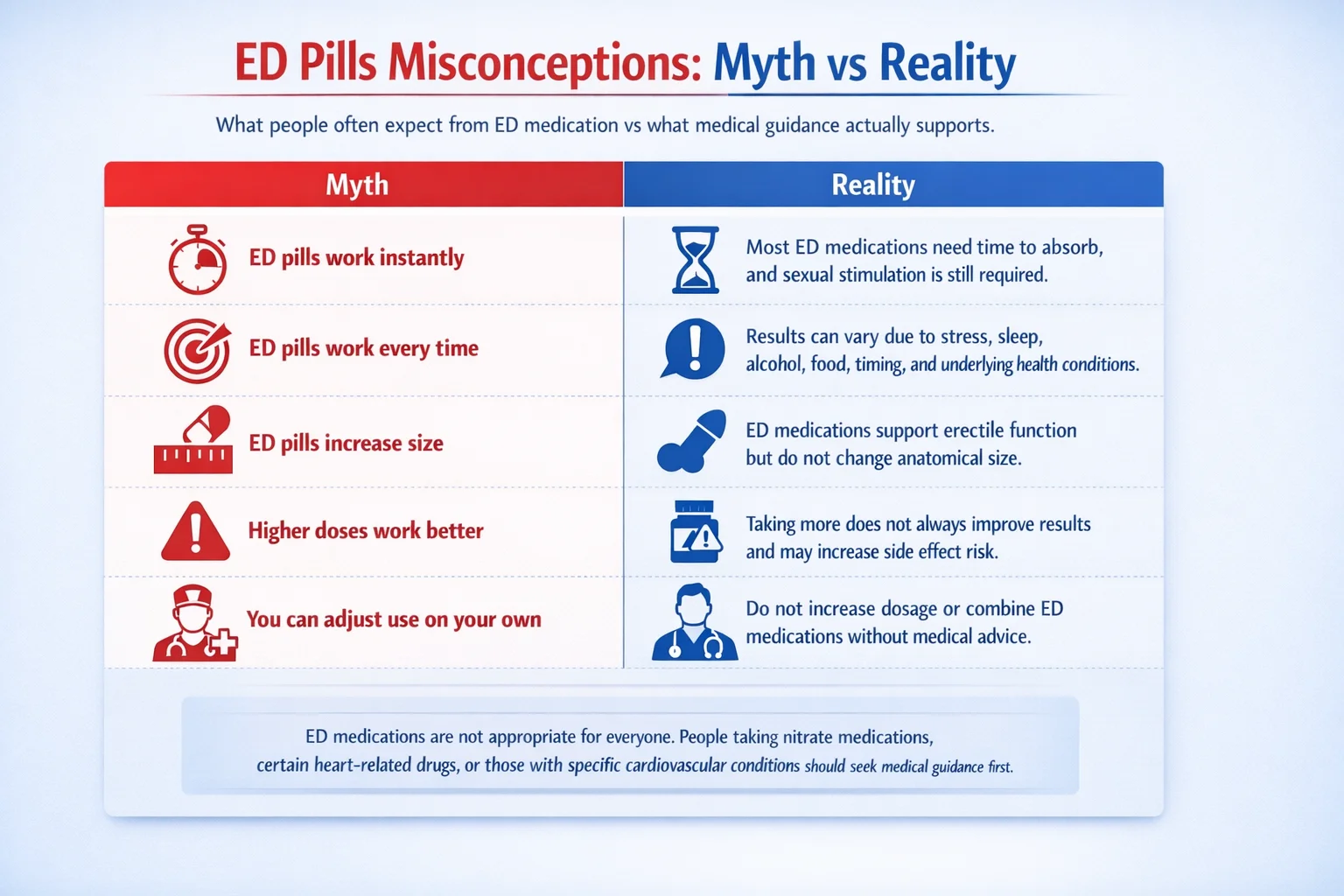
No, ED pills do not usually work instantly. Most require time to absorb, and sexual stimulation is still needed. Therefore, expecting an immediate response can lead to disappointment even when the medication is functioning as intended.
Why ED Pills May Not Work Every Time
ED pills do not produce exactly the same result on every occasion. Response may vary because of stress, poor sleep, alcohol intake, heavy meals, relationship tension, underlying health conditions, or medication timing. This variation does not automatically mean treatment has failed.
ED Pills Do Not Increase Size
Another common misconception is that ED medication changes anatomical size. In reality, these medications support erectile function but do not enlarge the penis beyond its natural limits.
Higher Doses Are Not Always Better
Taking more medication does not necessarily improve the result. Higher doses may increase the chance of side effects without solving the underlying issue. For safety, people should not increase dosage without medical advice and should not combine ED medications.
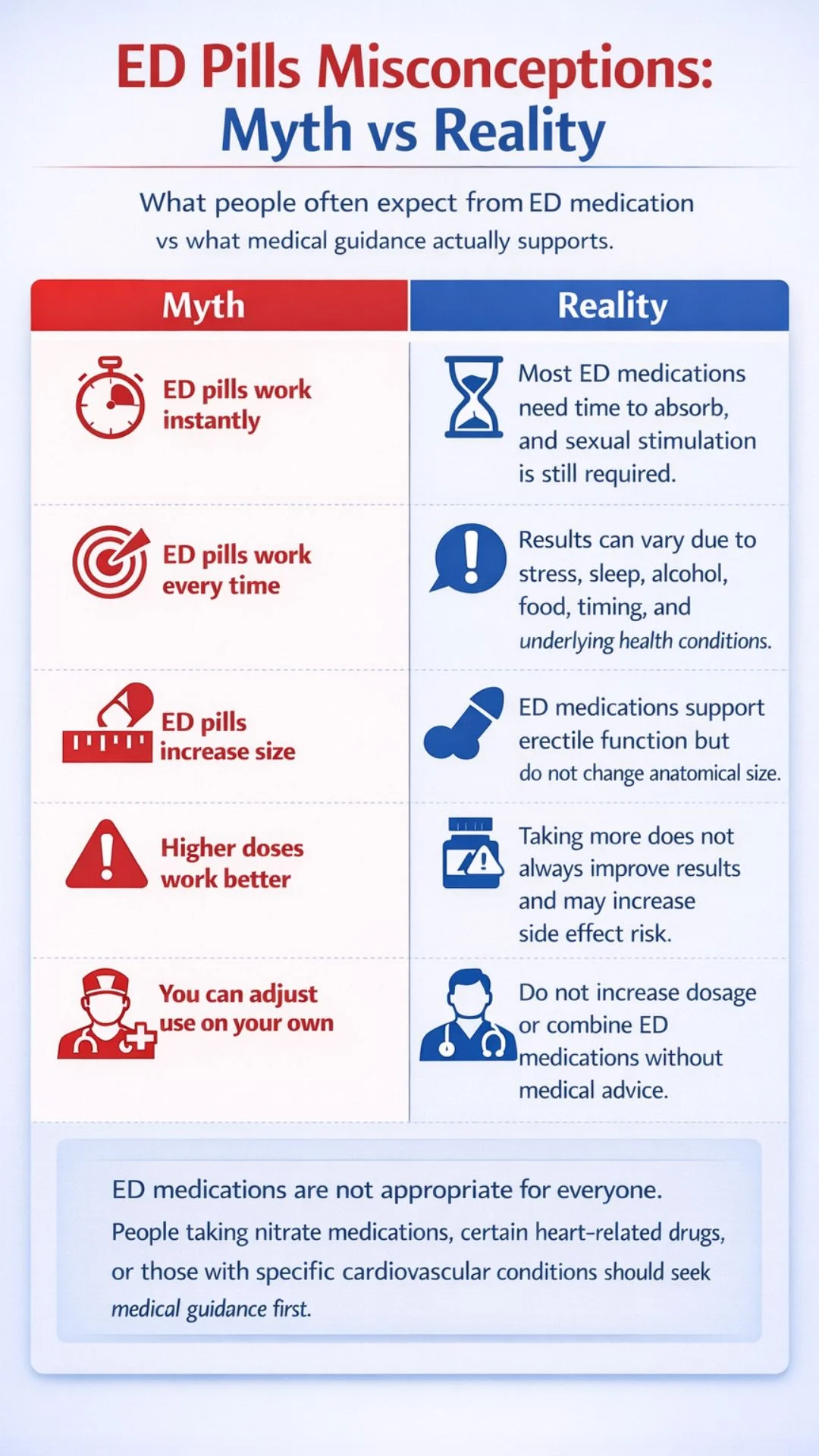
Expectation vs Reality of ED Pills Misconceptions
One of the most persistent ED pills misconceptions is the belief that these medications should produce fast, predictable results every time. The reality is more nuanced.
These medications work within the body’s natural physiological pathways, so timing, stimulation, emotional state, and overall health all matter. In addition, ED pills are not a permanent cure. They are often one part of a broader management plan that may also involve evaluating physical health, mental health, relationship factors, or other medications. For readers exploring medication differences, this Sildenafil vs Tadalafil comparison guide offers useful background.
Real-World Scenarios Behind ED Pills Misconceptions
Inconsistent Results
A person may notice that the medication seems effective on one occasion and less effective on another. In many cases, changes in sleep, stress, alcohol use, meal timing, or anxiety may explain the difference.
Delayed Onset
Some people expect rapid results and become concerned if the response feels delayed. However, a slower onset can happen because of food intake, metabolism, or the specific medication involved.
Limited Effectiveness
Sometimes a person notices little or no improvement. This can happen when underlying issues such as cardiovascular disease, diabetes, hormonal factors, or psychological stress affect erectile function. If ED medication repeatedly does not work, it is important to consult a healthcare professional rather than adjusting timing or dosage independently. Broader information about possible causes appears in Mayo Clinic ED causes and risk factors.
Psychological Factors and Performance Pressure
ED medication works through physical mechanisms, but psychological factors also matter. Performance anxiety, relationship stress, and pressure to achieve immediate success can interfere with sexual response.
Because of this mind-body interaction, medication alone may not fully address the issue in every case. A more complete approach may involve reducing pressure, improving communication, and addressing broader concerns. For readers navigating these concerns, guidance on how to talk to your partner about ED may also be helpful.
Safety and Limitations of ED Pills Misconceptions
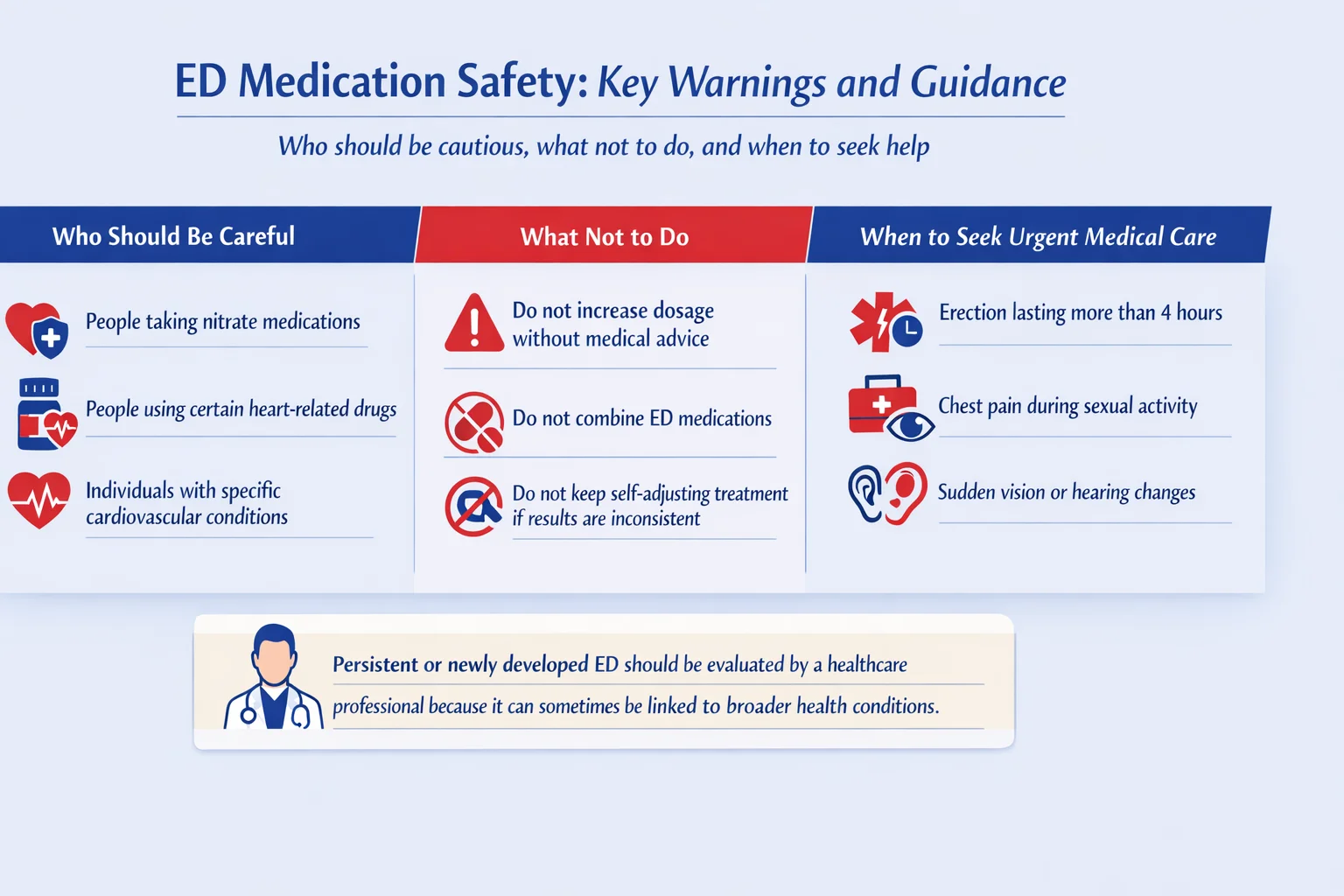
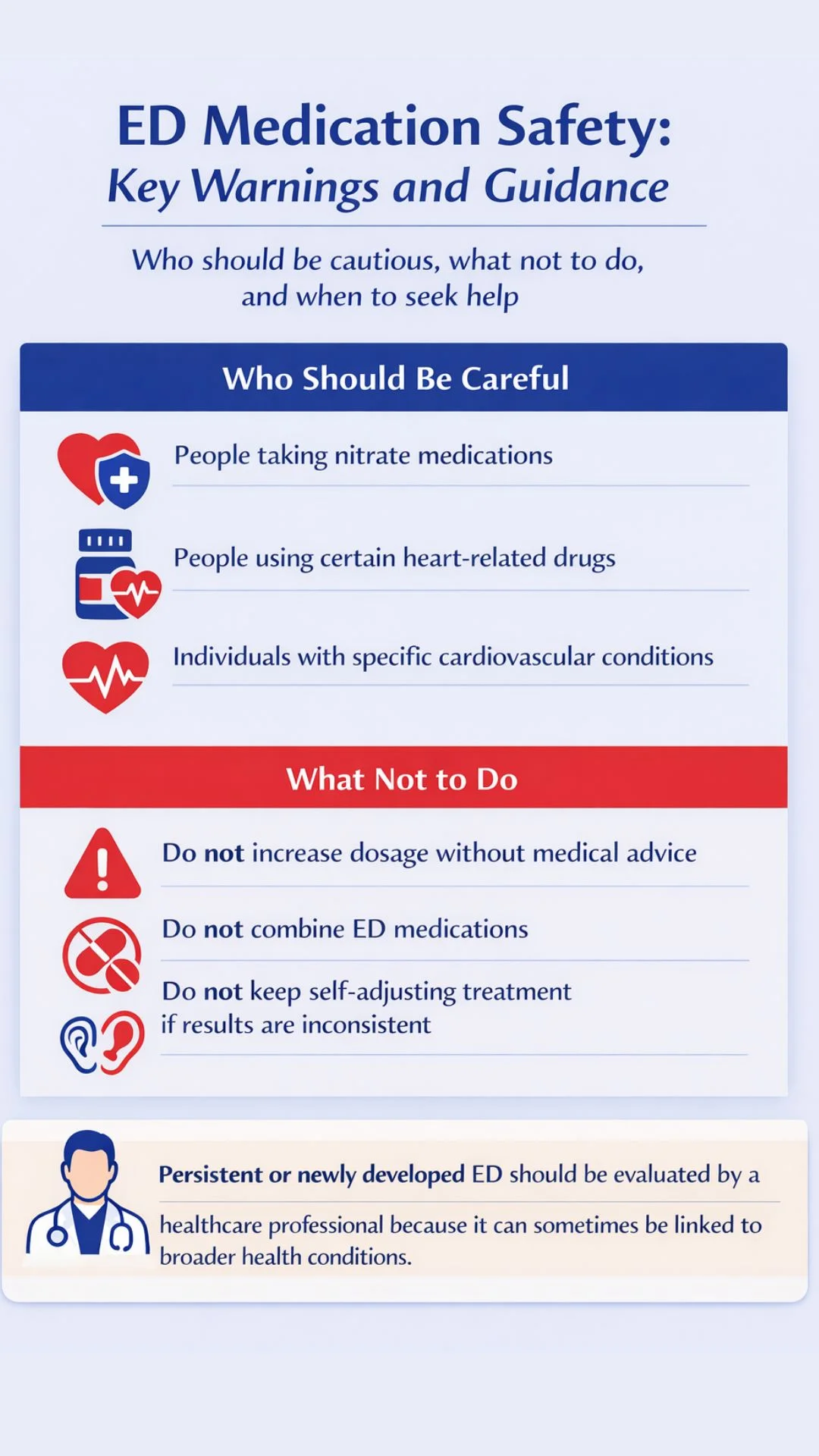
Correcting ED pills misconceptions is especially important when safety is involved. ED medications are not appropriate for everyone, particularly individuals taking nitrate medications or certain heart-related drugs. Safety depends on a person’s overall health and current prescriptions, so a clinician should guide treatment decisions.
People with specific cardiovascular conditions may also need careful medical evaluation before using ED medication. In addition, these medications should not be combined with other ED pills, and dosage should never be increased without professional advice. For a general overview of safe use, readers may review is generic Viagra safe.
Common and Serious Side Effects
Common side effects may include headache, flushing, nasal congestion, upset stomach, or dizziness. These effects are often mild, but side effects can vary depending on the medication and the individual.
More serious symptoms need prompt medical attention. Seek urgent medical care if an erection lasts more than 4 hours, if chest pain happens during sexual activity, or if sudden vision or hearing changes occur. For additional consumer safety information, see this NIH medication safety resource.
When Medical Advice Is Important
Persistent or newly developed ED should not be ignored. In some cases, ED can be linked to broader health conditions such as cardiovascular disease, diabetes, hormonal imbalance, or medication-related issues. Therefore, persistent or new ED should be evaluated by a healthcare professional.
People who want a better understanding of treatment pathways can review this erectile dysfunction overview. In addition, NIH erectile dysfunction treatment insights explain how treatment choices may vary based on medical history and underlying causes.
Product and Treatment Research Considerations
Some readers exploring ED pills misconceptions also compare product-specific options while researching treatment. However, product pages should not replace medical advice, especially when deciding whether a medication is appropriate or safe.
For example, a page for Cenforce 100 sildenafil tablets may help readers identify a product, while educational comparisons such as the best generic Viagra guide can offer broader context. Even so, treatment choices should still be guided by a qualified clinician.
Frequently Asked Questions
Does ED medication work instantly?
No. Most ED medications need time to absorb, and sexual stimulation is still necessary for them to work as intended.
Why might ED medication not work every time?
Response can vary because of stress, sleep, alcohol use, meal timing, anxiety, underlying health conditions, and medication timing.
Do ED pills increase size?
No. ED medication supports erectile function but does not change anatomical size.
Who should not take ED pills without medical guidance?
People taking nitrate medications, those using certain heart-related drugs, and individuals with specific cardiovascular conditions should not use ED pills without professional medical guidance.
When should you see a doctor if ED pills are not working?
You should seek medical advice if ED medication repeatedly does not work, if side effects occur, or if ED is persistent or newly developed.
Conclusion
ED pills misconceptions can lead to unrealistic expectations and unsafe decisions. These medications can support erectile function, but they do not work instantly, they do not work without stimulation, and they do not guarantee identical results every time.
A clinically responsible approach is to view ED medication as part of a broader treatment conversation rather than a stand-alone fix. When results are inconsistent, side effects occur, or ED becomes persistent, informed use and clinician-guided evaluation are the most reliable next steps.
Key Takeaways
- ED pills misconceptions often come from simplified messaging, anecdotal stories, and unrealistic expectations.
- ED medications support the body’s natural erectile response but do not create automatic erections.
- Sexual stimulation is still required for ED medication to work as intended.
- Results can vary because of timing, stress, food, alcohol, health conditions, and psychological factors.
- ED pills do not increase anatomical size.
- Higher doses do not always improve results and may increase the risk of side effects.
- ED medications may not be safe for people taking nitrates, certain heart-related drugs, or those with specific cardiovascular conditions.
- Do not increase dosage or combine ED medications without medical advice.
- Persistent or new ED should be evaluated by a healthcare professional because it can sometimes reflect broader health issues.
