


 Testosterone Gel
 Avanafil
Ivermectin Dosage for Humans: 3mg, 6mg, 12mg Tablet Guide

Medical Disclaimer:
This article is for informational purposes only and does not constitute medical advice, diagnosis, or treatment. Always consult a qualified healthcare provider regarding any questions you may have about your health, symptoms, or medications including ivermectin dosage for humans. Never ignore or delay professional medical advice because of content you’ve read online. MedsVista does not offer FDA-approved drugs and provides WHO-GMP certified generics only.
Introduction
Ivermectin is a prescription antiparasitic medication used to treat specific infections in humans caused by parasites such as nematodes and certain external parasites like lice and mites. First introduced in the 1980s and derived from the avermectin family of compounds, ivermectin has played a critical role in global public health, particularly in controlling onchocerciasis (river blindness) and strongyloidiasis.
Understanding ivermectin dosage for humans especially the differences between 3mg, 6mg, and 12mg tablets—is essential for ensuring both safety and therapeutic effectiveness. This medically responsible guide explains how dosage is determined based on weight and condition, when each strength is used, and how to take the drug safely. It includes compliance notices and expert guidance for patients and readers seeking clarity around this essential medication.
Understanding Ivermectin Tablet Strengths (3mg, 6mg, 12mg)
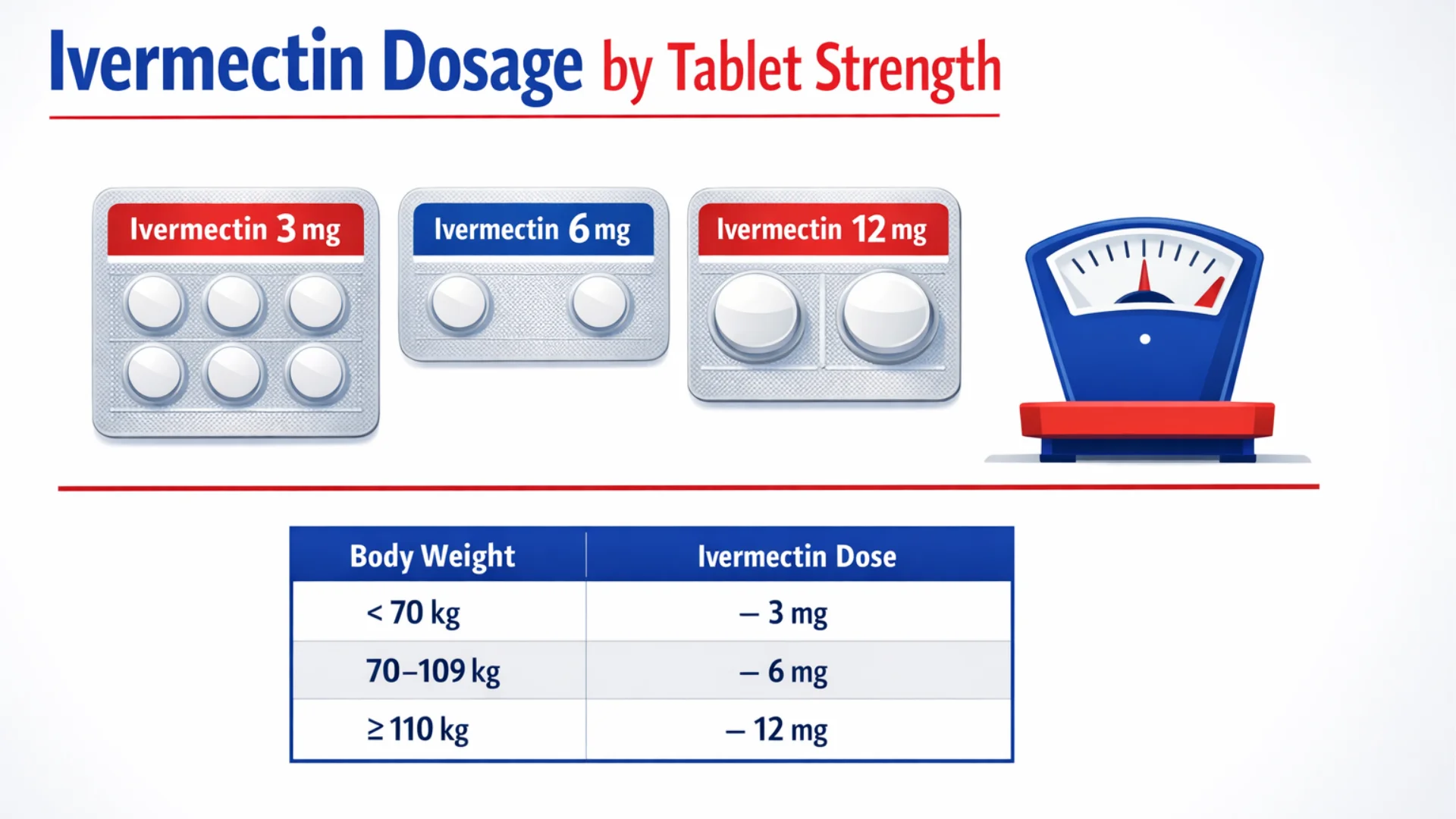
Ivermectin is available in three standard oral tablet strengths:
These strengths offer prescribing flexibility so that dosages can be closely matched to a patient’s body weight and treatment needs.
Why Tablet Strength Matters
- Flexible Dosing: The availability of multiple strengths allows prescribers to tailor dosages for each patient precisely.
- Reduced Pill Burden: Larger strengths like 12mg reduce the number of tablets a patient needs to take at once.
- Treatment Accuracy: Correct dosing helps prevent underdosing (ineffective treatment) or overdosing (increased risk of side effects).
Real-World Example
A 70 kg patient being treated for strongyloidiasis (at 0.2 mg/kg) requires 14 mg. This may be achieved using:
- One 12mg tablet and one 3mg tablet, or
- Two 6mg tablets plus one 3mg tablet.
Key Takeaways
- Ivermectin tablets are available in 3mg, 6mg, and 12mg strengths.
- These options support weight-based and condition-specific dosing.
- Always use the formulation prescribed by a licensed provider.
Weight-Based Ivermectin Dosing (with Table)
How Weight Affects Ivermectin Dosage
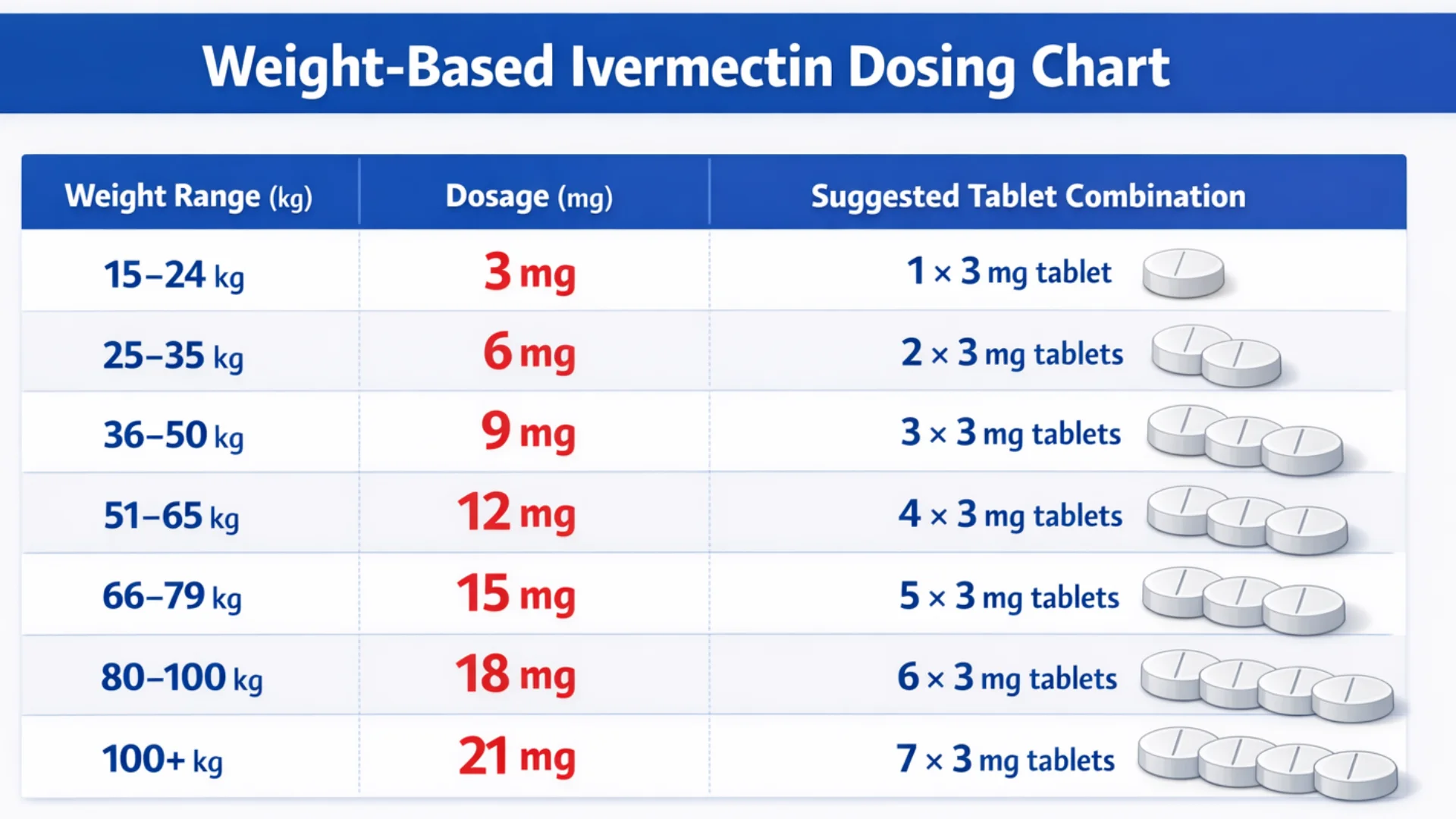
Ivermectin is typically dosed by body weight in milligrams per kilogram (mg/kg). The recommended dose depends on the specific parasitic condition being treated. Here’s a breakdown of commonly used guidelines:
- Onchocerciasis: 0.15 mg/kg
- Strongyloidiasis: 0.2 mg/kg
- Scabies (off-label): 0.2 mg/kg, repeated after 7–14 days
Ivermectin Dosage Table
Key Takeaways
- Dosing typically falls between 0.15–0.2 mg/kg.
- Tablet combinations should precisely match the prescribed amount.
- Do not self-medicate. Consult your doctor.
Dosage by Condition: FDA-Approved Use Cases
Ivermectin is FDA-approved for limited human use cases. Dosage depends on the infection and its severity.
a. Onchocerciasis (River Blindness)
- Cause: Onchocerca volvulus
- Recommended Dose: 0.15 mg/kg once
- Repeat Dosing: Every 6–12 months, depending on reinfection risk
- Example: A 60 kg patient = 9 mg (3 × 3mg tablets)
How to Take Ivermectin Safely
- Take ivermectin on an empty stomach (1 hour before or 2 hours after meals)
- Swallow the tablet whole with a glass of water
- Avoid alcohol and other medications unless approved by your doctor
- Store in a dry, room-temperature location away from children
Safety, Side Effects & Misuse Warnings
Common Side Effects
- Nausea
- Dizziness
- Diarrhea
- Mild rash or itching
Serious Reactions (Rare)
- Allergic responses (swelling, difficulty breathing)
- Liver enzyme elevations
- Neurological effects (tremors, confusion)
COVID-19 Misuse Warning
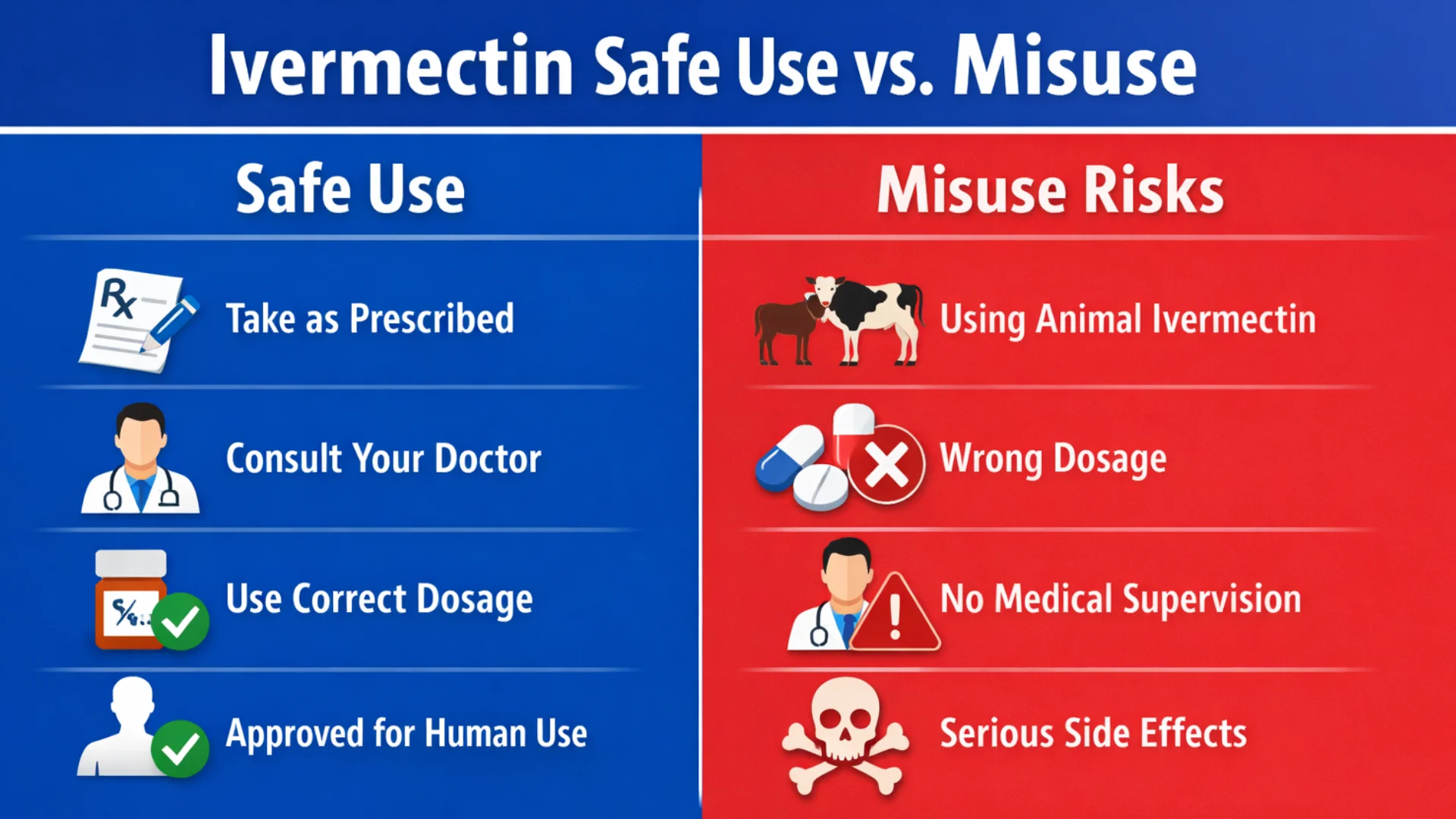
Ivermectin is not approved to treat or prevent COVID-19. Its misuse has led to severe health complications.
Authoritative warnings have been issued by:
Frequently Asked Questions (FAQs)
Q: Can I buy ivermectin without a prescription?
A: No. It is a prescription-only medication.
Q: Is 12mg stronger than 3mg?
A: All strengths contain the same active ingredient; the difference is the dose amount per tablet.
Q: Can I split a tablet to get a smaller dose?
A: Only if your doctor specifically advises it. Most tablets are not designed to be split.
Q: How often can I take ivermectin?
A: That depends entirely on your diagnosis. Follow your doctor’s exact instructions.
Q: What if I miss a dose?
A: Contact your healthcare provider. Do not double up on your next dose.
Conclusion: Take Ivermectin Only as Prescribed
Ivermectin has a long-standing role in modern medicine and a well-documented safety profile when used correctly for approved parasitic infections. Its success in treating conditions like strongyloidiasis and onchocerciasis is based on carefully calculated, weight‑based dosing, medical supervision, and proper diagnosis. When these elements are in place, ivermectin can be an effective and reliable therapy.
However, the safety of ivermectin depends entirely on how it is used. Taking the wrong dose, using it for an unapproved purpose without medical guidance, or obtaining it from unreliable sources significantly increases the risk of side effects and treatment failure. Misuse has been associated with avoidable complications, including neurological symptoms, allergic reactions, and liver stress. This is why medical oversight is not optional — it is essential.
Products such as:
should only be used under the supervision of a licensed healthcare provider who can determine the correct ivermectin dosage for humans based on your body weight, health status, and the specific infection being treated. MedsVista supplies WHO‑GMP certified generic medications, and proper medical guidance ensures these treatments are used safely and effectively.
It is equally important to remember that ivermectin is not a general-purpose medication and should never be used casually, preventively, or based on non-medical advice. Online information can provide education, but it cannot replace individualized clinical evaluation.
Consult your doctor. Do not self‑medicate. Work with a licensed provider.
These steps protect your health, ensure the right diagnosis, and help achieve the best possible treatment outcome.
