


 Testosterone Gel
 Avanafil

Are ED Medications Safe? A Doctor‑Reviewed Guide to Risks, Interactions, and Long‑Term Use


Informational only. This article is not medical advice. For personal health decisions, consult a licensed healthcare professional.
Erectile dysfunction (ED) affects millions of men worldwide, often impacting not just sexual performance, but emotional well-being, self-esteem, and relationship satisfaction. Over the past two decades, ED medications have transformed treatment—helping men regain not only sexual function but also a sense of confidence and intimacy in their relationships.
Yet despite their proven effectiveness, many men (and their partners) still pause to ask an important question: Are ED medications safe? It’s a valid concern—especially for those managing chronic health conditions, taking other medications, or considering long-term use.
This medically reviewed guide provides a clear, evidence-based look at the safety profile of ED drugs. We’ll explore how they work, potential side effects, interactions to watch out for, and the types of patients who should avoid them. Whether you’re new to ED treatment or looking to better understand your options, this article gives you the facts you need to make informed, confident decisions with your doctor.
👉 Visit MedsVista’s homepage early to explore safe, affordable, WHO-GMP certified ED solutions tailored to your needs.
What Are ED Medications?
Erectile dysfunction (ED) medications are prescription treatments that help men achieve and maintain an erection sufficient for sexual activity. These drugs are not aphrodisiacs — they don’t boost desire — but they work by improving the body’s natural erectile response to sexual stimulation.
Common ED Medications
The four most commonly prescribed ED drugs include:
- Sildenafil (brand name: Viagra)
Known for its fast onset (30–60 minutes), sildenafil typically lasts 4–6 hours. It’s often taken “as needed” before sexual activity. - Tadalafil (Cialis)
Tadalafil stands out for its longer duration — up to 36 hours — earning it the nickname “the weekend pill.” It’s available for both daily and as-needed use. - Vardenafil (Levitra, Staxyn)
Similar to sildenafil in duration and onset, but may be slightly better tolerated in men with diabetes or cardiovascular concerns. - Avanafil (Stendra)
The newest of the group, avanafil has a rapid onset — as little as 15 minutes — and fewer side effects due to greater selectivity in its action.
How Do They Work?
These medications belong to a class of drugs called phosphodiesterase type 5 inhibitors (PDE5 inhibitors). During sexual arousal, PDE5 inhibitors work by:
- Relaxing smooth muscle in the penile blood vessels
- Increasing blood flow to the penis
- Supporting the body’s natural erection process without artificially inducing arousal
It’s important to note that sexual stimulation is still required for the medication to work. These drugs do not automatically cause erections in the absence of arousal.
📘 Want a side-by-side breakdown?
Are ED Medications Safe for Most People?
Yes for the majority of men, ED medications are considered safe when prescribed by a licensed healthcare provider and taken as directed. These drugs have been on the market for over two decades and have undergone extensive clinical testing across diverse populations, including men with chronic conditions such as diabetes, high blood pressure, and early-stage cardiovascular disease.
Backed by Clinical Evidence
PDE5 inhibitors like sildenafil, tadalafil, and their counterparts have demonstrated a strong safety profile in randomized clinical trials and real-world usage. They are generally well tolerated, and side effects—when they occur—are usually mild and short-lived.
Two key resources outlining this safety profile include:
Factors That Influence Safety
While ED medications are safe for many, their use must be evaluated on a case-by-case basis. A doctor will consider several factors:
- Current medications — especially nitrates, alpha-blockers, or protease inhibitors
- Cardiovascular status — including history of heart attack, stroke, or arrhythmia
- Liver and kidney function — which affect drug metabolism
- Other conditions — such as eye disorders or anatomical penile abnormalities
Some men may require dose adjustments or alternative treatments depending on their overall health status.
✅ Key Takeaway:
ED medications are safe for most, but not all. A thorough medical evaluation is the safest path forward before starting any ED treatment.
Common Side Effects of ED Pills
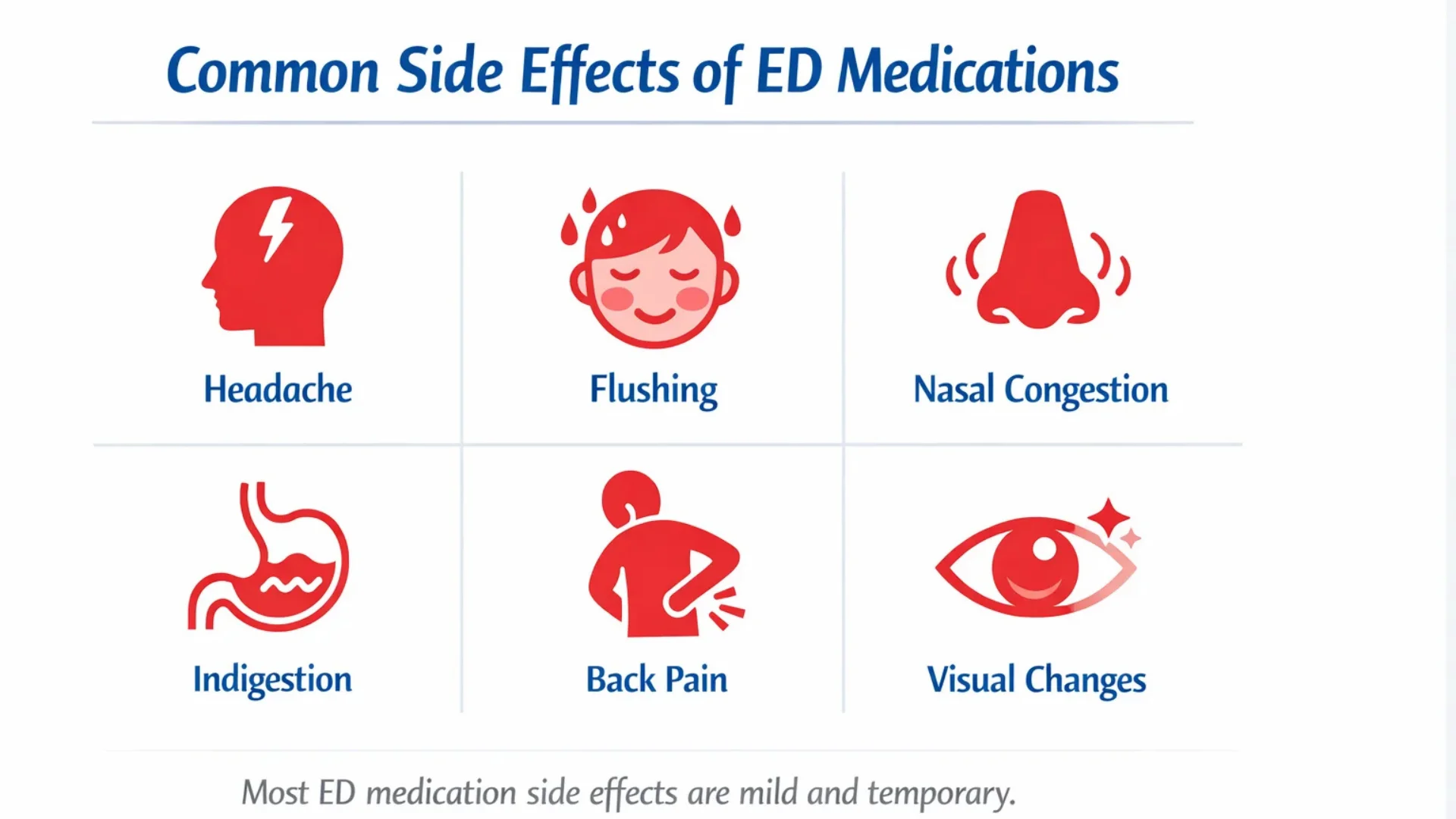
Common side effects include:
- Headache
- Flushing
- Indigestion
- Nasal congestion
- Back pain
- Visual changes (e.g., blue tint, blurry vision)
🔗 Full list of side effects – Mayo Clinic
⚠️ Speak to a doctor if symptoms are severe or persistent.
Who Should Not Take ED Medications?
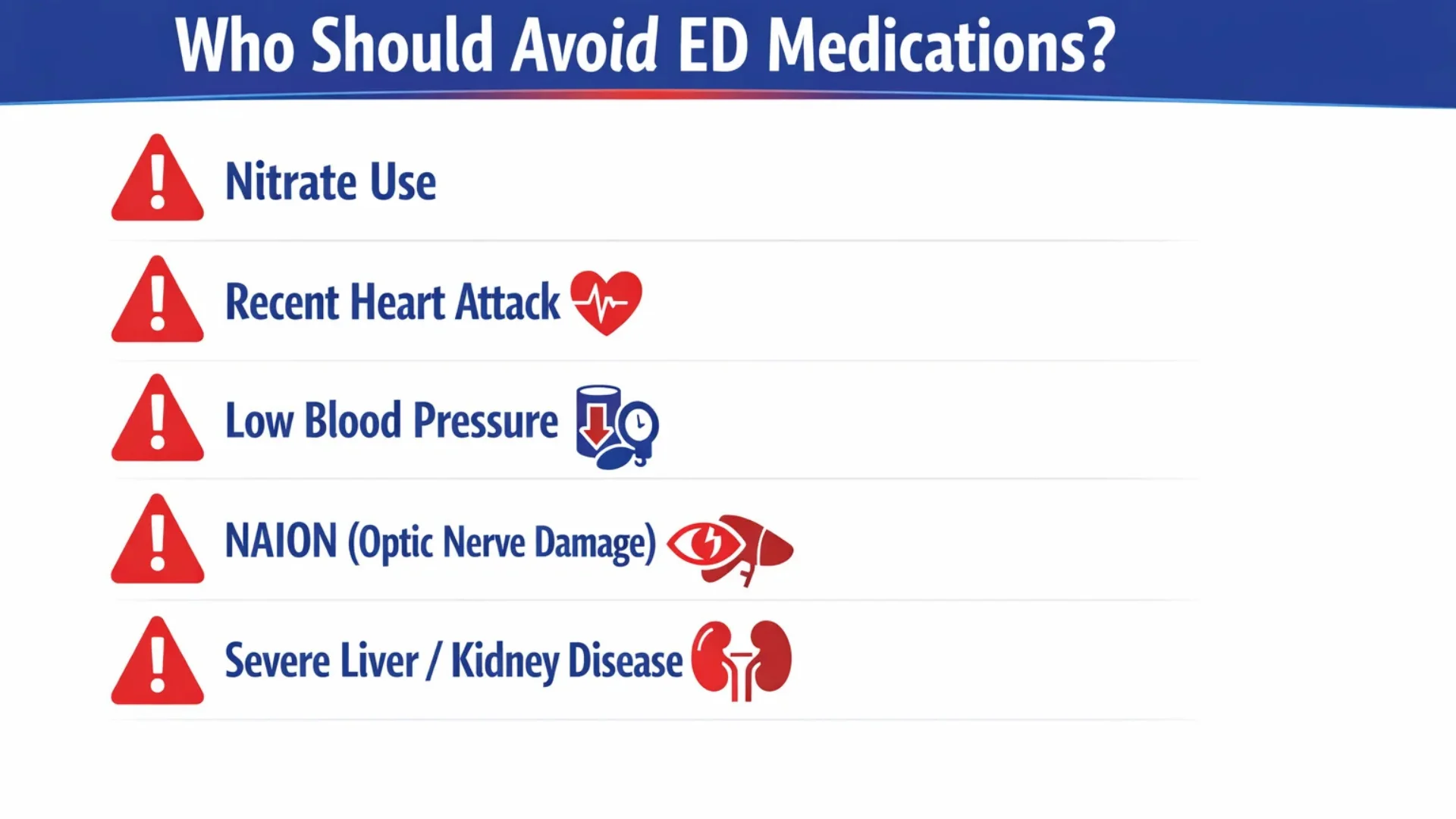
Avoid ED pills if you:
- Take nitrates (e.g., nitroglycerin)
- Have unstable heart conditions
- Suffer from low blood pressure
- Have rare eye conditions like NAION
📚 Read more from the NIH Bookshelf
❗ Always get medical clearance before starting ED meds.
Are ED Pills Safe for the Heart?
Yes — for most men with stable heart disease. But combining them with nitrates can dangerously lower blood pressure.
🔬 NCBI on PDE5 inhibitors & nitrates interaction
✅ ED pills are heart-safe for many men, but nitrate users must avoid them.
Long-Term Safety of ED Medications
No dependence or hormonal disruption has been found with long-term use. Still, ED may signal underlying issues like heart disease or diabetes.
🩺 Safe long-term with proper medical oversight.
Drug Interactions: What to Avoid
Avoid using ED meds with:
- Nitrates
- Alpha-blockers
- Excess alcohol
- Certain antibiotics or antifungals
- Sildenafil interactions – Drugs.com
- Mayo Clinic on ED & Nitrates
⚠️ Disclose all medications to your provider before use.
Doctor Advice: Myths vs Facts
- Myth: ED pills increase libido
Fact: They improve blood flow, not desire - Myth: Daily use is unsafe
Fact: Low-dose tadalafil is approved for daily use - Myth: Herbal alternatives are better
Fact: Many unregulated supplements are unsafe
✅ Stick to evidence-based treatment. Avoid self-medicating.
FAQs: Safety & Use of ED Pills
Q: Can ED meds cause permanent vision loss?
A: Rarely. Sudden vision loss may indicate NAION and needs urgent care.
🔗 NIH PMC – Vision Risks
Q: Can I take ED meds with blood pressure meds?
A: Sometimes — depends on the type. Consult your doctor.
Q: Are daily ED pills safe?
A: Yes, if prescribed. Daily tadalafil is approved for ongoing use.
Q: Can young men use ED meds?
A: Only with a medical need. Recreational use is discouraged.
🔒 Always consult your doctor. Do not self-medicate
Conclusion: Prioritize Safety With Evidence and Guidance
Erectile dysfunction is not just a physical condition — it often affects confidence, relationships, and quality of life. Fortunately, clinically approved ED medications offer a safe and effective path to relief for many men. But safety depends on how and where these medications are used.
When taken responsibly, ED pills like sildenafil and tadalafil can help restore not only sexual performance but also emotional well-being and intimacy. However, they are still prescription medications and must be treated as such — not taken recreationally or purchased from unregulated sources.
To use ED medications safely and effectively:
- ✅ Consult your doctor: A licensed provider will assess your cardiovascular health, current medications, and overall risks before prescribing the right ED treatment.
- ✅ Avoid mixing with contraindicated substances: Nitrates, alpha-blockers, and excessive alcohol can lead to serious interactions when taken with ED meds.
- ✅ Never self-medicate: Over-the-counter or imported “ED pills” may contain unlisted ingredients or unsafe dosages.
- ✅ Choose WHO-GMP certified generics: These medications are manufactured under internationally recognized Good Manufacturing Practices — ensuring quality, safety, and reliability.
- ✅ Understand the underlying causes: ED can be a sign of underlying issues like diabetes or heart disease. Don’t just treat the symptom — get a full medical evaluation.
By prioritizing safe, evidence-based care, you not only reduce risks but also get better, longer-lasting results from your treatment.
Author Note
This blog was written by Michael Reynolds, a seasoned medical writer specializing in men’s health and medication access. Reviewed by Dr. James Carter, board-certified urologist and MedsVista contributor.
