


 Testosterone Gel
 Avanafil

How Long Does TRT Take to Work? Results Timeline

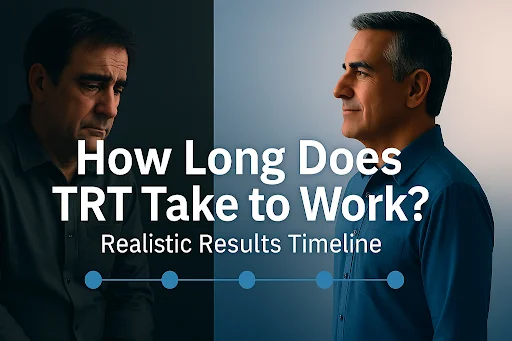
Starting testosterone replacement therapy (TRT) can feel like a big decision — and one of the first questions most guys have is: how long does TRT take to work? The truth is, there’s no instant fix. But understanding what to expect at each stage can help you stay patient, motivated, and realistic about your progress. TRT is a journey, not a sprint. Knowing the typical timeline helps you track your milestones, manage your expectations, avoid disappointment, and have more productive conversations with your doctor along the way.
Factors That Affect How Long TRT Takes to Work
One important thing to remember upfront: how long does TRT take to work depends on multiple factors that vary from person to person.

Main factors that influence how long testosterone replacement therapy takes to work.
✅ Your Age & Baseline Levels — Younger men with mild testosterone deficiency may notice quicker improvements than older men with much lower baseline levels.
✅ Overall Health & Lifestyle — Diet, exercise, stress levels, sleep quality, and other conditions like obesity or diabetes all impact how well your body responds.
✅ Treatment Method & Dosage — Injections can deliver noticeable results more quickly for some men, while gels and patches may create a steadier, more gradual effect.
✅ Consistency & Monitoring — Sticking to your dosing schedule, keeping up with lab tests, and working with your doctor to make safe adjustments can make all the difference in your outcome.
Different delivery methods (gels, injections, patches or pellets) also affect how soon you see results. Explore them in our TRT Delivery Methods Explained
For example, one man may feel a subtle boost in mood after just a few weeks, while another might need two or three months to see meaningful changes. There’s no one-size-fits-all answer — and that’s perfectly normal.
Key Takeaway: Be patient with your body and work closely with your provider to tweak your plan as needed. Comparing your results to someone else’s timeline won’t help — focus on your own steady progress. 👉 Factors that influence TRT effectiveness
Why Results Are Not Instant
TRT works by gradually restoring testosterone levels and allowing the body to respond over time. Mood, energy, libido, strength, fat distribution, and sleep quality may change at different speeds. Results also depend on baseline testosterone levels, treatment consistency, sleep, nutrition, exercise, medical conditions, and follow-up monitoring.
Typical TRT results timeline from week 1 to 12 months.
TRT Timeline — Week 1–4
The first few weeks of TRT are all about subtle changes. Don’t expect a dramatic surge of testosterone-fueled superpowers overnight — instead, your body quietly starts adjusting behind the scenes. Hormonal shifts take time, but many men do notice small signs that things are moving in the right direction.
Many men report:
- Improved mood & focus: You might feel a bit more upbeat, motivated, or able to concentrate — though this can come and go at first as levels fluctuate.
- Better sleep: Some men find they wake up fewer times during the night or feel more rested overall.
- Slight boost in libido: Early signs of increased sexual interest can appear, but this is usually mild and may not be consistent yet.
Mood, Energy, and Sleep — How Long Does TRT Take to Work Here?
So, how long does TRT take to work for mood and energy? Expect these areas to shift gradually during the first month. Some days may feel better than others — think of it as your body testing the waters and recalibrating.
Example: One man may notice he’s waking up feeling more refreshed after week two, while another feels more emotionally balanced by week four. It’s all about giving your body the time it needs to find its new normal.
Key Takeaway: Week 1–4 is like laying the foundation for bigger changes later. Be consistent, stay patient, and trust the process Want an overview of how TRT helps men? See Testosterone Replacement Therapy for Men— your future self will thank you for sticking with it. 👉 Week-by-week TRT expectations
TRT Timeline — Month 2–3
This is the point in your TRT journey where many men really start to feel the difference. By the second or third month, TRT’s impact usually becomes more noticeable — and more consistent. Hormone levels begin to stabilize, and daily life often feels more balanced and energized.
✅ Stronger libido: Morning erections may return more frequently, and overall sexual performance often improves.
✅ Energy levels level out: You might find you don’t hit that mid-afternoon slump as hard, and daily tasks feel less draining.
✅ Motivation and confidence: Many men feel more drive, both mentally and physically, making it easier to stay productive and stick to good habits.
✅ Body composition: Small but visible changes in muscle tone and body shape may start to show, especially if you’re exercising regularly and eating well.
Example: If you’ve been struggling with low motivation to hit the gym, you might suddenly find you’ve got the energy — and the mental drive — to get back into a steady routine as your testosterone levels keep building.
Key Takeaway: Month 2–3 is when your patience starts to pay off — but don’t get complacent. Keep up with your follow-ups and lab tests to make sure your levels stay in the sweet spot for maximum benefit and safety. 👉 Real patient results from Month 2 onward
TRT Timeline — Month 6–12
TRT really shines in the long term. Between six and twelve months, your results begin to stabilize and deepen — and this is when many men feel like they’re truly hitting their stride. This phase can bring bigger changes not just physically, but mentally and emotionally too.
✅ Muscle mass & strength: With proper training and nutrition, you’ll likely see measurable gains in lean muscle and improved strength.
✅ Reduced body fat: Many men find it’s easier to lose stubborn fat, especially around the midsection.
✅ Bone density: TRT helps maintain healthy bones — though these changes happen gradually and may only show up clearly with a bone scan.
✅ Mood & well-being: Symptoms of anxiety or depression linked to low testosterone often ease significantly by this stage.
✅ Sexual health: Libido and erectile function are often fully optimized, helping many men regain sexual confidence.
Example: Many men describe feeling more like their old selves — or even better than they’ve felt in years — by the end of the first year, especially when they’ve stuck to their plan and maintained healthy habits alongside treatment.
Key Takeaway: The biggest benefits come from sticking with your plan for the long haul — and supporting it with good sleep, stress management, balanced nutrition, and regular exercise. 👉 Long-term TRT effects and benefits
When to Recheck Progress
If symptoms are not improving, it does not always mean TRT has failed. A healthcare provider may review testosterone levels, blood counts, estradiol, sleep quality, adherence, delivery method, and other health factors. Treatment changes should be based on medical evaluation rather than self-adjustment.
Slow Results Should Not Lead to Self-Adjustment
Changing dose, frequency, or delivery method without medical guidance can increase side effect risk and make monitoring harder. If results feel slow or inconsistent, the safer next step is follow-up testing and clinical review.
Why Regular Monitoring Matters
🚩 Why Regular Monitoring Matters
No matter how clear you are on how long TRT takes to work, you can’t just “set it and forget it.” Regular monitoring is vital for both safety and long-term success. It keeps your treatment personalized and reduces any risks that might come up.
✅ Check hormone levels: Blood tests help make sure your testosterone stays within a healthy, balanced range — not too high, not too low.
✅ Watch for side effects: Keeping an eye on your red blood cell count, PSA levels for prostate health, and cholesterol helps catch potential issues early.
✅ Adjust as needed: If you’re not seeing the results you expect, your provider can safely adjust your dosage, delivery method, or frequency to get you back on track.
💡 Example: Some men find they need to tweak their injection frequency or gel application routine to avoid hormone swings and keep levels steady.
🔍 What to Monitor on TRT
Use this simple checklist to stay on top of your progress:
0
Main factors that influence how long testosterone replacement therapy takes to work.
- Blood Tests: Total & free testosterone, estrogen, SHBG
- CBC: Red blood cell count, hematocrit
- PSA: Prostate health if needed
- Blood Pressure: Watch your cardiovascular health
- Mood & Energy: Track how you feel — journal or app
- Libido & Sexual Function: Note any changes
- Body Composition: Measure muscle vs. fat progress
Explore the Full TRT Education Hub
Your guide to understanding testosterone replacement therapy from every major angle — meaning, symptoms, safety, timelines, treatment methods, and doctor conversations.
Testosterone Replacement Therapy Meaning
Testosterone Replacement Therapy for Men
Signs of Low Testosterone in Men
How Long Does TRT Take to Work?
TRT Delivery Methods Explained
Explore Related Men’s Health Topics
Low testosterone symptoms can overlap with sexual health, energy, mood, body composition, and broader men’s wellness concerns. These related MedsVista categories may help readers continue learning responsibly.
[Men’s Health Treatments general men’s wellness and treatment education
Testosterone Gel topical testosterone treatment education
Sildenafil erectile dysfunction medication education
Tadalafil longer-acting erectile dysfunction medication education
Levitra erectile dysfunction treatment education
✅ Key Takeaway
Combining regular monitoring and this practical checklist helps you keep your testosterone levels balanced, catch any side effects early, and adjust your treatment plan when needed. Staying consistent with your labs, check-ins, and self-tracking means your TRT will be more effective — so you can enjoy real results while protecting your long-term health. Trust the journey! 👉 Importance of regular TRT monitoring
Frequently Asked Questions
1: What changes may happen first on TRT?
Some men notice mood, energy, sleep, or motivation changes within the first few weeks, but early results can vary.
2: When does libido improve on TRT?
Libido may improve within several weeks to a few months in men whose symptoms are related to low testosterone.
3: When do strength and body composition change?
Muscle, strength, fat distribution, and body composition changes usually take longer and may become more noticeable over several months.
4: Why might TRT not feel like it is working?
Possible reasons include poor absorption, missed doses, wrong delivery method, untreated sleep issues, other medical conditions, unrealistic expectations, or hormone levels not reaching the target range.
5: Should men adjust TRT themselves if results are slow?
No. Treatment changes should be made only with medical guidance and lab review.
6: What should be tracked during TRT?
Symptoms, libido, energy, sleep, mood, workouts, side effects, lab results, and follow-up timing can help evaluate progress.
👉 Stick to your treatment plan. Don’t skip doses or try to adjust things on your own — it rarely works out well and can slow your progress.
👉 Keep up with lab tests and doctor visits. Regular check-ins help you get the most benefit from TRT with the fewest risks.
👉 Be patient and realistic. TRT is a marathon, not a sprint — real results come with time, consistency, and smart lifestyle choices that support your hormonal health.
👉 Communicate openly. If you’re not seeing results or you’re experiencing side effects, speak up — your doctor is there to help you make safe adjustments.
Remember: At MedsVista, we’re here to support your TRT journey with trusted information and safe, affordable options. Want help getting started, or have questions about your results timeline? We’re always just a message away.



One thought on “How Long Does TRT Take to Work? Results Timeline”