


 Testosterone Gel
 Avanafil

350 mg Soma: Uses, Dosage, Side Effects & Safety Guide

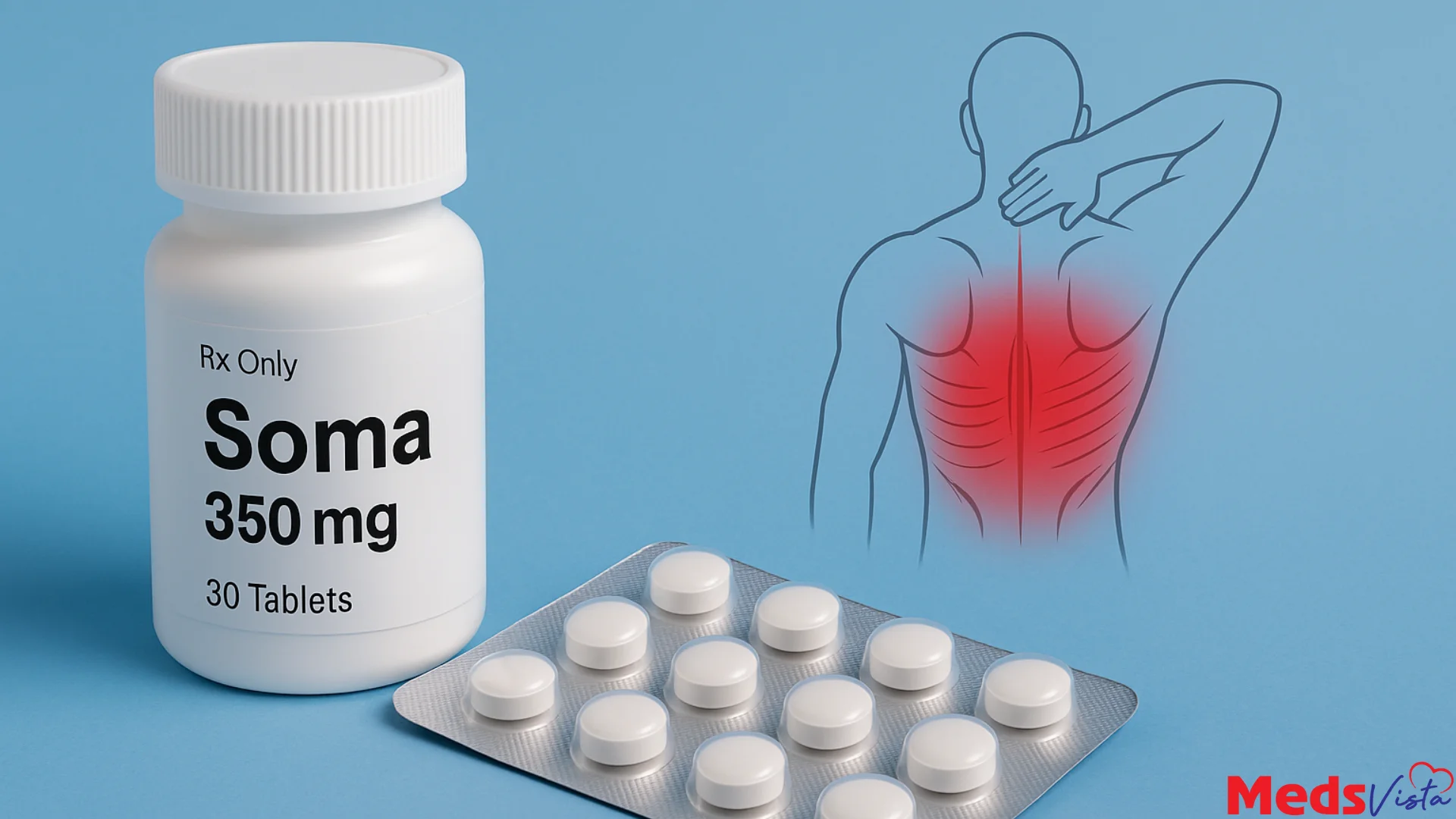
Carisoprodol, marketed as Soma, is a prescription skeletal muscle relaxant commonly prescribed for short-term relief of acute musculoskeletal pain. The 350 mg dosage is widely used for its therapeutic benefits but also carries increased sedative potential. This comprehensive guide explores how 350 mg Soma works, proper dosing, safety concerns, and patient FAQs.
MedsVista offers WHO-GMP certified generic Soma. Consult your doctor before beginning or modifying any medication regimen. Do not self-medicate.
What Is 350 mg Soma Used For?
Soma (carisoprodol) 350 mg is prescribed to alleviate acute musculoskeletal discomfort resulting from conditions such as sprains, strains, or muscle spasms. It is typically used for injuries like whiplash, lower back strain, or sports-related muscle spasms.
Soma should only be used as part of a broader treatment strategy that includes physical therapy, rest, and ergonomic adjustments. It is not intended for chronic or ongoing pain.
Common conditions treated include:
- Lower back strain
- Whiplash-related neck pain
- Muscle spasms from injury
- Postural pain due to repetitive strain
Key Takeaways:
- Prescribed for short-term, acute muscle pain
- Best used with rest and physical therapy
- Not suitable for long-term or chronic use
Soma 350 mg Dosage: How It's Typically Taken
The typical adult dosage ranges from 250 mg to 350 mg, taken up to four times daily: morning, midday, evening, and bedtime. The 350 mg strength is generally used when 250 mg proves insufficient.
Due to its central nervous system (CNS) depressant properties, Soma should not be used for longer than 2–3 weeks. Prolonged use can lead to dependence, tolerance, or withdrawal.
Standard Dosing Schedule:

Maximum daily dose: 1400 mg
Key Takeaways:
- Up to 350 mg four times daily
- Do not exceed 1400 mg per day
- Limit use to a 2–3 week period
350 mg vs. 250 mg Soma: Is There a Difference?
Carisoprodol is available in 250 mg and 350 mg strengths. While both are effective, 350 mg offers more potent pain relief but carries a higher risk of drowsiness and CNS depression.
250 mg and 350 mg tablet strengths
Comparison Table:

There is no FDA-approved 500 mg version in the U.S. The 250 mg dose is preferred for those sensitive to sedatives.
Key Takeaways:
- 350 mg offers stronger effects but higher risk
- 250 mg suits sensitive users or milder pain
- Only 250 mg and 350 mg are FDA-approved
How Soma 350 mg Works (Mechanism of Action)
Soma acts on the brain and spinal cord rather than directly on muscles. It is metabolized in the liver to meprobamate, a sedative that reduces nerve activity and muscle spasms.
Meprobamate enhances GABA-A receptor activity, inhibiting excessive neuronal firing and promoting relaxation.
Key Takeaways:
- Acts centrally, not directly on muscles
- Converted into meprobamate, a CNS depressant
- Helps reduce spasms, anxiety, and pain
Onset, Duration & What to Expect
Soma typically takes effect within 30 to 60 minutes of ingestion and lasts about 4 to 6 hours. Because of its sedative effects, users should avoid driving or operating heavy machinery after taking it.
Practical Tips:
- Start with an evening dose to test tolerance
- Avoid alcohol or other sedatives
- Monitor for lingering drowsiness
Key Takeaways:
- Onset: 30–60 minutes
- Duration: 4–6 hours
- Assess individual response before activities
Side Effects of Soma 350 mg
Most side effects are sedative in nature and dose-dependent.
Common Side Effects:
- Drowsiness
- Dizziness
- Nausea
- Headache
- Irritability
Serious Side Effects (Seek help immediately):
- Confusion or blurred vision
- Irregular heartbeat
- Fainting or seizures
- Respiratory depression
Key Takeaways:
- Sedation is most common
- Serious effects are rare but critical
- Never mix with other CNS depressants
Soma Coma & Overdose Risk
“Soma coma” is a term used for severe CNS depression caused by overdose or dangerous drug combinations (e.g., alcohol, opioids).
Signs of Overdose:
- Slurred speech
- Shallow breathing
- Loss of consciousness
- Seizures
Key Takeaways:
- Avoid combining with other sedatives
- Overdose is a medical emergency
- Seek immediate care if symptoms occur
Interactions: What Not to Mix with Soma
Soma interacts with many CNS depressants. Combining it with these can lead to life-threatening sedation or respiratory failure.
Avoid Combining With:
- Alcohol
- Opioids
- Benzodiazepines
- Barbiturates
- Sleep medications
Key Takeaways:
- Always disclose medications to your provider
- Interactions can be fatal
- Avoid mixing with sedatives
Who Should Not Take 350 mg Soma?
Certain populations should avoid Soma due to higher risks.
Do Not Use If:
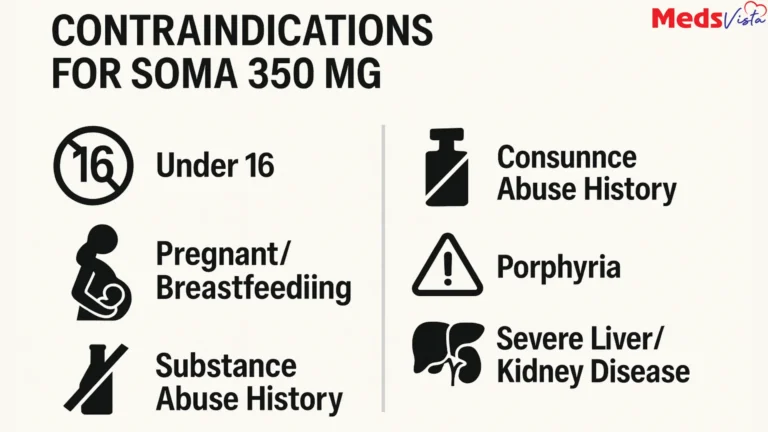
Key Takeaways:
- Avoid if pregnant, nursing, or underage
- Not suitable for those with substance abuse history
- Contraindicated in porphyria
Frequently Asked Questions
How long does Soma stay in your system?
Meprobamate, its active form, may stay in your body for up to 48 hours
Can I split a 350 mg tablet?
Soma is not scored and should not be split unless instructed by a healthcare provider
Can I drive after taking Soma?
No. Soma may impair alertness and motor coordination.
What if I miss a dose?
Take the missed dose as soon as possible, unless it’s close to your next one. Do not double up.
Conclusion: Responsible Use Is Essential
Soma 350 mg is a powerful therapeutic option for managing acute muscle pain, but its benefits must be weighed carefully against the risks. When used responsibly and under medical supervision, it can significantly reduce pain, improve comfort, and support recovery from musculoskeletal injuries. However, misuse or extended use can lead to dependency, reduced effectiveness, and dangerous side effects, particularly if combined with other CNS depressants.
Always follow your doctor’s directions precisely. Never increase your dose or frequency without explicit medical guidance, and monitor for any signs of over-sedation or adverse reactions. Make sure to schedule follow-ups with your provider, especially if symptoms persist beyond the typical 2–3 week treatment window.
Remember: the goal of Soma therapy is short-term relief—not ongoing symptom suppression. As part of a multimodal recovery plan that may include rest, physical therapy, and lifestyle changes, Soma can be highly effective.
MedsVista provides access to WHO-GMP certified generics. Explore carisoprodol options here to find safe and affordable alternatives—always in partnership with your healthcare provider.
Author Note
This article was medically reviewed by Dr. James Carter, MD, Men’s Health & Urology Specialist, and written by Michael Reynolds, Health & Wellness Writer
