


 Testosterone Gel
 Avanafil

What Is Nucynta Used For & Why Its Generic Matters

Tapentadol, marketed under the brand name Nucynta, is a prescription pain reliever that bridges two mechanisms of action. But what is Nucynta used for, and why does the availability of its generic version matter for patients managing chronic or acute pain? This article explores the approved uses, pharmacological profile, safety considerations, and market implications of generic tapentadol.
Visit MedsVista’s homepage for more on pain management medications.
1. Understanding Nucynta: A Dual-Action Analgesic
Nucynta (tapentadol) is a centrally acting opioid analgesic indicated for the management of moderate to severe pain in adults. What sets it apart is its dual mechanism:
- Mu-opioid receptor agonism (like traditional opioids)
- Norepinephrine reuptake inhibition (NRI)
These combined actions contribute to its efficacy while potentially reducing some opioid-related risks.
Key Takeaways:
- Nucynta works through both opioid and non-opioid mechanisms.
- It is used for both acute and chronic pain conditions.
2. What Is Nucynta Used For?
The primary FDA-approved uses of Nucynta include:
2.1 Acute Pain Management
Tapentadol immediate-release (IR) is indicated for short-term relief of moderate to severe pain, such as:
- Postoperative pain
- Musculoskeletal injuries
- Dental procedures
- Trauma-related pain (e.g., fractures, sprains)
In some clinical contexts, tapentadol IR is also used in emergency settings for acute injury-related pain under controlled supervision.
2.2 Chronic Pain Conditions
Nucynta extended-release (ER) is used for long-term, around-the-clock management of:
- Chronic musculoskeletal pain (e.g., lower back pain)
- Osteoarthritis-related pain
- Cancer-related chronic pain (off-label use in some regions with specialist guidance)
This formulation is not intended for as-needed (PRN) use and is reserved for patients requiring consistent pain control.
2.3 Diabetic Neuropathy Pain
Nucynta ER is also specifically approved for:
- Pain associated with diabetic peripheral neuropathy (DPN)
This differentiates it from many other opioids, which are not typically indicated for neuropathic pain.
According to data published in the Journal of Pain Research, tapentadol ER showed a clinically significant reduction in DPN-related pain intensity compared to placebo.
Key Takeaways:
- Tapentadol IR is for acute pain; ER is for chronic and neuropathic pain.
- Nucynta ER’s indication for diabetic nerve pain is a key clinical distinction.
- Tapentadol offers utility in a range of both nociceptive and neuropathic scenarios.
3. Nucynta IR vs ER: What's the Difference?
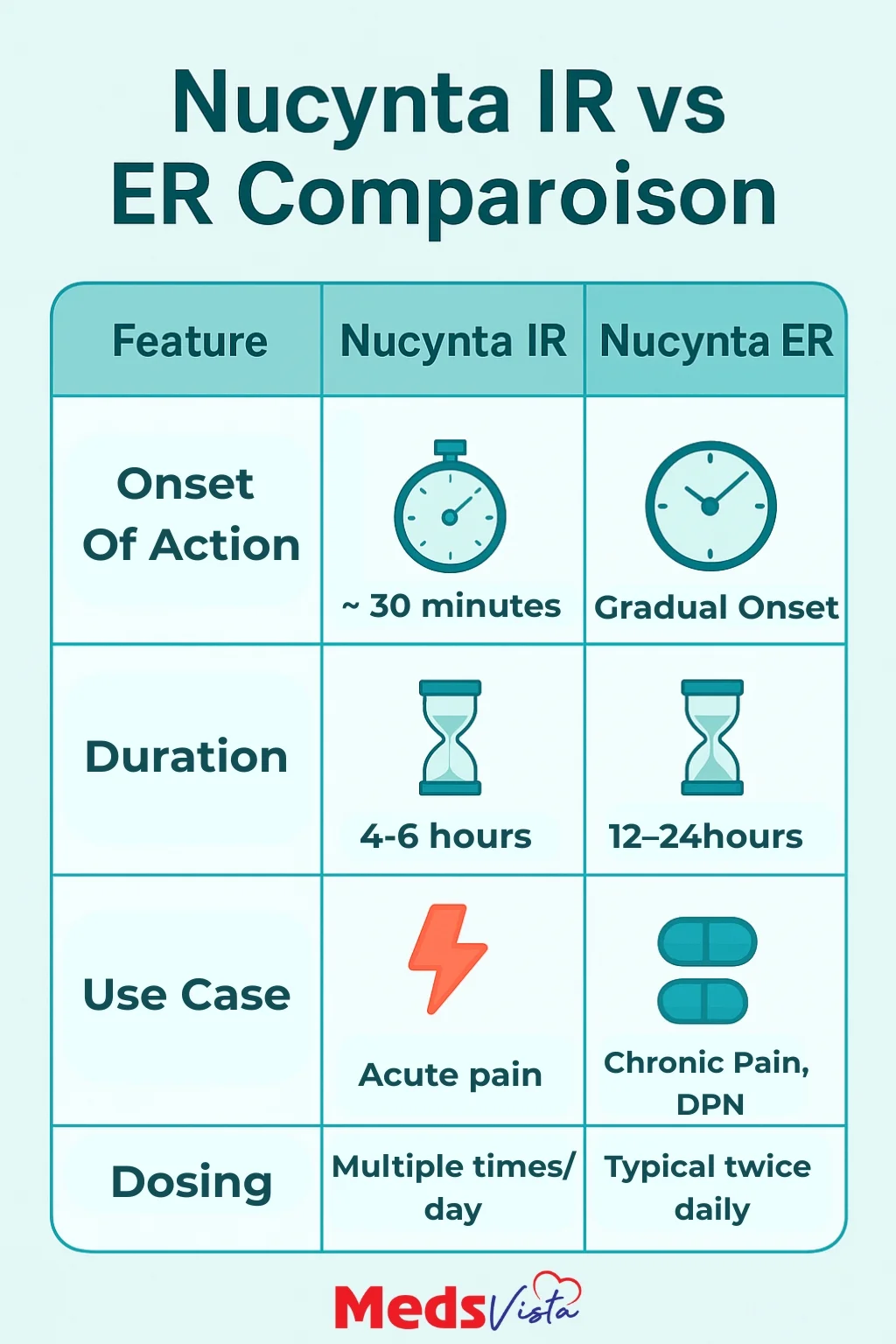
Key Takeaways:
- IR is designed for fast, short-term relief.
- ER is suited for chronic pain control and neuropathic pain management.
- Dose conversion between IR and ER should only be done under medical supervision.
4. How Tapentadol Works: Mechanism of Action
Tapentadol’s mechanism combines two pharmacologic effects:
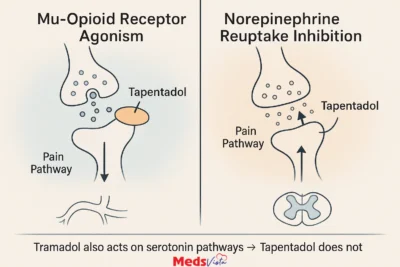
- Mu-opioid receptor agonism → reduces pain perception.
- Norepinephrine reuptake inhibition (NRI) → enhances descending pain inhibition pathways.
This duality makes it unique among opioids.
Clinical Insight:
Unlike traditional opioids like oxycodone or morphine, tapentadol doesn’t rely solely on opioid receptor activity. The NRI component may offer advantages in neuropathic pain.
This mechanism is sometimes compared to tramadol, but tapentadol acts more directly and does not depend on metabolic conversion for its NRI activity, making its pharmacokinetics more predictable.
Key Takeaways:
- Tapentadol provides analgesia through both opioid and non-opioid pathways.
- Its dual action may reduce the need for adjunct medications in neuropathic conditions.
- Predictable onset and duration improve treatment consistency.
To learn more about WHO’s evolving approach to pain relief, see the WHO revision of pain‑management guidelines.
5. Nucynta Side Effects and Safety Considerations
Like all opioids, tapentadol carries a risk of side effects and misuse.
What the Evidence Shows
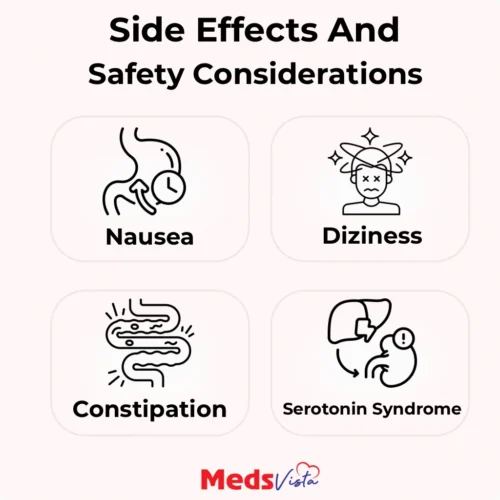
Common Side Effects:
- Nausea
- Dizziness
- Constipation
- Drowsiness
- Dry mouth
Serious Risks:
- Respiratory depression
- Addiction, abuse, and misuse
- Seizures (rare)
- Serotonin syndrome (especially if combined with SSRIs or SNRIs)
Who Should Avoid Nucynta:
- Individuals with severe liver or kidney impairment
- Those on monoamine oxidase inhibitors (MAOIs)
- Patients with a history of substance use disorder
- People with breathing problems such as severe asthma or COPD
Boxed Warning Summary:
Tapentadol carries a boxed warning for addiction, abuse, misuse, life-threatening respiratory depression, and neonatal opioid withdrawal syndrome if used during pregnancy.
Important Safety Tips:
- Always follow your doctor’s instructions.
- Do not combine with alcohol or other sedatives.
- Inform your physician of all medications you’re taking.
- Do not self-medicate. Always consult your healthcare provider before starting or stopping any medication.
Key Takeaways:
- Tapentadol shares opioid-related risks, though some patients may experience fewer GI side effects.
- Proper use and patient education are essential.
- Risk factors should be assessed before prescribing.
For context on global health priorities, consult the WHO fact sheet on opioid overdose.
6. Why Nucynta's Generic Version Matters
The availability of generic tapentadol (launched in the U.S. in 2022) impacts both access and affordability for patients.
Key Benefits of the Generic:
- Lower cost than brand-name Nucynta
- Increased accessibility for chronic pain patients
- Equivalent efficacy and safety profile
Market Context:
Tapentadol was previously protected under patent exclusivity. With generic approval, broader adoption in pain management protocols is expected.
Clinicians often prefer generics due to their cost-effectiveness. However, patients should be reassured that generics are reviewed for bioequivalence, meaning they work the same way and provide the same clinical benefit.
Insurance providers are also more likely to cover the generic version, making it a more feasible option for long-term pain care.
The generic form still requires a prescription and carries all the same safety warnings as brand-name Nucynta.
Key Takeaways:
- Generic tapentadol increases access to effective pain management.
- It is bioequivalent to Nucynta, with no compromise in quality.
- Patients should confirm with their provider which version is appropriate for them.
7. Frequently Asked Questions (FAQ)
Is Nucynta stronger than tramadol?
Tapentadol (Nucynta) has a stronger opioid effect compared to tramadol and does not rely on serotonin reuptake inhibition. However, individual responses may vary. Consult your doctor before switching medications.or health authorities (FDA, WHO, Cochrane) state there is no proven benefit for COVID-19 and advise against its use outside clinical trials.
Can you drive while taking Nucynta?
Due to its sedative effects, Nucynta can impair driving or operating machinery. Avoid such activities until you understand how it affects you.
How long does it take for Nucynta to start working?
Nucynta IR usually begins working within 30 minutes. The ER version has a slower onset designed for continuous pain control.
Can Nucynta be used long term?
Yes, the ER version of Nucynta is approved for chronic pain and diabetic neuropathy. Long-term use should be regularly monitored by a healthcare provider.
Is it safe to take Nucynta with antidepressants?
Caution is required. Combining tapentadol with SSRIs or SNRIs may increase the risk of serotonin syndrome. Always inform your doctor of all medications you’re taking.
Does Nucynta cause withdrawal symptoms?
Yes. Like other opioids, discontinuing Nucynta suddenly may lead to withdrawal symptoms such as restlessness, sweating, nausea, or anxiety. Tapering under medical supervision is recommended
Is Nucynta safer than other opioids?
Tapentadol may cause fewer gastrointestinal side effects and has a lower binding affinity to the mu-opioid receptor, which some clinicians interpret as a potentially improved safety profile. However, all opioids carry serious risks and must be used cautiously.
Is there an alternative to Nucynta?
Yes, Carisoprodol (Soma) is another muscle relaxant that some providers consider for certain types of pain and musculoskeletal conditions.
Conclusion: Informed Use of Tapentadol
Nucynta (tapentadol) provides effective relief for both acute and chronic pain, including diabetic neuropathy. Its dual-action mechanism distinguishes it from traditional opioids, while the availability of a generic version increases treatment accessibility.
For broader guidance on pain control strategies, refer to the WHO guidelines for the pharmacological & radiotherapeutic management of cancer pain in adults/adolescents.
Always consult your doctor before beginning tapentadol. Follow the patient information leaflet and report side effects promptly.
Author Note
This article was prepared for educational purposes as part of the MedsVista content system. It does not substitute medical advice. Readers are encouraged to consult their healthcare provider for personalized guidance.
